

Stickers, pinstripes, window tint, tape, and cured glue can leave a vehicle looking unfinished even after the original graphic is gone. You need the right removal method for the surface, residue type, and amount of physical effort you want to use. This shortlist covers liquid formulas, spray-and-scraper kits, a drill-mounted eraser wheel, and a solvent designed for reactive adhesives. You’ll find practical choices for occasional driveway projects, detailing work, and stubborn adhesive cleanup around the garage.
The Shortlist At A Glance

Goof Off Adhesive Gunk Remover 8 fl. oz.

MCTRHG Adhesive Sticker Remover 3.3 oz Spray & Scraper
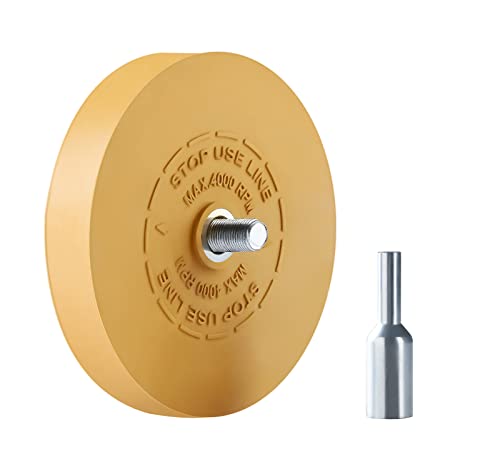
MIDO Eraser Wheel Decal Remover Tool

Perco Glue Off Adhesive Remover 3.3 oz

3M Specialty Adhesive Remover 38987 15 fl oz
More Details On Your Top Picks
For general garage cleanup, an 8-fluid-ounce bottle gives you a straightforward liquid approach to sticker edges, label residue, tape marks, and leftover car decals. The formula is intended for hard surfaces such as metal, glass, brick, wood, concrete, automotive finishes, and non-acrylic plastic, so you can keep one option available for more than a single panel.
You’ll likely appreciate the direct application format during a weekend detail, though the liquid still needs time to penetrate before wiping. That short dwell period matters on layered residue, while careful surface compatibility checks remain sensible, particularly around acrylic materials and delicate finishes. Compared with the MCTRHG kit, Goof Off gives you broader listed surface coverage but not the same built-in scraper assortment.
Strong Points
- The 8-fluid-ounce size suits repeated small cleanup jobs rather than a single decal.
- Listed compatibility spans metal, glass, wood, brick, concrete, automotive surfaces, and non-acrylic plastic.
- A liquid format can reach adhesive sitting around lettering, trim edges, and irregular hard surfaces.
- You can use it for stickers, labels, tape residue, and car graphics with one bottle.
- The bottle stores more easily than a drill accessory kit in a compact garage cabinet.
Things To Consider
- You need a separate scraper or cloth because the listing does not specify included removal tools.
- Allowing the formula to sit briefly adds a step during larger jobs.
- Storage deserves attention around heat and spills, as with other liquid garage chemicals.
Key Specs
Who It Suits Best
Choose this for routine home-garage cleanup across several hard surfaces, especially when you prefer a standalone liquid over a tool kit.
Consider Something Else When
MCTRHG Adhesive Sticker Remover suits you better for window tint, glass work, or projects where a spray bottle and plastic razors are useful.
Window glass, windshield residue, and old car decals call for controlled application, and this MCTRHG set pairs a 3.3-ounce spray with a scraper and 19 plastic razors. A plastic razor is a thin scraping edge intended to lift residue while reducing the chance of hard-metal contact. That combination gives you a more complete workstation than Goof Off Adhesive Gunk Remover 8 fl. oz.
The water-based formula may appeal during indoor DIY tasks because the source describes less oily cleanup and a lighter odor profile. You still need patience on thick tint adhesive, since a small 3.3-ounce container favors targeted jobs rather than broad vehicle restoration. For a commuter removing a parking decal or a homeowner cleaning glass, the compact kit has a sensible level of built-in control.
What We Like
- The spray format helps you direct liquid onto narrow decal borders and isolated glue spots.
- Nineteen plastic razors provide replaceable scraping edges for repeated small projects.
- The water-based composition is suited to users who prefer less greasy residue after wiping.
- Listed applications include painted surfaces, wood, glass, metal, trim, and sealed materials.
Trade Offs
- At 3.3 fluid ounces, the supply may feel limited across an entire vehicle.
- Plastic razors require proper disposal and organized storage after use.
- Large, sun-aged graphics may demand more passes than a powered eraser wheel.
Feature Snapshot
Made For
This kit fits DIYers handling small to medium decal, tint, and label jobs who want spray application and plastic scraping in one package.
Not Your Match When
3M Specialty Adhesive Remover 38987 suits you more for reactive adhesive work across varied substrates rather than ordinary sticker residue.
Large vinyl graphics and sun-aged pinstripes change the removal equation, which is where a rotating eraser wheel becomes useful. The MIDO tool uses a rubber wheel with a drill adapter, allowing you to connect it to most household drills listed by the source. Instead of softening residue with liquid, you use controlled mechanical friction to roll adhesive away from a vehicle surface.
You may find this approach faster for broad graphics, especially across a work van or boat with several decals. The trade-off is a greater need for steady handling, suitable drill control, and cleanup of rubber residue after the job. Compared with the spray kits from MCTRHG and Perco, this option takes more setup but gives you a powered route through extensive adhesive coverage.
Highlights
- The circular wheel covers broad decal areas more efficiently than a small hand scraper.
- A drill adapter lets you use a compatible household drill already in your garage.
- The rubber construction avoids adding a liquid formula to the removal process.
- The format suits sun-damaged vinyl, pinstripes, bumper stickers, and other vehicle graphics.
- Quick attachment and removal support a more organized workflow between vehicles.
- A single-wheel design takes less shelf space than a larger multi-tool kit.
Room For Improvement
- You need a drill, so this isn’t a complete standalone kit.
- Powered friction can make surface control more demanding for first-time users.
- Rubber residue may require additional wiping after decal removal.
- Wheel storage should keep the rubber away from heat and sharp tools.
Technical Sheet
Right Fit For
This wheel suits experienced DIY detailers and fleet owners removing broad vinyl graphics from vehicles with a compatible drill available.
Look Elsewhere When
Perco Glue Off Adhesive Remover 3.3 oz fits you better for small labels and hand-controlled work without a powered tool.
Perco takes the familiar liquid-and-scraper format and keeps it focused with a 3.3-ounce bottle, a scraper, and a plastic razor. That pairing is convenient for a car door label, tape residue on trim, or a few stickers around the house. The formula is described as water-based, while the scraper uses double-edged protectant blades to support hand removal.
For a small weekend project, the compact setup may be easier to manage than the MIDO wheel and drill combination. You’ll need to work in sections on larger decals, and the small bottle isn’t aimed at extensive vehicle fleets. The honest read is practical rather than flashy: you get the key hand tools in the box, but less liquid capacity than Goof Off Adhesive Gunk Remover 8 fl. oz.
Upsides
- The spray and scraper arrive as a coordinated two-part setup for hand removal.
- A plastic razor helps you approach residue with a nonmetal scraping edge.
- The water-based formula suits users who prefer a less oily cleanup routine.
- Stated applications include labels, stickers, tape residue, car decals, and grease.
- The 3.3-ounce size stores neatly in a small detailing bin.
Points To Note
- The small container may require replenishment during extensive decal work.
- Hand scraping takes longer across broad graphics than a drill-mounted wheel.
- Plastic scraping edges need cleaning and organized storage between projects.
Quick Facts
Best Suited To
This set suits occasional DIY users handling small automotive labels, tape marks, and sticker residue with hand tools.
A Better Fit Elsewhere
Goof Off Adhesive Gunk Remover 8 fl. oz. is a stronger fit for you when broader hard-surface coverage and a larger liquid supply matter more than included tools.
Reactive adhesives are a different category from ordinary sticker glue. A reactive adhesive needs a hardener or catalyst to form its bond, with epoxies, urethanes, and silicones listed as examples. The 3M 38987 is a 15-fluid-ounce, solvent-based remover intended for these tougher adhesive types across a range of substrates.
That specialized focus makes it a more appropriate garage choice for repair and fabrication work than the water-based MCTRHG or Perco sprays. You may find the larger container useful during recurring projects, though solvent-based handling calls for deliberate storage, ventilation, and surface compatibility checks. For routine decals, this level of specialization may be unnecessary; for reactive adhesive residue, the distinction matters.
Plus Points
- The 15-fluid-ounce container provides a larger supply for recurring shop work.
- Its stated target is reactive adhesive rather than only stickers and tape residue.
- The formula is solvent-based, matching the needs of specialized adhesive cleanup.
- Listed examples include epoxy, urethane, and silicone adhesive types.
Honest Caveats
- Solvent-based handling requires more storage and ventilation planning than a water-based spray.
- The specialized formula may be excessive for a single parking decal or household label.
- You should confirm substrate compatibility before applying it to a visible automotive finish.
Core Details
Whose Shelf It Belongs On
This remover suits experienced garage users, repair technicians, and fabricators dealing with epoxy, urethane, silicone, or similar reactive adhesive residue.
Reach For A Different Pick When
MIDO Eraser Wheel Decal Remover Tool fits you better for broad vinyl graphics when you already have a compatible drill and want mechanical removal.
How To Choose The Right Automotive Adhesive Removers
Match The Formula To The Residue
Start with the adhesive itself. Ordinary label glue, tape residue, and decal film usually suit a targeted liquid remover, while reactive adhesives formed with a catalyst or hardener call for a specialized formula such as 3M Specialty Adhesive Remover 38987. Choosing by residue type prevents you from using a highly specialized solvent for a simple parking sticker.
Water-based sprays from MCTRHG and Perco may suit light-duty household and vehicle cleanup where a less oily finish matters. Solvent-based options offer a different chemistry and require more deliberate handling, storage, and surface checks.
Consider The Surface Before The Tool
Vehicle paint, glass, metal, trim, and plastic don’t respond identically to scraping or solvents. Goof Off lists metal, glass, wood, brick, concrete, automotive surfaces, and non-acrylic plastic, while MCTRHG lists painted surfaces, wood, glass, metal, trim, and sealed materials. Acrylic plastic deserves separate caution because Goof Off specifically excludes that category.
A plastic razor gives you a lower-impact scraping edge than a metal blade, but pressure still matters. For broad vinyl, the MIDO rubber eraser wheel uses drill power, so your control and the drill’s handling characteristics become part of the job.
Choose Manual Or Powered Removal
A spray-and-scraper kit makes sense for a few labels, a windshield corner, or a small section of trim. MCTRHG adds 19 plastic razors, while Perco supplies a scraper and plastic razor, making both convenient for compact projects.
A drill-mounted wheel changes the workflow for large graphics. You save hand scraping across a wide panel, but you need a compatible drill, steady movement, and cleanup afterward. Most home garages can handle the manual kits more easily, while fleet, sign, and extensive decal work may justify MIDO’s powered format.
Think About Ownership After The Job
Storage, cleanup, and tool replacement affect the experience beyond adhesive removal. Small 3.3-ounce sprays are easy to store but can run short across multiple vehicles, whereas Goof Off’s 8-fluid-ounce bottle and 3M’s 15-fluid-ounce container offer more liquid for recurring work.
Keep scrapers, plastic razors, and eraser wheels organized so residue doesn’t transfer to later jobs. A practical setup includes clean cloths, surface-specific checks, and enough workspace to work in sections rather than rushing across an entire panel.
Things Worth Knowing First
Mistakes Worth Dodging
Choosing by bottle size alone can lead you toward the wrong formula. Match ordinary sticker residue with a general remover and reserve a reactive-adhesive formula for epoxy, urethane, silicone, or similar bonds.
Skipping the tool question creates another mismatch. A spray without a scraper adds an extra shopping step, while a drill wheel makes little sense for a single small label. Check the surface category too, particularly around acrylic plastic and visible painted panels.
Where The Extra Money Goes
Higher-tier choices usually add specialized chemistry, greater volume, or a more efficient removal method. The 3M 38987 offers 15 fluid ounces and a reactive-adhesive focus, while the MIDO wheel shifts the work from hand scraping to drill-assisted friction.
That upgrade pays off during recurring shop work, broad graphics, or difficult adhesive types. For occasional labels, Perco or MCTRHG gives you a more compact hand-tool setup without adding powered equipment or specialized solvent handling.
Final Verdict
You’ll get the most useful result by matching the remover to the adhesive, surface, and size of the job. Goof Off covers broad hard-surface cleanup, MCTRHG and Perco keep small spray-and-scrape projects manageable, MIDO brings drill-assisted removal to large graphics, and 3M addresses reactive adhesive work with a solvent-based formula. A careful surface check and patient, section-by-section process matter as much as the bottle or tool. Choose the format that fits your garage routine, and the cleanup becomes far less frustrating.
