

Small cracks, loose trim, split brackets, and damaged interior pieces can turn a quick car fix into a frustrating project. You need the right adhesive type for the material, bond location, gap size, and exposure to heat, moisture, and vibration. This roundup covers thin liquid super glue, non-drip gel, two-part epoxy, light-activated glue, and an automotive filler-sealer, giving you practical options for garage repairs, motorcycles, boats, and household projects.
The Shortlist At A Glance
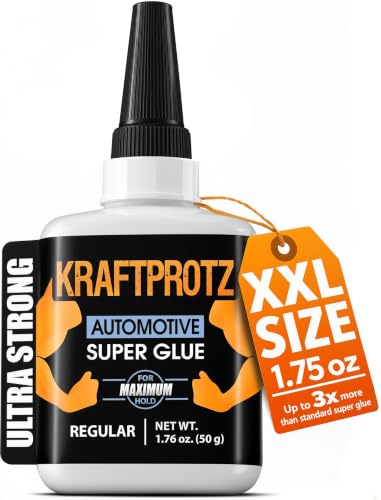
KRAFTPROTZ Automotive Super Glue Liquid 1.75 oz

KRAFTPROTZ Automotive Super Glue Gel 1.75 oz

PLJOFRSHI 2-Part Metal Glue 1.76oz

J-B Weld Light-Activated Superglue 5g, 2-Pack

J-B Weld AutoWeld 25ml, BLACK

WXYCRUEYE Metal Glue Epoxy Welding Adhesive 1.76oz
More Details On Our Top Picks
Thin liquid adhesive earns its place in a glovebox or garage drawer because it can run into narrow cracks that thicker formulas cannot reach. For dashboard seams, interior trim, headlight housing cracks, and small plastic parts, that flow helps you cover the bond line without leaving a visible mound.
The formula is listed for plastic, rubber, metal, and fiberglass, with clear, waterproof, and heat-resistant characteristics. You may find the liquid harder to control on a vertical panel than the gel version, so masking and careful positioning matter during a door-trim repair.
Strong Points
- Flows into fine cracks and tight joints.
- Clear finish suits visible cabin repairs.
- Supports bonding across plastic, rubber, metal, and fiberglass.
- The anti-clog cap can make storage less troublesome between occasional repairs.
- The 1.75-ounce fill gives you more material for repeated household and vehicle fixes.
Things To Consider
- Thin liquid can travel beyond the intended area, especially on upright surfaces.
- Cyanoacrylate, the fast-bonding adhesive family used here, needs clean, well-positioned parts because repositioning time is limited.
Key Specs
Who It Suits Best
You get the strongest fit as a DIY car owner handling fine cracks and small, tightly matched parts in a clean indoor workspace.
Where Another Pick Suits Better
KRAFTPROTZ Automotive Super Glue Gel 1.75 oz suits you more for vertical trim, brackets, and repairs where controlled placement matters.
Vertical surfaces change the adhesive decision. This KRAFTPROTZ option uses a gel consistency that stays where you place it, making it more manageable for mirror housings, dashboard panels, fender clips, and loose body trim than the free-flowing liquid in Pick 1.
Gap filling gives you a little more tolerance around imperfectly matched pieces, while the clear, waterproof, heat-resistant formula keeps the finish discreet. For most driveway repairs, you may appreciate the control, though gel can take longer to spread through hairline cracks than a liquid.
What We Like
- Non-drip texture helps keep adhesive on vertical parts.
- Gap-filling behavior accommodates small surface irregularities.
- Clear appearance works well on visible interior and trim components.
- Listed compatibility includes plastic, metal, fiberglass, and rubber.
Trade Offs
- Gel may not penetrate the narrowest microcracks as readily as KRAFTPROTZ Automotive Super Glue Liquid 1.75 oz.
- Residual gel around the cap can affect storage, so wiping the nozzle before closing it is a sensible ownership habit.
- Fast-setting adhesive leaves limited time for alignment once both surfaces meet.
Feature Snapshot
Made For
You benefit most from this gel for beginner-friendly trim, bracket, mirror-housing, and dashboard repairs where placement control matters more than deep crack penetration.
Consider Something Else When
J-B Weld AutoWeld 25ml, BLACK is a better fit for you when the repair needs a thicker automotive filler-sealer with impact resistance.
Two-part epoxy changes the process from instant bonding to deliberate mixing and curing. You combine resin and hardener in a 1:1 ratio, then use the included pusher and scraper to place the compound across metal, plastic, ceramic, fiberglass, glass, or wood.
That broader material range makes this a sensible workshop choice for car brackets, motorcycle cracks, plumbing repairs, boats, and construction tasks. The trade-off is preparation: you need clean surfaces, accurate mixing, and enough working space, so KRAFTPROTZ Automotive Super Glue Gel 1.75 oz remains easier for a quick trim fix.
Highlights
- Two-component epoxy forms a thicker repair layer than liquid super glue.
- 1:1 syringe supports measured resin-and-hardener dispensing.
- Included pusher and scraper reduce the need for separate application tools.
- Broad material compatibility covers metal, plastic, ceramic, fiberglass, glass, and wood.
- Waterproof positioning suits workshop jobs that may face moisture.
Minor Gripes
- Mixing adds cleanup and setup compared with a one-part adhesive.
- Unused mixed epoxy cannot be stored for later use.
Technical Sheet
Right Fit For
You get the best match as a hands-on DIYer managing mixed-material repairs that need gap coverage across automotive, plumbing, marine, or workshop projects.
A Better Fit Elsewhere
J-B Weld Light-Activated Superglue 5g, 2-Pack suits you more for small, visible bonds where you want light-controlled curing instead of epoxy mixing.
Light-controlled curing gives you a distinct timing advantage over ordinary instant glue. You apply the clear adhesive, position the parts, then shine the included blue light over the bond, with the supplied context specifying a five-second cure.
That approach suits small dashboard ornaments, trim pieces, cracks, and odd-shaped objects where alignment matters. You may find the 5g size better suited to targeted repairs than large projects, while PLJOFRSHI 2-Part Metal Glue 1.76oz offers more useful gap coverage for broad damaged areas.
Upsides
- Blue-light activation gives you direct control over the curing step.
- Specified five-second cure supports quick small-part repairs.
- Clear adhesive keeps the finished joint visually discreet.
- The two-pack format gives you a second tube for later jobs.
Room For Improvement
- Light access matters, so recessed or hidden bond lines may be less convenient.
- The 5g quantity is modest for repeated large automotive repairs.
- Storing the light and adhesive together helps prevent misplaced components.
Quick Facts
Who Will Love This
You suit this choice best as a detail-focused DIYer repairing small visible parts where accurate positioning and a rapid light-triggered cure matter.
Not Your Match When
WXYCRUEYE Metal Glue Epoxy Welding Adhesive 1.76oz fits you better for larger metal-focused patches and filler-style automotive work.
For body patches and repairs that need more than a thin bond line, AutoWeld takes a different route. The black compound combines adhesive, filler, and sealer functions, giving you material that can bridge damaged areas rather than only joining two neatly matched edges.
A 1:1 dual-cartridge setup and self-mixing static mixer simplify dispensing once both sides are flowing evenly. The stated 15-minute set, 30-minute sanding and painting window, and 3,770 PSI cured strength make this the more process-oriented option, although careful surface preparation still determines how well your repair holds in daily driving.
Reasons To Buy
- Black color blends naturally with many automotive repair areas.
- Impact-resistant formulation suits bodywork exposed to road vibration and knocks.
- Filler and sealer functions help cover irregular damage.
- 1:1 dispensing reduces guesswork during preparation.
- Sandable and paintable timing supports a more finished repair.
- The 25ml format gives you useful volume for automotive jobs.
Points To Note
- Accurate equal-part dispensing matters before attaching the static mixer.
- The black color may show through lighter finishes without additional surface work.
At A Glance
Built With In Mind
You get the clearest fit as a hands-on automotive DIYer repairing body panels, brackets, and damaged areas that need filling as well as bonding.
Reach For A Different Pick When
KRAFTPROTZ Automotive Super Glue Liquid 1.75 oz is better suited to your fine interior cracks and tiny joints where a thick filler would be excessive.
Metal-focused epoxy makes sense for repairs that need a substantial patch rather than a nearly invisible drop of glue. This two-component formula uses a 1:1 mix and comes with a pusher, spatula, and syringe, giving you the basic tools for shaping a repair around metal, steel, plastic, fiberglass, and related automotive surfaces.
The listing also positions it for body filler, muffler repair, motorcycle shells, boats, tanks, pipes, and heaters. Depending on the repair shape, you may value that broad scope, though J-B Weld AutoWeld 25ml, BLACK gives you a more defined cartridge system and documented sanding and painting schedule.
Bright Spots
- Two-part epoxy creates a substantial compound for metal repair.
- 1:1 syringe helps you measure the components consistently.
- Included spatula and pusher support spreading and shaping.
- Material range includes metals, plastic, steel, fiberglass, and automotive body surfaces.
- 1.76-ounce size fits a compact workshop repair kit.
Small Caveats
- Epoxy preparation takes more time and cleanup than either KRAFTPROTZ super glue.
- Large or high-stress repairs still require careful fit, surface preparation, and adequate curing time.
- The included accessories need cleaning promptly before mixed adhesive hardens.
Core Details
Whose Shelf It Belongs On
You suit this option as a garage DIYer who wants one epoxy kit for metal body patches, motorcycle repairs, and mixed workshop projects.
Swap It Out When
J-B Weld Light-Activated Superglue 5g, 2-Pack fits you better for small clean bonds where a short, light-triggered cure matters more than epoxy volume.
How To Choose The Right Automotive Adhesive Glues
Match Adhesive Type to the Repair
Liquid cyanoacrylate works best for close-fitting parts and hairline cracks because its low viscosity, meaning thin flow, can enter narrow spaces. You get speed and a neat bond line, but the material can run on vertical surfaces. KRAFTPROTZ Automotive Super Glue Liquid 1.75 oz suits dashboard seams, small plastic pieces, and fine interior damage.
Gel cyanoacrylate stays in place more effectively. That thicker body helps you work on upright trim, clips, brackets, and mirror housings without watching the adhesive migrate across the panel. You give up some deep crack penetration, so the gel makes more sense for controlled placement than capillary-style coverage.
Know When Epoxy Earns Its Place
Two-part epoxy combines separate resin and hardener to create a thicker repair compound. You gain gap filling, shaping ability, and wider material coverage, but you also take on mixing, cleanup, and curing time. PLJOFRSHI 2-Part Metal Glue 1.76oz and WXYCRUEYE Metal Glue Epoxy Welding Adhesive 1.76oz suit metal patches, irregular breaks, and workshop jobs that need more body.
For automotive filler and sealer work, J-B Weld AutoWeld 25ml, BLACK gives you a cartridge-based approach with a 1:1 mix, a stated 15-minute set, and a 30-minute sanding and painting point. That format costs more in handling complexity than instant glue, yet it better matches bodywork where you need to rebuild a damaged edge.
Consider Surface, Movement, and Exposure
Clean, dry, well-aligned surfaces make adhesive repairs more predictable. Dust, oil, loose paint, and textured contamination reduce contact between the bond surfaces, especially around engine bays and exterior trim. Match the formula to the area rather than treating every crack as the same job.
Moisture and temperature shifts also matter. Waterproof and heat-resistant listings support exterior or cabin applications, but no adhesive should replace a mechanical fastener or damaged component designed to carry major loads. Use super glue for small bonds and epoxy for repairable gaps, then reserve light-activated glue for areas where you can illuminate the entire bond.
Plan Application and Storage
Adhesive work rewards preparation more than speed. Dry-fit the parts, protect nearby surfaces, and stage your tools before opening a fast-setting formula. Gel caps and liquid nozzles can clog with residue, so clean the tip according to the label and store the container closed.
A dual-cartridge epoxy has a different ownership routine from a small super glue tube. You need to dispense evenly, mix or use the supplied mixer correctly, and clean tools before the compound hardens. For occasional roadside or glovebox use, a compact instant adhesive is easier to carry; for a dedicated garage, epoxy accessories add practical value.
Things Worth Knowing First
Mistakes Worth Dodging
Choosing liquid glue for a vertical panel often creates a messy trail instead of a precise bond. Pick gel for upright trim and epoxy for gaps, then reserve thin liquid for tight cracks and closely matched pieces. Skipping surface cleaning causes the same problem across all three types.
Another common mistake is ignoring the finish. Clear formulas suit visible cabin parts, while J-B Weld AutoWeld 25ml, BLACK is easier to blend into dark repair zones. Keep light-activated glue for locations where the included blue light can reach the entire bond.
What Separates Premium From Basic
Higher-tier automotive adhesives generally justify their place through application control, dispensing hardware, or a more specific repair role. A static mixer can reduce manual measuring, while a light-activated formula gives you command over the cure point. Those details matter during precise trim work or repeated garage repairs.
Spending more makes sense for body patches, frequent use, or jobs that need sanding and painting afterward. A basic liquid or gel remains the practical choice for one small interior crack, especially when a thicker epoxy would add unnecessary preparation.
Closing Remarks
You can narrow this list quickly by matching the adhesive to the repair shape. Choose KRAFTPROTZ Automotive Super Glue Liquid 1.75 oz for fine cracks, the gel version for vertical trim, J-B Weld AutoWeld 25ml, BLACK for filler-style bodywork, and either epoxy kit for broader metal or mixed-material repairs. J-B Weld Light-Activated Superglue 5g, 2-Pack adds timing control for small precise bonds. Start with clean surfaces, deliberate alignment, and the formula that fits your actual repair.
