

Cloudy, yellowed lenses can make an older vehicle look neglected, especially after years of sun exposure, road film, and weather. You need an option that matches the condition of your plastic lenses, your comfort with sanding, and the time available in your driveway or garage. The choices below range from abrasive multi-step kits to polish-only and spray-and-wipe formulas for lighter haze. You’ll also find options suited to drill-assisted work, hand application, and repeat treatments across more than one vehicle.
The Shortlist at a Glance

3M Ultra Headlight Restoration Kit (39195)

Mothers PowerPlastic 4Lights Plastic Polish 8 oz. (08808)

POLIWELL Headlight Restoration Kit 24Pack

XPERTCHEMY Headlight Restoration Kit

Car Headlight Restoration Kit Spray, 2-3 Treatments
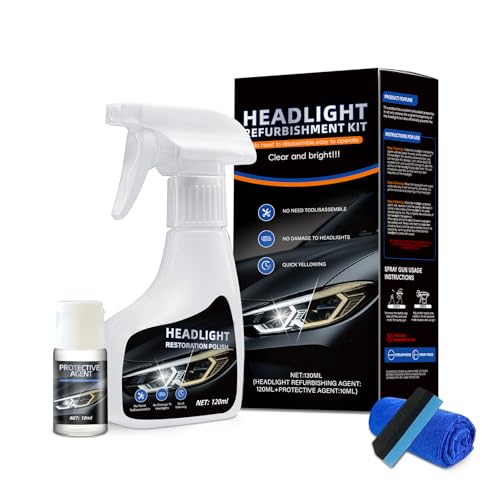
Carrie Rowe Headlight Restoration Polishing Kit (1Set)
More Details On Your Top Picks
Deep oxidation calls for more than a bottle of polish, and this 3M kit takes that approach with several abrasive stages plus a finishing protectant. The included 3.25-inch disc holder and small sanding discs suit controlled work around a headlight lens, while masking tape helps shield nearby paint and trim during driveway repairs.
You move from 500-grit sanding to 800-grit finishing, then to a 3000-grit refining disc. That progression gradually smooths the surface rather than relying on one aggressive pass, although it demands patience, clean water, and careful pressure. You may find the process especially useful on a daily commuter with pronounced yellowing, cloudy plastic, or neglected taillight and fog-light lenses.
Strong Points
- Multiple abrasive grades give you a more controlled path from rough oxidation to a smoother lens.
- The disc holder keeps sanding contact more consistent than loose hand-held discs.
- Masking tape supports cleaner preparation around painted body panels.
- The kit supports plastic headlights, taillights, fog lights, and directional-light lenses.
- The final clear-coat product helps address the ownership step that polish-only kits leave to you.
Things To Consider
- Sanding creates more cleanup and requires steadier technique than Mothers PowerPlastic 4Lights.
- Owners commonly find that abrasive discs need proper storage between projects to keep grit and moisture from affecting them.
Key Specs
Who It Suits Best
Choose this for hands-on DIYers restoring heavily yellowed plastic across one or several vehicle light assemblies.
Where Another Pick Suits Better
Mothers PowerPlastic 4Lights suits you better for light haze, quick polishing, and ongoing plastic care without a full sanding sequence.
Light haze and early oxidation don’t always justify a full abrasive kit. Mothers PowerPlastic 4Lights uses an ultra-fine polish, meaning its particles are intended for subtle surface refinement rather than substantial material removal, and pairs that action with oxidation-inhibiting polymers and UV shields.
The 8-ounce bottle fits routine garage care, especially for a vehicle that receives regular washing but develops mild sun dullness over time. Compared with the 3M 39195, you get a simpler application and less equipment, though severe clouding may remain after polishing alone. For most lightly weathered lenses, that trade-off keeps the job manageable.
What We Like
- Ultra-fine polishing suits light haze and surface dullness.
- UV-shielding ingredients support longer intervals between routine lens care.
- The 8-ounce format stores easily with car-care supplies.
- It works across hard and flexible clear plastics, giving you more uses than headlights alone.
Trade Offs
- Heavy yellowing may need an abrasive process such as the POLIWELL kit before polish can refine the finish.
- Hand application takes repeated wiping and surface preparation, with no sanding accessories included.
- Keeping the bottle sealed and the applicator clean matters because debris can create new fine marks during polishing.
At A Glance
Made For
This fits commuters and casual home mechanics managing light oxidation on headlights or other clear plastic surfaces.
Consider Something Else When
POLIWELL Headlight Restoration Kit 24Pack is a stronger fit for you when deep haze requires sanding discs, scouring pads, and a multi-stage process.
POLIWELL gives you a clearly staged workflow: wet abrasion, polishing, and a UV-blocking finish. Wet sanding uses water to carry away residue and reduce friction, while the supplied P1000, P3000, and P5000 discs create a broad progression for cloudy or sun-damaged lenses.
The 24-piece format is aimed at a more involved garage session than Mothers PowerPlastic 4Lights. You also get scouring pads and components intended for an electric drill, so you can choose hand work or attach compatible accessories for larger surfaces. Depending on your comfort with drill speed and pressure, the added flexibility can shorten the work or make technique more important.
Highlights
- Three stated stages help you separate material removal, polishing, and surface protection.
- P1000, P3000, and P5000 abrasives offer progressively finer surface refinement.
- Drill-compatible accessories can reduce hand fatigue across multiple lenses.
- The 24-piece count gives you a broad accessory set for a larger DIY restoration job.
- A UV-blocking final coat addresses protection after the lens has been clarified.
- The system suits heavily clouded surfaces more closely than a polish-only bottle.
Minor Gripes
- The larger accessory count creates more setup, sorting, and cleanup in a small garage.
- Drill use can remove material quickly, so beginners may prefer slower hand work first.
- Wet discs and pads need thorough drying before storage.
Feature Snapshot
Right Fit For
This suits hands-on DIYers with cloudy lenses, an electric drill, and enough workspace for a detailed restoration process.
Not Your Match When
Car Headlight Restoration Kit Spray, 2-3 Treatments is better for you when you want hand-applied spray work without sanding accessories.
Hand application is the defining angle here. XPERTCHEMY targets heavy yellowing, clouding, stains, and hairline scratches without requiring power tools, while its ceramic UV protector uses two coating wipes for the final surface treatment.
That setup sits between the abrasive depth of 3M Ultra Headlight Restoration Kit and the simpler polish approach of Mothers PowerPlastic 4Lights. You may find the hand-only format more comfortable beside a parked vehicle where a drill and extension cord are inconvenient. The catch is that larger or deeply damaged lenses can demand more rubbing and patience.
Upsides
- No power tool requirement keeps the process accessible for hand-focused DIY work.
- The stated target range includes heavy yellowing, clouding, stains, and fine scratches.
- Two ceramic coating wipes provide a defined protection step after cleaning.
- The compact approach works well for apartment parking areas and small garages.
- Hand control helps you stay close to lens edges and body-panel contours.
Worth Noting
- Hand polishing can take longer on broad or severely damaged lenses than drill-assisted work.
- Coating wipes need careful handling and clean storage so the application surface stays free of grit.
Quick Facts
Best Suited To
This is suited to careful beginners and vehicle owners who need hand-applied restoration beside a home or apartment parking space.
A Better Fit Elsewhere
3M Ultra Headlight Restoration Kit (39195) suits you more when severe oxidation calls for graded sanding discs and a dedicated disc holder.
For a quick maintenance session, this toretark kit keeps the process to spray and wipe, with no sanding tools or power equipment. That makes it approachable for a first driveway project, especially where you need to refresh dull, blurred, or yellowed lenses without gathering a full abrasive system.
The stated coverage of two to three vehicle headlight treatments gives you a useful advantage for a household with multiple cars or a follow-up application. Compared with XPERTCHEMY, the process is less tool-intensive but also less suited to removing substantial surface damage through abrasion. The honest read is straightforward: convenience leads, while correction depth depends on the condition of the lens.
Bright Spots
- Spray-and-wipe use reduces setup time for routine lens care.
- No power tools or sanding equipment are required.
- Coverage for two to three vehicle treatments supports more than a single repair.
- The format is easy to store with basic wash and detailing supplies.
Room For Improvement
- Without sanding tools, deeply etched oxidation may remain beyond the formula’s intended convenience.
- Spray application requires careful rinsing and wiping to avoid residue around trim.
- Owners commonly find that treatment surfaces need clean cloths and dry storage for consistent upkeep.
Core Details
Who Will Love This
This matches first-time DIY users who prioritize a short hand process for mild to moderate lens dullness.
Look Elsewhere When
POLIWELL Headlight Restoration Kit 24Pack is a better match for you when heavy clouding calls for wet sanding and staged polishing.
Carrie Rowe keeps its positioning broad, presenting a multifunctional headlight cleaner and polishing set for all vehicle types. The source details describe a fast-acting spray aimed at yellowing and cloudiness, which puts this option closer to toretark’s hand-friendly format than to the staged abrasives in 3M’s kit.
You may find the compact single-set approach convenient for a basic maintenance shelf or an occasional vehicle refresh. Its broad vehicle compatibility makes the intended use flexible, but the available details don’t specify abrasive grades, treatment coverage, or a separate protection system. That narrower specification profile makes it more suitable for straightforward upkeep than for planning a detailed correction job.
Plus Points
- Spray-based use supports a quick approach to surface haze.
- The multifunctional positioning covers different vehicle types.
- A single set takes up little storage space in a trunk or garage cabinet.
Points To Note
- The available details don’t identify abrasive grades or sanding accessories for heavy correction.
- No separate UV coating is specified, so ongoing protection may require another care step.
- As with spray products generally, clean preparation and thorough wiping remain important for an even finish.
Details At A Glance
Whose Shelf It Belongs On
This fits you best as a compact maintenance option for basic haze on different vehicle types.
Swap It Out When
Mothers PowerPlastic 4Lights suits you more when you want an identified 8-ounce polish with UV-shielding and oxidation-inhibiting components.
How To Choose the Right Automobile Headlight Cleaners
Match the Formula to Lens Damage
Start with the surface condition rather than the label. Light haze and early dullness often suit a polish such as Mothers PowerPlastic 4Lights, while thick yellowing, clouding, or visible surface wear usually calls for graded abrasives such as those in the 3M or POLIWELL systems.
An abrasive removes a controlled amount of degraded plastic, so technique matters. You need clean water for wet sanding, masking around painted panels, and patience between grades. Spray-and-wipe formulas reduce effort, but their convenience may not match deeply weathered lenses.
Understand Grit Progression
Grit describes abrasive coarseness. Lower numbers remove material more quickly, while higher numbers leave a finer surface that is easier to polish clear. The 3M kit moves from 500 grit through 800 and 3000 grit, and POLIWELL uses P1000, P3000, and P5000 for a different progression.
That sequence benefits you when the lens needs structured correction. Skip a stage or press unevenly, and the finish can show sanding marks that require extra polishing. A single-bottle product makes more sense for maintenance rather than substantial resurfacing.
Consider Your Workspace and Skill
A driveway beside a parked car favors hand-applied options such as XPERTCHEMY, toretark, or Carrie Rowe. You avoid arranging a drill, discs, and larger accessory groups, which helps in apartment lots or compact garages.
Drill-compatible kits suit you more when both lenses are broad, heavily clouded, or part of a multi-vehicle project. Power assistance can reduce hand fatigue, but you need steady movement and controlled pressure around edges and corners.
Look Beyond the Initial Cleaning Step
Clarifying the plastic is only part of the ownership routine. A UV shield, clear coat, or ceramic protector creates a separate finishing stage that matters for vehicles parked outdoors, while polish-only options leave you to manage protection through their stated formula.
Check the package coverage too. Toretark specifies two to three treatments, whereas the 3M and POLIWELL listings emphasize accessory systems rather than a treatment count. You’ll make a more practical choice by matching that detail to one vehicle, several vehicles, or recurring maintenance.
What To Weigh Before You Choose
Mistakes Worth Dodging
Choosing a spray formula for deeply damaged plastic can leave you disappointed because the process doesn’t include the abrasive correction needed for substantial surface buildup. Conversely, a full sanding kit adds unnecessary work for light haze. Inspect the lens in daylight and match the correction level to the visible damage.
Don’t overlook cleanup and protection. Tape nearby paint, keep abrasive materials separated, and store damp pads only after they dry thoroughly. A rushed finish can create extra surface marks or leave residue around trim.
Where the Extra Money Goes
Higher-tier kits usually package several correction stages, holders, pads, and a final protective product rather than relying on one bottle. That added structure gives you more control over rough oxidation and can make the workflow easier to repeat across multiple lenses.
The upgrade makes sense for older vehicles with pronounced yellowing or for households maintaining more than one car. Lightly hazed lenses may not justify the extra equipment, especially when a polish or spray formula already matches the condition.
Final Verdict
Your best choice depends on the lens condition and the amount of hands-on work you can manage. Choose 3M for a structured abrasive restoration, Mothers for light haze and recurring plastic care, or POLIWELL for a broad drill-assisted kit. XPERTCHEMY keeps hand work central with ceramic protection, while toretark and Carrie Rowe favor quick spray-based maintenance. Clean preparation, controlled technique, and a suitable finishing step will matter as much as the formula itself.
