

Auto seam sealers help you close body joints, floor-pan edges, trunk seams, roof seams, and other gaps where moisture can work its way into a vehicle. You’ll find meaningful differences between brushable compounds, cartridge formulas, and two-part systems, especially during restoration work or RV maintenance. A commuter repairing a small rust-prone seam needs a different application style from a fabricator covering broad flange joints. The five options below focus on adhesion, flexibility, curing behavior, finish, and practical workshop fit.
The Shortlist At A Glance

LAUCO Maxi-Seal Gray Polyurethane Seam Sealer 2-Pack
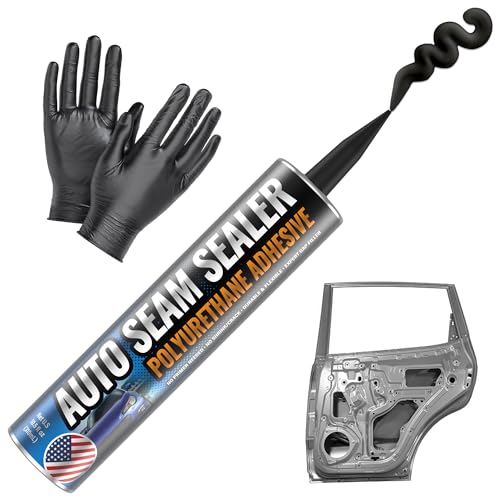
FORTIVO Professional Automotive Seam Sealer Black

FORTIVO Professional Automotive Seam Sealer White

Custom Shop Barrier Bond Brushable Seam Sealer Quart

3M Heavy-Bodied Seam Sealer 08308 Black
More Details On Our Top Picks
Broad cracks and uneven body joints call for a thicker compound, and LAUCO’s polyurethane formula is shaped around that job. Polyurethane is a flexible sealant material that can accommodate some movement after curing, making it a sensible match for vehicle seams exposed to vibration and changing temperatures.
You get two 10.5-ounce tubes, an application tip, and a gray finish that suits many underbody and interior repair areas. The single-component format keeps mixing out of the process, while moisture curing supports interior or exterior use. You may find the heavy consistency easier to control across wide gaps than a thin cartridge bead, though careful tooling matters for a clean finish.
Strong Points
- Two 10.5-ounce tubes provide useful material for multiple seam repairs.
- Adheres to bare, primed, or painted metal surfaces.
- Flexible, non-shrinking, and non-cracking formulation suits moving body joints.
- Low-odor chemistry is more comfortable for enclosed garage work than strongly solvent-heavy formulas.
- The supplied tip helps you place material into narrow or irregular seams.
Things To Consider
- Thick material can require deliberate tooling and prompt cleanup around the repair area.
Key Specs
Who It Suits Best
DIY restorers and RV owners handling broad, irregular seams benefit most from the flexible two-tube format.
Consider Something Else When
Choose Custom Shop Barrier Bond Brushable Seam Sealer Quart for large lap and flange joints that need a visible brush-textured finish.
Black seam repairs can blend neatly into dark underbody areas, truck beds, and RV roof sections, which gives this FORTIVO version a focused use case. Its polyurethane base bonds with bare, painted, or primed metal, so you can match the sealant to several stages of a body project.
The quick-set design is aimed at paint work that needs to move along, with the source material describing paint readiness after 30 minutes and no sanding requirement. Gloves and an application tip are included, useful during a driveway repair where setup space is limited. Depending on bead thickness, temperature, and humidity, practical working time can feel different from the stated paint window, so surface preparation and cleanup still deserve attention.
What We Like
- Black color blends into many hidden automotive and RV areas.
- Designed for adhesion to bare, painted, and primed metal.
- Thirty-minute paint-readiness claim supports faster repair scheduling.
Trade Offs
- The black finish has less visual flexibility than LAUCO’s gray option.
- Fast-setting material leaves less time for correcting an untidy bead.
- Tip cleanup and proper storage matter because cured polyurethane can make the applicator difficult to reuse.
At A Glance
Made For
Choose this version for black RV roof sections, dark underbody seams, and quick-turnaround metal repairs.
Not Your Match When
FORTIVO Professional Automotive Seam Sealer White suits light-colored panels and repairs where black material would show through the finish.
White FORTIVO follows the same quick-set polyurethane approach as the black version, but the lighter color changes where it makes sense. You’ll have a better visual match for light panels, pale RV roofing, and areas where a dark bead could remain noticeable beneath a thin coating.
The formula is described as flexible during weather exposure, with resistance to shrinking and cracking built into its intended use. That makes it appealing for an RV kept outdoors or a daily driver exposed to wet roads. You may prefer LAUCO Maxi-Seal Gray Polyurethane Seam Sealer 2-Pack for deeper cracks, since LAUCO is specifically presented as a thick compound for larger gaps.
Highlights
- White color fits light repair surfaces more naturally.
- Adheres to bare, painted, and primed metal.
- Flexible weather-oriented design suits exterior seams.
- Supplied gloves and tip make a small repair easier to set up.
Minor Gripes
- White material can show dirt during application, so immediate cleanup around the seam is worthwhile.
- The quick-set format may be less forgiving during detailed cosmetic work.
Technical Sheet
Right Fit For
Light-vehicle owners, RV renovators, and DIY repairers working on visible pale seams get the clearest benefit from this colorway.
Where A Sibling Pick Shines
FORTIVO Professional Automotive Seam Sealer Black is a better fit for dark underbody repairs and black RV roof surfaces.
Brush application changes the workflow entirely, and Custom Shop Barrier Bond is built for that hands-on approach. A brushable sealer lets you spread material across lap seams, flange joints, cracks, and crevices without relying on a narrow cartridge bead.
The quart can contains 30.4 fluid ounces, giving you a practical amount for a restoration project with several seams. Its light gray finish and brush marks are intended to resemble factory-style joint texture, while paint readiness in 30 to 60 minutes keeps the repair moving. In most garage projects, the trade-off is messier tool cleaning and more exposed product during storage compared with LAUCO’s closed tubes.
Upsides
- Brushable consistency works well across wide or irregular joint surfaces.
- Light gray color supports an OEM-style appearance under paint.
Room For Improvement
- A quart can takes more workspace and cleanup than a ready-to-place tube.
- Brush application requires a suitable brush and careful lid handling between sessions.
- The large container may be excessive for a single small seam.
Feature Snapshot
Best Suited To
Restoration hobbyists and body-repair shops covering multiple wide joints benefit from the brushable quart format.
Another Choice May Suit
3M Heavy-Bodied Seam Sealer 08308 Black is better suited to controlled cartridge application and structured two-part curing.
For door skins, floor pans, trunk floors, and roof seams, a cartridge system can give you more consistent placement than a brush. The 3M 08308 uses a two-part epoxy, meaning two reactive components cure together to form the finished bead, while the self-mixing cartridge handles the ratio as material is dispensed.
The 200 ml cartridge holds less material than Custom Shop Barrier Bond’s quart can, but the controlled delivery suits precise panel work. You’ll need a compatible manual applicator, including the listed 3M 08117 or 08571 options, so setup is more involved than LAUCO’s tube format. For professional repair sequences, that extra equipment may be worthwhile; for one small household-garage job, it can feel like unnecessary complexity.
Reasons To Buy
- Self-mixing delivery helps maintain the intended two-part blend.
- Heavy-bodied material suits substantial automotive seam beads.
- Designed for general-purpose sealing across doors, floors, trunks, and roofs.
- Black color fits many hidden or dark body sections.
- The cartridge format gives you more controlled placement than a brush on narrow seams.
Points To Note
- A compatible applicator is required, adding equipment and setup considerations.
Quick Facts
Whose Shelf It Belongs On
Professional repairers and experienced fabricators who already have a compatible applicator gain the most from this cartridge.
Reach For A Different Pick When
LAUCO Maxi-Seal Gray Polyurethane Seam Sealer 2-Pack is more suitable for low-setup DIY work and larger irregular cracks.
How To Choose The Right Auto Seam Sealers
Match The Formula To The Joint
Polyurethane remains flexible after curing, which helps on seams that experience vibration, body movement, or temperature changes. Single-component tubes such as LAUCO and FORTIVO keep setup straightforward, while 3M’s two-part epoxy cartridge targets controlled dispensing and a more structured cure.
Brushable material takes a different path. Custom Shop Barrier Bond spreads across broad lap and flange seams, giving you a textured finish that can resemble factory-applied joint compound.
Decide Between Brush And Cartridge
A brush works well for large areas, uneven edges, and visible seam texture. You’ll need a suitable brush, a surface for working, and a plan for cleaning the tool before the compound sets.
Cartridges provide a narrower bead and more controlled placement, which helps around door skins, floor pans, and tight panel joints. A self-mixing cartridge reduces manual measuring, but you still need the correct applicator.
Consider Color And Paint Timing
Gray usually gives you a neutral base beneath later coatings, while black suits dark underbody areas and black RV roofing. White can make more sense for light-colored panels where a dark line could remain visible.
The stated paint window ranges from 30 minutes for FORTIVO to 30 to 60 minutes for Custom Shop Barrier Bond. Treat those figures as product specifications rather than a universal schedule, since bead thickness, airflow, temperature, and humidity influence practical curing.
Plan The Repair Surface
Seam sealer performs best as part of a clean body-repair sequence. Remove loose contamination, prepare the metal according to your coating system, and mask edges before dispensing or brushing.
Storage and cleanup deserve equal attention. Close tube and can openings promptly, protect unused material from moisture, and keep applicator tips from curing in place. For a daily driver, a small tube may be easier to manage; a restoration project with many seams can justify a larger container.
What To Weigh Before You Choose
Mistakes Worth Dodging
Choosing by color alone can leave you with the wrong application style. A black FORTIVO tube may suit an exposed dark roof seam, but Custom Shop Barrier Bond gives you broader brush coverage and a textured gray finish.
Ignoring equipment requirements creates another avoidable problem. The 3M 08308 cartridge needs a compatible applicator, while the tube-based choices offer a simpler path for occasional repair work.
What Separates Premium From Basic
Higher-tier seam sealers typically justify their position through controlled dispensing, two-part chemistry, specialized application systems, or a more targeted finish. Those attributes matter most across repeated professional repairs, where consistent bead placement can save cleanup and rework.
For a single small seam, a straightforward single-component polyurethane may better match your workspace and skill level. Paying more for a cartridge system makes sense when precision, repeatability, and established shop equipment matter more than minimal setup.
Final Verdict
Your best match depends on the seam, finish, and application method rather than a single universal formula. LAUCO suits broad DIY repairs, FORTIVO gives you fast paint-oriented black or white options, Custom Shop Barrier Bond covers large brush-textured joints, and 3M serves controlled cartridge work. Prepare the surface carefully, select a color that fits the finished panel, and plan cleanup before the material begins curing. That approach gives you a cleaner repair and a more manageable garage workflow.
