

Rust rarely stays confined to one small spot. Road salt, standing water, battery-terminal corrosion, and damp storage can gradually weaken exposed metal on daily drivers, trailers, boats, and recreational vehicles. You need the right format for the job, whether you want a light protective film, a rubberized barrier, or a black primer-like coating for already-rusted steel. The six Auto Rust Treatments below cover quick maintenance, spot repairs, and larger metal surfaces.
The Shortlist At A Glance




More Details On Our Top Picks
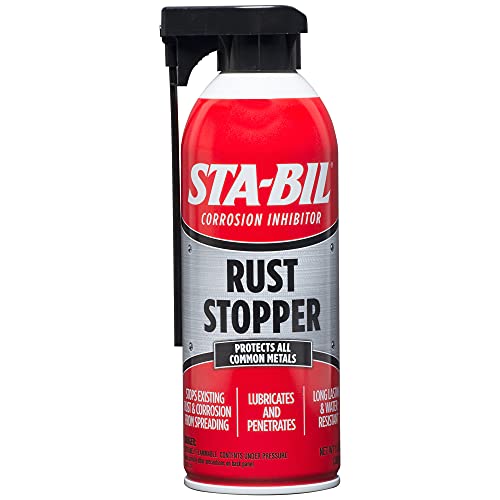
Daily drivers, motorcycles, boats, and recreational vehicles need a light treatment that reaches small metal parts without turning routine upkeep into a major project. STA-BIL uses a corrosion-inhibiting spray that leaves a water-resistant lubricating film, so battery terminals, exposed fasteners, and painted metal receive broader coverage than a dedicated converter.
You may find the format especially convenient in a garage where squeaky hinges or sticking hardware need attention alongside rust control. The trade-off is coverage depth: this is a maintenance spray, not a thick black repair coating for heavily scaled panels.
Strong Points
- The 13-fluid-ounce format suits targeted work and stores more easily than gallon containers.
- A water-resistant film helps limit moisture erosion on exposed or painted metal.
- Battery-terminal use adds practical value during routine vehicle maintenance.
- Lubrication can help with squeaking and sticking hardware.
- The formula acts on contact around existing corrosion while also guarding clean metal.
Things To Consider
- A sprayed film can collect dust, so wipe accessible parts before reapplication.
- It lacks the hard, paint-ready finish offered by Seymour 16-45 Rust Converter Black.
Key Specs
Who It Suits Best
You get the most from this spray as a DIY vehicle owner handling battery terminals, hardware, and light surface corrosion.
Consider Something Else When
Choose Rust-Oleum Stops Rust 2-in-1 Rust Reform & Seal Spray Black for broad underbody coverage and a thicker rubberized barrier.
Underbody panels and wheel wells face more abrasion than battery terminals, which makes Rust-Oleum’s rubberized coating a logical step up from STA-BIL Rust Stopper Anti-Corrosion Spray 13 Oz. The spray seals both bare and rusty metal behind a flexible barrier that handles moisture, chemical exposure, and surface wear.
For a truck, RV, or commuter vehicle exposed to wet roads, that flexibility may matter more than a primer-ready finish. Preparation still matters, and the dark coating can hide developing surface changes, so inspect and clean the area carefully before application.
What We Like
- Two functions in one coating reduce the need to pair a converter with a separate sealer.
- Rubberized material flexes with treated areas better than a rigid paint film.
- Moisture and abrasion resistance suit wheel wells and underbody metal.
- The aerosol format supports controlled coverage across awkward vehicle surfaces.
Worth Noting
- Overspray and uneven buildup can make cleanup more involved around suspension components.
- The flexible black layer isn’t the natural choice for a small repair that needs a visible topcoat.
- Surface preparation remains necessary for durable adhesion.
Feature Snapshot
Made For
This suits vehicle owners covering larger exposed areas such as wheel wells, underbodies, trucks, and RVs.
Not Your Match When
Seymour 16-45 Rust Converter Black fits better for a smaller iron or steel repair that needs a primer-compatible surface.
Rusty iron and steel need a different approach from clean metal that only needs a protective film. Seymour 16-45 uses a rust converter, a treatment that changes rusted material into a black coating suitable for primer-style use, while loose corrosion still needs removal first.
That makes it useful for vehicle brackets, trailer parts, railings, and small sheet-metal repairs where sanding every contour would consume an afternoon. You may find the 10-minute touch-dry time convenient, but the 24-hour wait before a topcoat requires a planned repair window.
Highlights
- Chemical conversion reduces extensive wire brushing and sanding on iron and steel.
- The black finish can remain in place or receive a compatible topcoat.
- Moisture resistance supports repairs on trailers, fences, railings, and vehicle parts.
- The aerosol format reaches irregular surfaces with less setup than a gallon treatment.
Trade Offs
- It applies to iron and steel, not every metal type.
- Loose rust must be removed, and a topcoat requires a full 24-hour wait.
Quick Facts
Right Fit For
You benefit most from this converter as a DIY mechanic handling localized rust on iron or steel components.
Look Elsewhere When
BLACK STAR MRO Chem Rust Converter 1 Gallon is better suited to a large trailer, fence, or workshop project requiring more material.
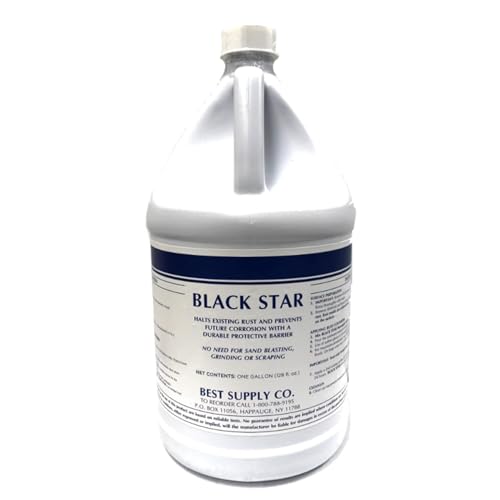
Large steel projects change the calculation, because aerosol cans become inconvenient across trailers, railings, storage tanks, or extensive vehicle panels. BLACK STAR MRO Chem Rust Converter comes in a one-gallon container and transforms rust into a black polymer-resin coating designed to seal treated steel from moisture.
Compared with Seymour 16-45 Rust Converter Black, the gallon format favors repeated or broad application rather than quick spot work. The honest caveat is storage and application: a large liquid container needs a suitable work area, careful cleanup, and a plan for protecting nearby surfaces.
Upsides
- One gallon supports substantial steel restoration without relying on repeated aerosol coverage.
- The converted black resin layer creates a hard moisture barrier.
- Suitable for broad projects involving trailers, fences, railings, and shop metal.
Room For Improvement
- The container size is excessive for a battery bracket or isolated body-panel spot.
- Liquid application demands more setup and surface protection than a spray can.
- Surface condition still affects the final appearance, so heavy loose scale needs attention.
At A Glance
Best Suited To
This is aimed at experienced DIY restorers and shop owners treating extensive steel surfaces rather than isolated vehicle hardware.
A Better Fit Elsewhere
LISRUX 4-in-1 Rust Converter & Metal Primer 34 Fl Oz Black makes more sense for a smaller home garage project with less storage demand.
LISRUX takes the broad-project approach with a 141-fluid-ounce black, water-based rust converter and metal primer. Its stated heat and UV resistance make it a considered option for automotive metal, equipment, and outdoor surfaces that face changing weather rather than a single sheltered repair.
Compared with BLACK STAR MRO Chem Rust Converter 1 Gallon, this option is presented as a ready-to-use coating with primer duties built in. Depending on your project size, that may simplify the finishing plan, though the large container is harder to justify for a single small patch.
Bright Spots
- The 141-fluid-ounce quantity suits repeated maintenance or extended restoration work.
- Water-based handling can fit organized garage projects with brush or coating application.
- Heat and UV resistance support outdoor automotive and equipment use.
- A combined converter and primer reduces the number of coating stages.
- The black finish gives treated metal a consistent base appearance.
Points To Note
- The large container requires deliberate storage and careful sealing between work sessions.
- Brush-on liquid coverage takes more preparation than STA-BIL Rust Stopper Anti-Corrosion Spray 13 Oz.
Details At A Glance
Who Will Love This
You gain the clearest advantage as a DIY restorer or equipment owner with multiple metal surfaces to cover over time.
Swap It Out When
Seymour 16-45 Rust Converter Black is a better fit for a compact repair where a spray format and smaller-scale workflow matter more.
Small garage projects often need more coating than an aerosol can provides but less than LISRUX Rust Converter & Metal Primer 141 Fl Oz Black. This 34-fluid-ounce black option keeps the same water-based, heat-resistant, UV-resistant positioning in a more manageable quantity.
That middle ground works well for a fender repair, trailer hardware, or several brackets handled across a weekend. You may find the liquid format slower to set up than a spray, yet it offers better control for deliberate brush application and easier storage between projects.
Best Bits
- 34 fluid ounces suit moderate DIY restoration without the bulk of a gallon container.
- The four-in-one positioning combines rust conversion, priming, and protective coating functions.
- Heat and UV resistance support exposed vehicle and equipment surfaces.
- Black color gives repaired steel a uniform dark base.
Small Caveats
- Liquid application requires brushes, surface preparation, and a controlled work area.
- The smaller quantity may run short across a full underbody or extensive fence project.
- Storage needs attention so the coating remains usable between applications.
Core Details
The Right Fit
This option suits DIY vehicle owners who need a liquid treatment for several medium-sized repairs without storing a gallon.
Reach For A Different Pick When
Rust-Oleum Stops Rust 2-in-1 Rust Reform & Seal Spray Black is more suitable for underbody work where aerosol delivery and a flexible rubberized film matter most.
How To Choose The Right Auto Rust Treatments
Match The Formula To The Rust
A corrosion inhibitor leaves a protective film on exposed metal, making it useful for battery terminals, hinges, fasteners, and painted areas that need ongoing maintenance. A rust converter takes a different route: it reacts with rust on compatible iron or steel and changes the surface into a darker coating. That distinction matters on a rusty bracket or trailer panel, where a film alone may not provide the finish you need.
Choose Coverage Before Color
Aerosol formats suit narrow spaces, irregular hardware, and quick vehicle touch-ups. Rubberized sprays add a flexible barrier for wheel wells and underbodies, where road grit and moisture reach the coating. Liquid treatments make more sense across broad panels, fences, trailers, and shop equipment, but they need brushes, surface protection, and more storage space.
Read The Metal Compatibility
Iron and steel are specifically named for Seymour 16-45 Rust Converter Black. That wording should guide your selection, because a treatment designed around rusted steel isn’t automatically suitable for aluminum, copper, or galvanized surfaces. Check the intended substrate before preparing the area, especially around mixed-metal vehicle assemblies.
Plan The Repair Window
Touch-dry time and topcoat timing affect whether a treatment fits a weekday driveway repair or a longer garage project. Seymour states a 10-minute touch-dry period and a 24-hour wait before topcoating, while a flexible seal coating serves as its own barrier. Remove loose scale, degrease where appropriate, allow the surface to dry, and keep the application area protected from fresh moisture.
Things Worth Knowing First
Mistakes Worth Dodging
Choosing a gallon container for one small bracket creates unnecessary storage and cleanup work. Choosing a light spray for a broad underbody can leave you repeating passes without the thicker barrier you actually need. Match quantity and coating style to the surface area, then inspect seams, edges, and hidden hardware rather than treating only the most visible patch.
Skipping loose-rust removal is another common mistake. A converter can work on remaining rust, but flaky material can weaken adhesion and leave an uneven finish. Clean tools promptly after liquid coatings and store opened containers according to the label directions.
What The Higher Tier Buys
Higher-tier treatments usually justify their place through coverage volume, specialized finish behavior, or a more complete repair sequence. A rubberized coating targets abrasion-prone vehicle areas, while a large liquid converter makes repeated trailer or equipment work more practical.
Paying more makes sense for frequent restoration, outdoor metal, or a surface where rework would take substantial time. For occasional battery-terminal care, STA-BIL Rust Stopper Anti-Corrosion Spray 13 Oz keeps the job narrower and easier to manage.
Final Verdict
Your choice should follow the rust pattern, metal type, and project size rather than the label alone. STA-BIL suits routine hardware and terminal care, Rust-Oleum fits flexible vehicle barriers, Seymour handles focused steel conversion, and the larger LISRUX and BLACK STAR containers serve broader restoration work. A 34-fluid-ounce LISRUX option sits between those extremes for moderate garage repairs. Prepare the surface carefully, respect the stated drying window, and choose a coating you can store and apply properly. That approach gives your vehicle or equipment a more sensible layer of protection for the work ahead.
