

You need the right polisher for more than shine alone. Paint correction, wax application, oxidation removal, and tight-area cleanup all demand different levels of control, reach, and power. This roundup covers rotary machines, random orbital designs, a cordless detail tool, and a two-step compound-and-polish kit for garages, boats, daily drivers, and weekend detailing. You’ll find clear trade-offs around speed range, backing-plate size, cord-free handling, accessory coverage, and practical storage.
The Shortlist At A Glance

GEVEELIFE Buffer Polisher 6 Inch/7 Inch

AVID POWER Car Rotary Buffer Polisher Waxer 1200W
SPTA 7 Inch 180mm Rotary Polisher
Chemical Guys C4 & P4 Paint Correction Kit
SPTA Cordless Mini Polisher 12V

Niusken Cordless Car Buffer Polisher Kit
More Details On Our Top Picks
Large panels on a car, boat, or workshop project benefit from the GEVEELIFE’s 1600W motor and selectable 6-inch or 7-inch pad format. Rotary motion means the pad spins directly around its central axis, giving you strong correction potential but demanding steadier hand control than an orbital design.
The seven-position range covers 1000 to 3500 RPM, so you can begin gently with wax and move higher for correction work. You may find the larger body tiring around mirrors and narrow contours, while the detachable handle gives you more grip options across a long detailing session.
Strong Points
- 1600W output suits extended work across large vehicle panels.
- Two backing-plate sizes let you balance coverage and access.
- Seven speed settings provide finer adjustment than a basic rotary dial.
- The removable handle supports alternate hand positions during boat or car work.
- A constant-power control system is specified for sustained operation.
Things To Consider
- Rotary action can require more technique around edges and sharp body lines.
- Owners commonly find larger corded machines less convenient to store than compact cordless tools.
Key Specs
Who It Suits Best
You’ll get the most from this machine as a confident DIY detailer handling full-size vehicles, boats, or repeated correction projects.
Where Another Pick Suits Better
Choose the SPTA Cordless Mini Polisher 12V for emblems, narrow trim, and small correction areas where this larger rotary body feels excessive.
AVID POWER takes a slightly less forceful route than the GEVEELIFE, pairing a 1200W motor with six speeds from 1000 to 3500 RPM. That range fits a home garage nicely, especially for wax application, polishing, and occasional heavier correction on a daily driver.
The supplied setup includes 6-inch and 7-inch backing plates, sanding papers, wool bonnets, and four 6-inch polish pads. You may find the broader kit reduces accessory shopping, though rotary technique still matters around raised edges and fresh paintwork.
What We Like
- Six speed positions cover common waxing and correction tasks.
- Two plate sizes help you switch between panel coverage and closer work.
- The included pads, papers, and wool bonnet create a useful starting setup.
- A 1200W motor offers substantial power without matching the GEVEELIFE’s higher output.
Trade Offs
- The rotary drive may feel demanding for beginners working near panel edges.
- Pad cleaning and careful storage matter because the kit contains several consumable accessories.
- Its corded format limits driveway movement compared with the Niusken cordless kit.
Feature Snapshot
Made For
This option suits garage detailers who want a capable rotary machine with enough accessories for varied paint and surface work.
Consider Something Else When
The Niusken Cordless Car Buffer Polisher Kit fits you better when cable-free movement and random orbital action matter more than rotary correction control.
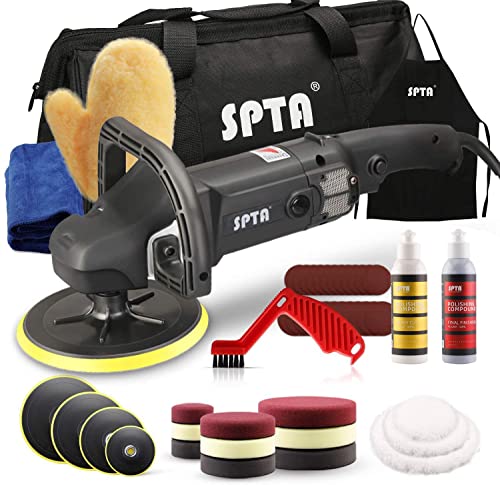
The SPTA 7 Inch 180mm Rotary Polisher gives you the broadest speed span among the full-size machines here, starting at 500 RPM and reaching 3000 RPM. That slower floor can help you spread compounds with greater control, while the 180mm format covers broad bonnet and boat surfaces efficiently.
A digital screen shows the selected setting, and the package includes both a side handle and a D-handle. Compared with AVID POWER’s accessory-heavy presentation, SPTA puts more emphasis on speed visibility and grip choice, though the 7-inch body can feel oversized on tight contours.
Highlights
- The 500-3000 RPM range gives you deliberate control at the low end.
- A digital speed display makes the selected setting easy to monitor.
- Ball-bearing construction is specified for long-term mechanical durability.
- Two handle styles let you adapt control to horizontal or vertical panels.
- The 1200W motor suits substantial correction and polishing workloads.
Minor Gripes
- Its 7-inch format is less nimble around mirrors, pillars, and narrow trim.
- Rotary operation rewards practiced pressure control rather than casual use.
Technical Sheet
Right Fit For
You’ll appreciate this machine most as an experienced detailer handling large vehicles and needing visible, low-speed control.
Not Your Match When
The SPTA Cordless Mini Polisher 12V is more suitable for small panels, trim, and portable spot correction.
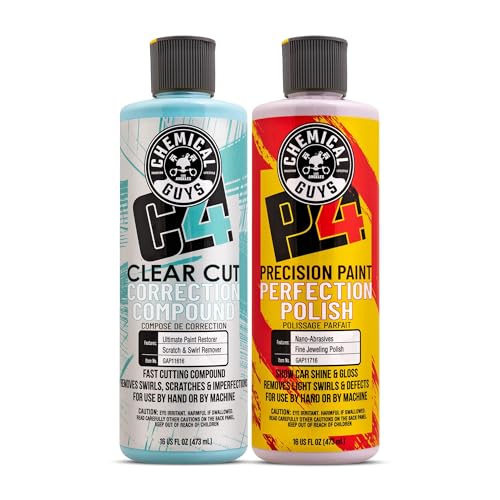
Machines create the motion, but the compound and polish determine how you organize the correction stage. Chemical Guys pairs a cutting compound, C4, with P4 precision polish, giving you a two-step sequence for scratches, swirls, towel marks, oxidation, and surface etching.
Each bottle holds 16 ounces, enough to support more than a single small panel in a typical garage workflow. The honest caveat is that this kit needs a compatible polisher and suitable pads, so it works best as a paint-correction companion rather than a standalone machine.
Upsides
- The two-formula sequence gives you a clear correction-to-refinement workflow.
- C4 targets heavier visible defects before the finishing stage.
- P4 is intended to refine clarity and gloss after compounding.
Points To Note
- You need a separate polisher, pads, and suitable surface preparation supplies.
- Two-step correction takes longer than applying a single finishing product.
- Storage should keep both bottles sealed and separate from dusty pads.
Quick Facts
Who Will Love This
You’ll benefit most as a detailer who already owns a polisher and wants a clearly separated compound-and-polish routine.
Look Elsewhere When
Choose the AVID POWER Car Rotary Buffer Polisher Waxer 1200W when you need the machine, backing plates, and pad accessories in one setup.
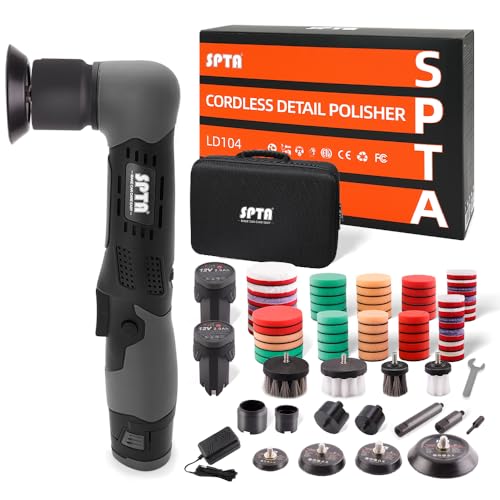
Small pads change the job completely. The SPTA Cordless Mini Polisher 12V is designed for emblems, body lines, narrow trim, and other areas where a 6-inch or 7-inch rotary tool cannot sit comfortably.
The RO/DA design combines random orbital movement with rotation, a motion that can feel more forgiving for light correction than direct rotary action. You get 25mm, 50mm, and 80mm backing-plate options plus polishing and wool pads, although its compact scale makes full-car correction a slower project.
Bright Spots
- Cordless operation makes tight-area detailing easier around a parked vehicle.
- Three backing-plate sizes cover very small details through modest spot areas.
- The RO/DA format suits controlled work on contours and trim.
- Polishing, wool, sanding, and cleaning accessories broaden its role.
- Its compact design stores more easily than the full-size rotary options.
Room For Improvement
- A mini format is not efficient for correcting an entire large vehicle.
- Battery charging and pad changes become part of the ownership routine.
- Small pads can concentrate work on a tiny area, so careful movement matters.
Feature Rundown
Best Suited To
You’ll find this tool most useful for detailers handling spot correction, emblems, body creases, and compact surfaces.
Swap It Out When
The GEVEELIFE Buffer Polisher 6 Inch/7 Inch suits you more for broad panels, boat work, and long corded correction sessions.
Driveway detailing becomes less awkward with the Niusken’s cordless random orbital layout and two included batteries. Random orbital movement means the pad both rotates and travels in a changing orbit, giving you a versatile approach for wax, cleaning, and general paint work without dragging a cord around the vehicle.
Six speed settings, an LED display, and 18 assorted pads give you a broad starting kit. You may find the battery platform convenient for occasional garage use, but the listing specifies that these batteries don’t work with DeWalt tools, so you’ll need to maintain this separate power system.
Plus Points
- Two 21V batteries reduce interruptions during a multi-panel session.
- Each battery is specified at 2000mAh, a measurement of stored electrical capacity.
- Six speed settings and an LED display support repeatable adjustments.
- The random orbital action suits beginners who want a less direct correction feel.
- Eighteen assorted pads cover polishing and detailing tasks from one kit.
Honest Caveats
- The dedicated battery system won’t integrate with DeWalt batteries.
- Charging, battery storage, and pad cleaning add regular ownership tasks.
Details At A Glance
Whose Shelf It Belongs On
This kit suits beginners and home detailers who value cord-free full-car access, simple speed monitoring, and a broad accessory bundle.
A Better Fit Elsewhere
The SPTA 7 Inch 180mm Rotary Polisher is better suited to experienced users seeking a 500 RPM starting point and large-panel corded correction.
How To Choose The Right Auto Polishers
Rotary Versus Random Orbital Motion
A rotary polisher spins its pad around one central axis. That direct movement transfers correction power efficiently, making rotary tools useful for oxidation, scratches, and large panels, but you need careful pressure and steady movement near edges.
A random orbital polisher combines rotation with an offset orbit. The changing path generally gives you a more forgiving format for waxing and light correction, particularly as a beginner working on a daily driver. The Niusken uses this layout, while the GEVEELIFE, AVID POWER, and SPTA 7 Inch are rotary choices.
Match Pad Size To The Panel
Six-inch and seven-inch pads cover broad doors, hoods, roofs, and boat sides with fewer passes. That larger footprint saves time across open panels, although it becomes awkward around mirrors, pillars, badges, and narrow trim.
The SPTA Cordless Mini Polisher addresses that gap with 25mm, 50mm, and 80mm backing plates. You’ll want a compact tool for spot work, while a full-size machine makes more sense for repeated whole-vehicle correction.
Speed, Power, And Control
Wattage describes electrical input, not a guaranteed finish, so treat motor output as one part of the decision. The GEVEELIFE reaches 1600W, AVID POWER and the SPTA 7 Inch use 1200W motors, and the listed speed ranges show how gently each machine can begin.
Lower RPM helps you spread product with control; higher RPM supports faster correction, but it also increases the need for deliberate pad movement. A visible display, such as the SPTA’s digital readout or Niusken’s LED screen, helps you repeat a setting across multiple panels.
Accessories And Ownership
A kit with plates, pads, sanding papers, or wool bonnets reduces setup work, but it also creates more items to clean and store. Keep pads separated by compound type, clean residue after each session, and store bottles upright.
Cordless tools improve movement around a driveway, while corded machines avoid battery rotation. For extended boat or fleet work, the GEVEELIFE’s higher stated motor output may suit you; for occasional home use, the Niusken offers a more portable routine.
Before You Choose Your Machine
Mistakes Worth Dodging
A common mistake is choosing pad diameter before considering the surfaces you’ll actually polish. Large pads cover hoods quickly but make tight trim frustrating, while a mini tool can turn full-car correction into a slow process.
You can also overvalue motor wattage and ignore speed control. Match the machine’s motion, starting RPM, handle design, and accessory set to your skill level and workspace.
Where The Extra Money Goes
Higher-tier machines and kits typically charge more for broader speed adjustment, better grip options, multiple pad sizes, larger accessory bundles, or cordless convenience. Those features matter most during repeated correction sessions, large vehicle work, or jobs that move between garage and driveway.
A focused compound-and-polish kit can also raise the total setup value by giving you a defined two-step process. Spending more makes sense when the added control or included equipment replaces separate purchases, not when your routine only involves occasional wax application.
Final Verdict
Your ideal choice depends on the surface area, correction style, and workspace you manage. Choose the GEVEELIFE or SPTA 7 Inch for large-panel rotary work, AVID POWER for a broad accessory setup, Chemical Guys for a structured two-stage finish, SPTA’s mini tool for tight details, and Niusken for cordless orbital convenience. A full-size machine suits a garage with room to work, while a compact or cordless option keeps occasional detailing easier to organize. Match the pad size and motion to your actual vehicle, then let control guide your decision.
