

Your results depend on more than paint and a spray gun. Clean masking lines, controlled surface abrasion, filtered material delivery, and a staged correction process all shape the finish you see in a garage or collision workspace. This shortlist covers core Auto Paint Supplies for DIY refinishing, detailing, restoration, and small-shop work. You’ll find consumables for preparation, protection, spraying, and correction, with each choice matched to a distinct task. The right combination can reduce rework, simplify cleanup, and help you keep a project moving through each stage.
The Shortlist At A Glance




More Details On Your Top Picks
General masking is where the KREFINISH tape makes the most sense. Its green crepe-paper format measures 0.7 inches wide, and the six-roll pack gives you a useful supply for separating panels, covering trim, or protecting adjacent areas during automotive paint work.
The stated 120°C heat-use range suits paint-booth work, while the flexible backing should conform more readily around ordinary edges than a stiff plastic strip. You may find it less suitable for highly detailed graphics, where the narrower Xuniea set gives you more control.
Strong Points
- Six rolls reduce interruptions during a multi-panel project.
- The 0.7-inch width covers common masking tasks without taking excessive surface area.
- The stated heat range supports booth-based paint processes.
- Flexible paper backing should tear and handle easily by hand.
Things To Consider
- Paper tape needs clean, dry storage because workshop moisture can affect its edge and adhesion.
- The wider format isn’t intended for very tight pinstriping or elaborate curved graphics.
Key Specs
Who It Suits Best
DIY refinishing projects and small collision-repair shops needing straightforward, heat-ready masking tape for standard paint separation.
Consider Something Else When
Choose Xuniea Fine Line Vinyl Tape for narrow curves, custom graphics, and pinstriping that demand several precise widths.
Custom graphics call for a different kind of masking, and Xuniea addresses that need with five widths from 1/16 to 3/4 inch. The vinyl construction is flexible and waterproof, which should help you form clean arcs across motorcycle tanks, vehicle panels, and other shaped surfaces.
Each roll measures 36 yards, so you can keep several line sizes ready without buying separate packs. The low-tack adhesive may be easier to remove from a cured surface, though careful surface preparation still matters for clean edges during spraying.
What We Like
- Five widths cover fine lines, broader stripes, and intermediate masking needs.
- Flexible vinyl follows curves more naturally than standard paper tape.
- Water resistance suits damp detailing areas and cleanup-prone workspaces.
Trade Offs
- Low tack can be less forgiving on dusty, textured, or poorly prepared surfaces.
- Narrow tape takes more time to position accurately on a large panel.
- Storage around sharp tools can nick the vinyl edges and affect line quality.
Feature Snapshot
Made For
DIY custom-paint projects, motorcycle graphics, and detail-oriented users who need narrow tape for curved lines.
Not Your Match When
KREFINISH Automotive Masking Tape suits you better for broad panel coverage, routine booth masking, and longer straight runs.
For repeated spray sessions, the 3M PPS 2.0 kit focuses on material control rather than surface preparation. The 22-ounce cup uses disposable liners, lids with built-in 200-micron filters, a reusable hard cup, sealing plugs, and mixing ratios molded into the cup.
A 200-micron filter strains particles before material reaches the gun, a useful detail for paint, primer, or coating applications. Compared with the simple masking tools above, this system costs more in consumables, but you may value the cleaner workflow during frequent color changes or shop production.
Highlights
- Integrated filtration helps screen material before spraying.
- The 22-ounce capacity fits many small- to medium-sized spray jobs.
- Disposable liners can reduce cleanup time between compatible materials.
- Printed mixing ratios help you prepare material directly in the cup.
- Sealing plugs support temporary storage of material between stages.
Room For Improvement
- Ongoing liner and lid replacement adds recurring ownership expense.
- Compatibility with your specific spray gun setup needs confirmation before purchase.
Technical Sheet
Right Fit For
Frequent spray users, restoration shops, and detail-focused DIYers who value filtration and reduced cleanup over the lowest consumable cost.
Look Elsewhere When
Chemical Guys C4 and P4 Kit fits you better when paint correction, rather than spray-gun preparation, is the main task.
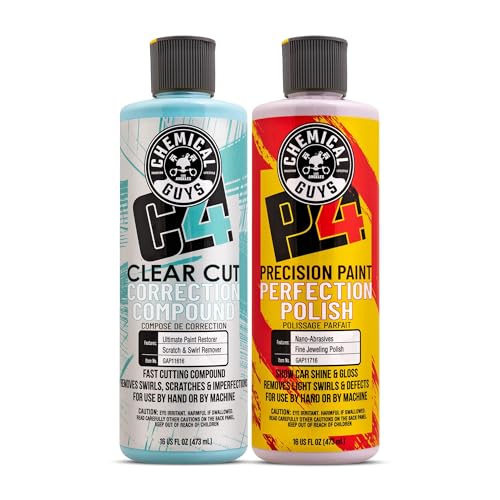
Paint correction works best as a sequence, and this two-bottle kit divides that sequence into cutting and refining stages. C4 compound addresses scratches, swirls, oxidation, towel marks, and etching, while P4 polish follows with a finer finish on clear-coat paint.
Each bottle contains 16 ounces, giving you a defined amount for panel work or recurring detailing. The honest caveat is that correction technique, pad choice, and paint condition still affect the result, so this option suits patient users more than anyone seeking a one-step process.
Upsides
- Two formulas give you a logical path from defect removal to gloss refinement.
- C4 targets several common surface defects encountered on older vehicles.
- P4 provides a dedicated finishing stage rather than asking one formula to do everything.
- Two 16-ounce bottles support more than a single small-panel session.
Points To Note
- A two-step process takes longer than applying one polish.
- Open bottles need clean, tightly closed storage to limit contamination and drying.
- Deep damage may require more advanced correction equipment or professional assessment.
Quick Facts
Who Will Love This
Detailers and careful DIY restorers handling visible swirls, towel marks, oxidation, or light surface defects across painted panels.
Swap It Out When
S SATC Maroon Scuff Pads suit you more for pre-paint surface abrasion and primer adhesion preparation.
Hand preparation remains useful around contours, edges, and areas that don’t suit a power sander. S SATC supplies ten maroon pads measuring 6 x 9 inches, with an abrasive surface intended for medium-to-heavy scuffing before paint or primer work.
The pad format gives you a broad handhold for doors, panels, and restoration parts, while the flexible material can follow modest surface changes. Depending on the coating, you may find the maroon abrasive more aggressive than needed for delicate finishing, so keep Chemical Guys C4 and P4 for correction after paint has cured.
Best Bits
- Ten pads provide useful replacement stock for multi-part projects.
- The 6 x 9-inch format gives your hand plenty of working surface.
- Abrasive particles and binders are designed for tear-resistant handling.
- Hand use gives you direct control around edges and irregular shapes.
Small Caveats
- Medium-to-heavy abrasion isn’t the right match for delicate final polishing.
- Dust and spent coating can load the abrasive surface, so regular pad changes help maintain consistent cutting.
At A Glance
Built With In Mind
DIY restoration users preparing metal, painted parts, or primer surfaces by hand in a garage or small workshop.
Reach For A Different Pick When
Tangibay Pre-Taped Masking Film suits you better for protecting broad vehicle areas during spraying rather than abrading them.
Large-area protection takes less handling when tape and sheeting arrive together. Tangibay combines 3/4-inch automotive masking tape with HDPE plastic film, supplied in two rolls measuring 22 inches by 66 feet.
That format suits doors, windows, furniture, walls, and sections of a vehicle that need coverage during spraying. The film is described as tear-resistant and rated for up to 244°F for half an hour, though careful draping and secure edges still matter in a busy workshop.
Bright Spots
- Integrated tape and film can shorten setup for broad protection jobs.
- Two 22 x 66-foot rolls provide substantial sheeting coverage.
- HDPE film is designed to resist tearing during draping.
- The 3/4-inch tape edge works for general boundaries around covered areas.
Areas To Watch
- Pre-taped film is less versatile than separate tape and plastic for irregular shapes.
- Rolls need protected storage to prevent crushed edges and film damage.
- Large sheets can be awkward to position alone around a full vehicle.
Core Details
Whose Shelf It Belongs On
DIY painters and small workshops covering broad vehicle or household surfaces before spray application.
Where A Sibling Pick Shines
KREFINISH Automotive Masking Tape fits you better for narrow, reusable roll-by-roll masking around individual panels and trim.
How To Choose The Right Auto Paint Supplies
Match The Tool To The Paint Stage
Preparation, spraying, correction, and protection require different materials. Scuff pads create a hand-worked abrasive surface for primer adhesion, masking tape separates paint zones, and pre-taped film shields large areas. Compound removes surface defects, while polish refines the finish after the heavier correction stage.
Garage restorers often need several categories rather than a single all-purpose item. A clean workflow usually moves from surface preparation to masking, spraying, and final correction.
Choose Tape By Edge And Coverage
Standard paper tape suits broad boundaries and routine panel masking. Fine-line vinyl tape works better for curves, narrow graphics, and pinstripes because the thin widths are easier to position around a design.
Pre-taped film trades some shape flexibility for faster coverage. You’ll appreciate that shortcut around windows, doors, walls, or furniture, while separate tape remains more adaptable for tight contours.
Read Capacity And Filtration Details
A spray cup’s capacity tells you how much material it holds, while a micron rating describes the size threshold of its filter. The 3M 26000 combines a 22-ounce cup with a 200-micron filter, making it more relevant to recurring spray work than occasional hand touch-ups.
Disposable liners simplify cleanup, but they also create an ongoing supply consideration. Confirm your spray-gun connection and material workflow before choosing a cup system.
Consider Handling And Storage
Large film rolls need room to unroll without dragging across dirty surfaces. Scuff pads should remain dry and clean, while tape belongs in protected storage so edges don’t crush or collect dust.
For correction liquids, keep containers closed between sessions. Your workspace, project size, and cleanup routine matter just as much as the headline feature.
Things Worth Knowing First
Wrong Turns To Avoid
Choosing tape by color alone can leave you with the wrong width or adhesive style. Match the tape to the edge, surface, and heat exposure, then reserve fine-line vinyl for graphics rather than broad masking.
Another common mistake is treating a scuff pad like a finishing abrasive. Maroon pads are aimed at medium-to-heavy surface work, so use a gentler process for delicate correction tasks.
Where The Extra Money Goes
Higher-tier supplies often add better workflow control rather than a dramatic change in appearance. Integrated filters, measured mixing references, disposable liners, and staged correction formulas reduce repeated handling during specialized jobs.
The upgrade makes more sense for frequent spray work or recurring detailing. Occasional garage projects may gain more from a well-sized tape, film, or pad pack.
Closing Remarks
Your best setup depends on the stage of work in front of you. KREFINISH handles routine masking, Xuniea gives curved graphics finer control, and Tangibay speeds large-area protection. S SATC supports hand preparation, while Chemical Guys covers two-stage correction and 3M serves recurring spray applications with filtration and liners. Start with the surface, coverage area, and workflow you actually use, then choose the supply that removes the most friction from that task.
