

You need the right polish for the defect in front of you, not a generic bottle that promises to handle everything. This shortlist covers glass-focused cleaning, fine finishing, aggressive paint correction, two-step polishing, protective coating, and compact machine work for tight areas. Daily commuters may prioritize water-shedding glass, while detail-focused home users may need a compound that addresses swirls or sanding marks before refining the finish. You’ll also find options for mirrors, tinted windows, body lines, emblems, and larger painted panels.
The Shortlist At A Glance

Chemical Guys V32 Optical Grade Extreme Cutting Compound 4 oz


More Details On Our Top Picks
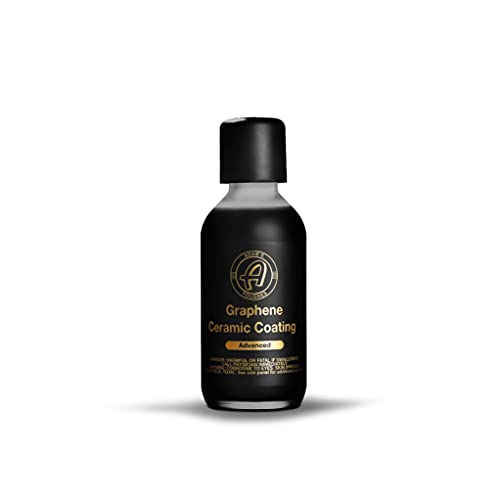
Paint protection takes a different route here. Instead of correcting scratches, this clear graphene ceramic coating is designed to sit over prepared paint, with a stated 10H hardness level and UV tracing technology intended to help you see coverage during application.
That approach suits a garage detailer protecting a freshly corrected vehicle from weather, chemical exposure, and surface deposits. You may find the preparation and application demand more patience than a routine glass cleaner, but the coating format makes sense for long-term exterior care rather than quick visual cleanup.
Strong Points
- 10H hardness gives you a clearly defined protection grade.
- Graphene ceramic construction targets paint, rather than serving as a glass polish.
- UV tracing technology can make coverage easier to monitor during application.
- The coating format fits vehicles that spend long periods outdoors.
- A clear finish avoids adding a visible tint to painted panels.
Things To Consider
- Surface preparation matters, so you need more time and cleaner working conditions than Item 5 requires.
- Coating maintenance and storage call for careful attention to the product instructions and bottle closure.
Key Specs
Made For
You gain the most from this coating as a detail-focused vehicle owner planning a long-term paint-protection project.
Consider Something Else When
Chemical Guys C4 & P4 Compound & Polish Kit suits you better when visible swirls and towel marks need correction before protection.
Deep scratches, sanding marks, and pronounced swirls call for a cutting compound rather than a light finishing polish. V32 uses optical-grade micro abrasives, meaning the abrasive material is refined for controlled paint correction while you work across older or heavily marked paint.
The 4-ounce format is practical for a targeted repair or occasional panel correction, though a full-size vehicle may require more product planning. Compared with Adam’s Polishes Advanced Graphene Ceramic Coating 10H, this is a correction stage, not a protective top layer, so you’ll need a separate finishing or protection step afterward.
What We Like
- Heavy-cut positioning gives you a clear role for serious paint defects.
- Optical-grade abrasives are aimed at efficient correction work.
- The small 4-ounce container suits isolated panels and spot repairs.
- Its compound format works naturally before a finer finishing polish.
Trade Offs
- Aggressive correction can require a careful follow-up polish to improve clarity.
- The compact quantity may feel limiting during a complete SUV correction.
- Residue management and pad cleaning become more important during repeated passes.
At A Glance
Right Fit For
You’ll appreciate this compound most for focused correction work on older paint or deep visible defects.
Not Your Match When
menzerna Super Finish Plus 3800 suits you more when your paint already looks clear and only micro marks or holograms need refining.
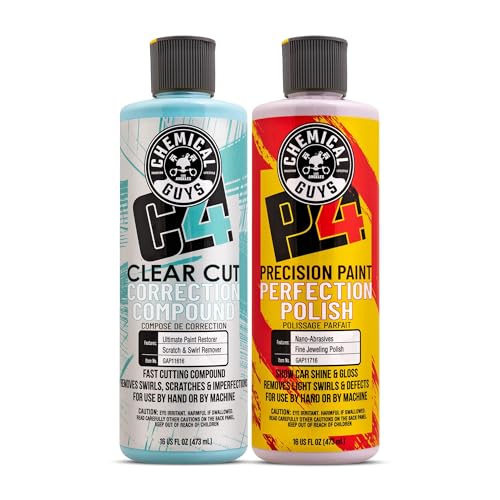
Paint correction feels more structured with two dedicated stages. C4 handles stronger defects such as scratches, oxidation, etching, and towel marks, while P4 follows with a finer polish that refines the surface and increases visible gloss.
You receive two 16-ounce bottles, so this kit makes more sense for a complete vehicle or several seasonal projects than the smaller V32 container. In most home garages, that separation also helps you avoid using a heavy compound where a finishing polish would have been enough.
Highlights
- Two-step design gives you a logical path from correction to refinement.
- Two 16-ounce bottles provide more working material for larger vehicles.
- C4 addresses multiple defect types before the finishing stage.
- P4 helps reduce the dull appearance that can follow heavier correction.
- The kit suits DIY users who want separate compound and polish roles.
Minor Gripes
- You need to switch products and clean or change pads between stages.
- Two-step correction takes longer than using a single finishing polish on lightly marked paint.
Feature Snapshot
Best Suited To
This kit fits you best as a DIY detailer correcting several panels and wanting a complete compound-to-polish sequence.
Where Another Pick Suits Better
Chemical Guys V32 suits you better for a smaller, more aggressive spot-correction job centered on deep defects.
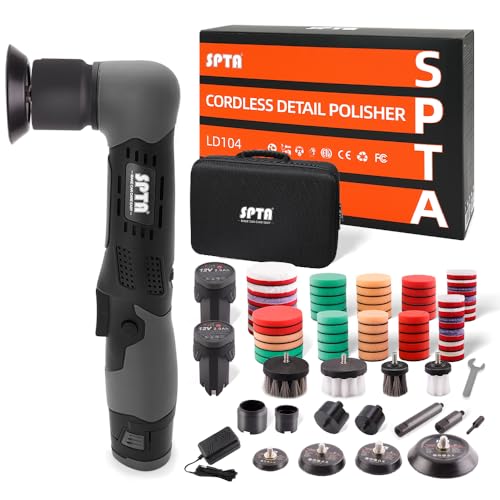
Large polishers can feel awkward around badges, narrow body lines, door handles, and curved trim. This cordless mini unit uses a 12V platform and multiple backing-plate sizes, giving you a more controlled tool for areas where a full-size machine wastes space.
The 25mm, 50mm, and 80mm plates cover progressively broader sections, while the included polishing and wool pads support different correction approaches. You may find the compact format slower on a whole hood, but it earns its place beside a larger machine for precision access and mobile detailing.
Upsides
- Cordless operation keeps you from routing a power cable around the vehicle.
- Three backing-plate sizes adapt the tool to tight and moderately broad areas.
- The small form suits emblems, trim edges, and narrow styling lines.
- Included foam-style polishing and wool pads give you a starting range of materials.
- The tool stores more easily than a full-size polisher in a compact detailing cabinet.
Room For Improvement
- The mini format is less efficient for large uninterrupted panels.
- Pad cleaning and organized storage matter because several small accessories can be easy to misplace.
- Battery availability and runtime may shape how comfortably you handle a multi-panel session.
Quick Facts
Who Will Love This
You’re a strong match for this polisher as a mobile detailer or home user focused on emblems, trim, body lines, and small correction areas.
Reach For A Different Pick When
Chemical Guys C4 & P4 Compound & Polish Kit fits you better when the main task is correcting broad painted panels with a two-stage liquid system.
For windshields, side glass, and mirrors, the 3D GLW Series takes the shortlist in a more literal direction. Its SiO2, or silicon dioxide, polymer formula is designed to clean glass while leaving a water-shedding surface for rain, moisture, and everyday road grime.
The 16-ounce size suits regular maintenance for a commuter vehicle, and the stated compatibility with tinted and non-tinted windows broadens its use around the cabin. The honest trade-off is scope: this cleaner targets glass care, not paint correction or long-term body-panel coating.
Bright Spots
- SiO2 polymers give the cleaner a protective glass-care angle beyond basic wiping.
- Compatibility with tinted and non-tinted windows simplifies product selection.
- You can use the formula on mirrors as well as vehicle windows.
- The 16-ounce bottle suits recurring windshield and side-glass maintenance.
Points To Note
- Glass must be cleaned thoroughly before application so residue does not interfere with clarity.
- It does not replace a paint compound, polish, or coating.
- Cloth choice and wipe-off technique can affect streak control during routine care.
Core Details
Whose Shelf It Belongs On
This cleaner suits you best as a daily commuter who wants clearer glass care and water-shedding performance for windows and mirrors.
Swap It Out When
Adam’s Polishes Advanced Graphene Ceramic Coating 10H serves you better when your priority is protecting painted body panels rather than maintaining glass.
Fine paint finishing is where this 8-fluid-ounce polish earns attention. It targets micro scratches and holograms, which are fine, patterned marks that can remain after heavier correction, then focuses on a deep-gloss appearance across cars and SUVs.
Silicone-free chemistry may appeal to detailers who want a clean finishing step before applying a separate sealant. You may find it especially useful on dark paint, where light haze and pad marks show readily, although it won’t replace V32 or C4 for deeper defects.
Best Bits
- Finishing-focused formula targets fine marks rather than heavy paint removal.
- Hologram correction supports a cleaner appearance on dark-colored vehicles.
- Silicone-free composition fits workflows that place a separate sealant afterward.
- The 8-fluid-ounce bottle is manageable for occasional finishing work.
- Compatibility with cars and SUVs gives you broad vehicle coverage.
- Fine polishing helps you refine paint after a stronger compound stage.
Small Caveats
- The smaller bottle may be less practical for frequent multi-vehicle detailing.
- Paint with deep scratches still needs a stronger correction compound first.
Details At A Glance
Built With In Mind
You’ll find the strongest fit here as a detailer refining dark cars or SUVs after a heavier correction step.
A Better Fit Elsewhere
Chemical Guys V32 suits you more for pronounced scratches and sanding marks that need an aggressive first correction stage.
How To Choose The Right Auto Glass Polishes
Match The Formula To The Surface
Start by separating glass care from paint correction. A SiO2 glass cleaner such as 3D GLW Series is intended for windows and mirrors, while V32, C4, P4, and menzerna Super Finish Plus 3800 belong to painted-surface correction. Using a paint compound on glass, or expecting a glass cleaner to level paint defects, creates the wrong workflow from the start.
Tinted windows deserve particular attention. A formula that specifically lists tinted and non-tinted glass gives you clearer compatibility guidance than a general exterior cleaner, especially for a family vehicle with factory or aftermarket tint.
Choose Cut Level With Care
Cut describes how strongly an abrasive removes surface material. Heavy-cut options such as Chemical Guys V32 make sense for deep scratches, sanding marks, and pronounced swirls, but they generally need a finer follow-up stage to restore clarity.
Light finishing products work better for micro scratches, holograms, and haze. menzerna Super Finish Plus 3800 fits that role, while the C4 and P4 kit gives you both correction and refinement in one coordinated package. For most home garages, matching the cut level to the defect prevents unnecessary passes.
Think About Your Work Area
A full-size panel rewards a systematic liquid-polish workflow, especially with the two 16-ounce bottles in the C4 and P4 kit. Tight trim, badges, and body creases call for a small backing plate, making the SPTA cordless mini polisher easier to position in confined areas.
Your workspace also affects the choice. Coatings demand cleaner preparation and more controlled application, while a glass cleaner fits a quick driveway maintenance routine. Long-term protection is useful for vehicles parked outside, but convenience matters more for a car washed frequently in a covered garage.
Plan The Full Process
Correction and protection are separate jobs. A compound removes or reduces defects, a finishing polish improves clarity, and a coating or sealant provides the later protective layer. Adam’s Polishes Advanced Graphene Ceramic Coating 10H fits after paint preparation, not before it.
Pad selection, residue removal, and storage also affect the experience. Keep pads clean, close liquid containers securely, and reserve aggressive compounds for areas that actually need them. That approach helps you avoid spending time correcting marks created by an overly forceful first step.
Things Worth Knowing First
Mistakes Worth Dodging
A common mistake is choosing a heavy compound for light haze. Start with the least aggressive option that matches the defect, then move upward only when the surface needs more correction. Glass and paint also require different formulas, so keep the intended surface in view before opening the bottle.
Another misstep is buying a small container for a complete SUV correction. The 4-ounce V32 bottle fits targeted work, while the two 16-ounce bottles in the C4 and P4 kit make more sense for broad coverage.
What Separates Premium From Basic
Higher-tier detailing options often add specialized abrasives, staged formulas, larger quantities, or application aids. The added cost makes more sense for dark paint, repeated correction work, outdoor storage, or a finish where small holograms remain visible.
Routine commuters may gain more from 3D GLW Series than from a full paint-correction system. Detailers managing several vehicles may value the dedicated stages in C4 and P4, or the focused finishing behavior of menzerna Super Finish Plus 3800.
The Takeaway
Your best choice depends on the surface and the defect, not the label alone. Choose 3D GLW Series for glass, V32 for heavier correction, menzerna for fine finishing, or C4 and P4 for a complete two-step paint process. The SPTA mini polisher adds control around tight exterior details, while Adam’s coating belongs in a carefully prepared protection routine. Start with your vehicle’s actual condition, match the formula to the work, and keep the process as focused as the finish you want.
