

Rust repairs can range from small pinholes to deep rust-outs around wheel arches, rocker panels, and floor sections. You need a filler that matches the repair depth, substrate, sanding plan, and final finish rather than a generic putty that only hides surface damage. These five options cover fiberglass-reinforced filling, aluminum-filled restoration work, lightweight sanding, multi-surface repairs, and larger panel finishing. Your best match depends on whether you value structural reinforcement, easy shaping, broad material compatibility, or a smoother path to primer.
The Shortlist At A Glance

Duraglas Fiberglass Filled Filler 1 Gallon

U. S. Chemical & Plastics All-Metal 1-Quart

Evercoat Z-Grip Lightweight Body Filler 128 Fl Oz

J-B Weld Body Filler Quart Automotive & Home
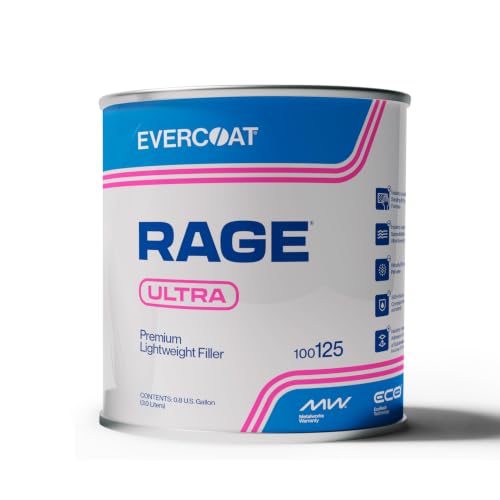
Evercoat Rage Ultra Sanding Body Filler 128 Fl Oz
More Details On Our Top Picks
Deep rust-outs need more than a thin skim of finishing putty, and Duraglas approaches that problem with short fiberglass strands mixed through the filler. Fiberglass reinforcement adds a more substantial internal structure, making this gallon-size container a sensible match for extensive metal repairs or fiberglass panel damage.
You can also pair it with fiberglass cloth for larger openings, although the reinforced texture usually means more shaping before the surface is ready for primer. The supplied cream hardener uses a 2% by-weight mix, or a 50:1 ratio, so careful measuring matters during garage repairs. You may find the blue-green material easy to distinguish from the panel, which helps you track coverage during a layered repair.
Strong Points
- Short fiberglass strands give deep rust repairs more internal reinforcement than conventional smooth filler.
- The gallon quantity suits restorers handling multiple panels rather than a single small blemish.
- Compatibility with metal and fiberglass supports mixed-material bodywork.
- Pairing with fiberglass cloth extends its usefulness across larger holes and damaged sections.
- The contrasting blue-green color can make coverage easier to follow during shaping.
Things To Consider
- Fiberglass strands can make sanding and feathering more laborious than with Evercoat Z-Grip.
- The 50:1 mix requires a scale or disciplined measuring for repeatable batches.
- A large container takes more storage space and makes less sense for occasional spot repairs.
Key Specs
Who It Suits Best
Choose this for larger rust-out repairs, fiberglass panel work, and restoration projects where reinforcement matters more than quick hand-sanding.
Where Another Pick Suits Better
Evercoat Rage Ultra suits you better for broad cosmetic panel leveling where controlled, non-sag application and easier sanding take priority.
Classic-car restoration calls for a filler that behaves more like a metal repair compound than a soft skim coat. All-Metal uses aluminum within its compound, giving you a dense option for leveling metal, covering spot welds, and mending rust damage on steel or other suitable surfaces.
The material can be drilled and tapped after curing, which gives restoration work more flexibility around hardware and attachment points. Its one-quart size is easier to store than Duraglas’s gallon, though it offers less reinforcement for a large open rust-out. You may appreciate its lead-like working character during careful shaping, but the denser composition can demand more effort than a lightweight filler.
What We Like
- Aluminum-filled construction suits metal leveling and restoration-focused repairs.
- Drillable and tappable cured material can accommodate certain hardware-related repairs.
- Adhesion to metal and wood broadens its use beyond vehicle panels.
Worth Noting
- The one-quart container may run short during extensive multi-panel restoration work.
- Its dense, metal-like character can require more shaping effort than lightweight Evercoat Z-Grip.
- Careful surface preparation and cleanup remain important because cured material is difficult to remove.
- This option is more specialized than J-B Weld Body Filler for mixed home and vehicle projects.
At A Glance
Made For
Restoration hobbyists and experienced DIY fabricators gain the most from its aluminum-filled composition and drillable cured surface.
Consider Something Else When
J-B Weld Body Filler suits you more for smaller mixed-material repairs around a vehicle, workshop, or household where broad compatibility matters most.
For everyday panel shaping, the main advantage of Evercoat Z-Grip is its lightweight formulation rather than deep structural reinforcement. Hattonite, a friction-reducing additive, is designed to limit heat buildup during sanding and supports shaping with 80-grit paper.
That sanding profile makes it a practical choice for aluminum, galvanized steel, fiberglass, and standard steel bodywork. Compared with the denser All-Metal compound, Z-Grip should feel more approachable across broad surface correction, though it isn’t the first choice for a large unsupported opening. In a busy home garage, reduced sandpaper loading can help keep the work area cleaner and the finishing process moving.
Highlights
- Lightweight composition makes broad contour work less tiring to shape.
- Hattonite addresses heat and friction during sanding with 80-grit paper.
- Suitability for steel, aluminum, galvanized steel, and fiberglass supports varied panel repairs.
- The 128-fluid-ounce size fits repeated vehicle projects and larger refinishing sessions.
Trade Offs
- Its lightweight focus doesn’t provide the fiberglass reinforcement found in Duraglas.
- Large rust-outs still need an appropriate backing or reinforcement strategy before filler application.
Feature Snapshot
Right Fit For
DIY restorers and home-garage users handling broad panel correction across steel, aluminum, galvanized steel, or fiberglass benefit most.
A Better Fit Elsewhere
Duraglas Fiberglass Filled Filler suits you more for deep holes and rust-outs that need short-strand reinforcement rather than lightweight sanding.
J-B Weld Body Filler keeps the process familiar for garage projects: combine its two components, apply the mixture, then shape the cured repair. The formula is intended for cracks and rust-outs across metal, wood, fiberglass, and SMC, a molded composite material used on some vehicle panels.
Its stated 30-minute drying time can suit a short repair session, although your full project still includes preparation, sanding, primer, and paint. Compared with Evercoat Z-Grip, this option places more emphasis on cross-material convenience than sanding refinement. You may find that breadth useful for a household workshop, but dedicated restoration work benefits from a filler matched more closely to the panel and repair depth.
Upsides
- Two-component format supports a defined repair mixture for automotive and household use.
- Works across metal, wood, fiberglass, and SMC, reducing the need for separate compounds.
- Sandable and paintable surface supports the normal body-repair finishing sequence.
Room For Improvement
- The broad material range doesn’t replace fiberglass reinforcement for large open rust damage.
- A 30-minute drying claim describes drying, not the entire preparation-to-paint process.
- Two-component products require clean mixing tools and prompt cleanup after application.
Quick Facts
Who Will Love This
DIY users who repair vehicle panels and household surfaces in the same workshop gain the most from its broad material compatibility.
Not Your Match When
Evercoat Z-Grip suits you better for extensive sanding across aluminum or galvanized steel panels where low-friction shaping is the priority.
Large panel refinishing rewards a filler that stays where you place it and transitions cleanly into the surrounding surface. Evercoat Rage Ultra uses EcoResin technology and a non-sag formulation, giving you a controlled option for steel, aluminum, fiberglass, and other supported substrates.
The filler is designed around sanding with 80-grit paper, while its filling ability can reduce the need for a separate finishing putty in suitable repairs. Compared with Duraglas, Rage Ultra favors surface refinement over embedded fiberglass strands, so it fits shaped panel work better than open rust holes. Depending on the contour and repair depth, you may still need staged application rather than one heavy pass.
Bright Spots
- EcoResin technology targets easier, more controlled sanding.
- Non-sag behavior helps maintain placement on vertical body panels.
- Strong filling properties can streamline the transition toward primer.
- Compatibility with steel, aluminum, and fiberglass supports varied automotive refinishing.
- The 128-fluid-ounce quantity fits repeated panel work and larger projects.
Small Caveats
- Its surface-finishing role doesn’t provide the deep-repair reinforcement of Duraglas.
- Large container volume needs sealed, organized storage between projects.
- Although the filler is intended for 80-grit sanding, final surface preparation still takes multiple stages.
Feature Rundown
Whose Shelf It Belongs On
Refinishers working across broad vertical panels and mixed automotive substrates benefit most from its non-sag, sanding-oriented design.
Reach For A Different Pick When
U. S. Chemical & Plastics All-Metal suits you better for classic-car restoration involving metal leveling, spot weld coverage, or drillable repairs.
How To Choose The Right Auto Body Fillers For Rust
Match Reinforcement To Damage Depth
Surface pinholes and shallow sanding marks need a different compound from a perforated rocker panel. Fiberglass-filled material, such as Duraglas, adds short strands through the filler and suits deeper voids or repairs supported with fiberglass cloth. Smooth lightweight filler works better as a shaping layer over properly prepared metal, not as a substitute for missing panel structure.
Your repair plan should start with the damaged area, not the container size. A large rust-out may require cutting away compromised metal and adding suitable backing before filler enters the process.
Compare The Panel Material
Steel is common, but aluminum, galvanized steel, fiberglass, and SMC each change the adhesion requirements. Evercoat Z-Grip specifically lists several of these surfaces, while All-Metal brings an aluminum-filled approach suited to metal restoration. J-B Weld Body Filler covers metal, wood, fiberglass, and SMC, making it useful for mixed workshop jobs.
Surface preparation remains decisive. Remove loose corrosion, clean the panel thoroughly, and follow the product’s preparation instructions before mixing any compound.
Plan Around Sanding And Shape Control
Sanding is where filler selection becomes obvious during a long repair session. Hattonite in Z-Grip is intended to reduce heat and friction, while Rage Ultra focuses on EcoResin technology, 80-grit sanding, and resistance to sagging on vertical panels.
A non-sag formula helps on doors, quarter panels, and other upright areas. Lightweight material can reduce effort across broad contours, but reinforced filler may be the more appropriate choice beneath a thick repair.
Consider Quantity And Workshop Habits
A gallon container makes sense for repeated restoration work, while a quart is easier to store for occasional repairs. Two-component systems need clean mixing surfaces and prompt tool cleanup, since cured residue becomes harder to remove.
Your skill level matters too. Beginners usually benefit from predictable shaping and a clear sanding path, while experienced restorers may value aluminum-filled material, drillable repairs, or fiberglass reinforcement over convenience.
Things Worth Knowing First
Mistakes Worth Dodging
A common mistake is treating every rust spot as a cosmetic dip that filler can cover. Deep corrosion, open holes, and weakened edges need proper panel repair or reinforcement before you shape a smooth surface over them.
Another error is choosing by volume alone. A gallon of reinforced filler may be excessive for one small patch, while a quart of metal-focused compound may not suit a broad body restoration. Match the material, repair depth, and sanding demands before opening the container.
Where The Extra Money Goes
Higher-tier body fillers often put more attention into resin behavior, sanding control, adhesion across difficult substrates, or reduced sag on vertical panels. Those attributes can matter during long quarter-panel repairs, aluminum work, and projects where surface preparation takes more time than the initial application.
A more specialized compound makes sense for repeated restoration work or a visible panel that needs careful contouring. For a small household repair, J-B Weld Body Filler’s broad surface range may offer more practical value than a formulation built primarily for professional-style refinishing.
Final Verdict
Your repair depth should decide the filler first. Duraglas suits deep rust-outs that need fiberglass reinforcement, All-Metal fits metal restoration, Z-Grip favors broad low-friction sanding, J-B Weld covers mixed workshop surfaces, and Rage Ultra brings controlled non-sag shaping to larger panels. You gain the cleanest result by matching the compound to the substrate and preparing the damaged area thoroughly. For most DIY panel projects, the right filler is the one that reduces rework without pretending to replace sound metal.
