

Welding spatter can cling to torch nozzles, contact tips, fixtures, and nearby work surfaces, adding cleanup between passes and slowing a busy fabrication session. You need the right format for your work: a dip gel gives controlled nozzle coverage, while an aerosol spreads across larger areas and general-purpose lubricants serve corrosion-prone equipment. This shortlist covers MIG-focused gels, multi-process sprays, and corrosion-control formulas for home workshops, repair bays, and industrial environments. You’ll also find practical trade-offs around residue, application, storage, and compatibility before choosing a can or tub.
The Shortlist At A Glance
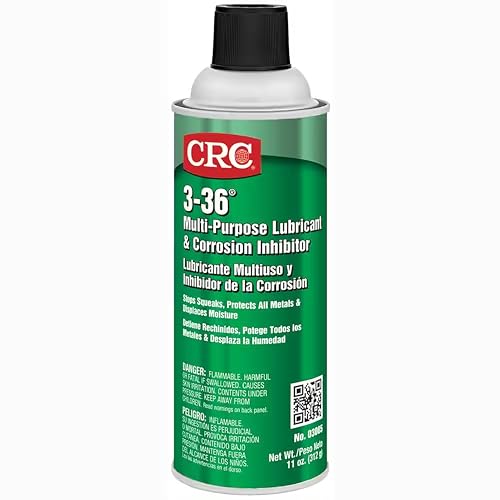
CRC 3-36 Multi-Purpose Lubricant

ACF-50 Anti-Corrosion Lubricant Compound

YESWELDER MIG Welding Nozzle Gel

Akfix A90 Anti Spatter Welding Spray

Anti Spatter Welding Nozzle Gel
More Details On Our Top Picks
Metal parts around a welding bench often need more than spatter control. CRC 3-36 combines lubrication with water displacement, light cleaning, rust loosening, and corrosion inhibition, so you can address squeaks or damp hardware without reaching for several separate formulas.
The petroleum-based, non-drying film suits hinges, tools, fixtures, and metal mechanisms that sit in a humid garage. You may find the oily residue less convenient around surfaces that need to stay clean before welding, but that same film benefits stored equipment and moving parts. Compared with the dedicated nozzle gels below, this is a broader maintenance option rather than a torch-specific consumable.
Strong Points
- Five functions in one formula reduce the number of maintenance products needed in a workshop.
- Water displacement helps address moisture around metal tools and equipment before corrosion takes hold.
- The 11-ounce aerosol format is practical for spot treatment on hinges, fasteners, and small mechanisms.
- Fast action on squeaks suits routine maintenance between fabrication jobs.
- CRC’s industrial and household equipment focus gives you broad application flexibility.
Things To Consider
- The oily, non-drying coating can attract dust and requires wiping during cleanup.
- Its general-purpose design doesn’t provide the controlled dip coverage available from YESWELDER MIG Welding Nozzle Gel.
Key Specs
Who It Suits Best
You’ll get the most value from this option in a home workshop or repair area where metal protection and general lubrication matter as much as welding cleanup.
Where Another Pick Suits Better
Choose YESWELDER MIG Welding Nozzle Gel instead for dedicated MIG torch-tip care and a cleaner dip-based application.
Electrical equipment changes the decision. ACF-50 is formulated for corrosion control on electronics and electrical components, including radios, computers, connectors, switches, wiring, alternators, starters, and battery terminals.
That broad component list makes it relevant to aircraft-style equipment, marine electronics, vehicle electrical systems, and workshop instruments. The 13-ounce aerosol gives you useful coverage, although careful application and surface preparation still matter around delicate assemblies. Compared with CRC 3-36, ACF-50 has a more specialized electrical-maintenance role and less emphasis on general penetrating lubrication.
What We Like
- Its electrical and electronics compatibility supports maintenance on connectors, terminals, switches, and test equipment.
- The compound targets corrosion already in progress, which suits restoration work on older equipment.
- Non-flammable and virtually non-toxic properties may make workshop handling more comfortable than harsher solvent choices.
- The aerosol format helps you reach wiring junctions and compact components without opening a tub.
Worth Noting
- It isn’t a dedicated welding-nozzle dip, so frequent MIG work benefits more from a gel such as the jhtii Anti Spatter Welding Nozzle Gel.
- Small electrical parts still need controlled application, drying time, and clean storage after use.
- The required ground shipment can affect delivery planning for workshop restocking.
Feature Snapshot
Made For
You’re best matched with ACF-50 for corrosion-sensitive electronics, vehicle electrical assemblies, radios, instruments, or connectors in damp service conditions.
Consider Something Else When
Akfix A90 Anti Spatter Welding Spray suits you better for regular Arc, MIG, and TIG nozzle protection across a welding station.
A dip gel makes sense beside a MIG machine because you can place the nozzle or contact tip directly into the container instead of spraying a wide area. YESWELDER positions this 16-ounce formula for manual and automatic MIG equipment, giving you targeted coverage during repeated weld cycles.
Silicone-free means the formula avoids silicone as an ingredient, a useful distinction for shops managing surface contamination concerns. The odorless, non-flammable, non-toxic formula also keeps the application format straightforward, though a tub needs a stable, clean place near the torch. Compared with CRC 3-36, this choice is narrower in purpose but more precise for daily MIG maintenance.
Highlights
- Dip application puts the coating where you need it, with less overspray around the bench.
- The 16-ounce size suits repeated nozzle and contact-tip care during regular fabrication.
- Manual and automatic MIG compatibility supports both hand-held torches and production setups.
- Silicone-free composition fits shops that prefer to avoid silicone-based nozzle products.
- Odorless and non-flammable characteristics make the tub convenient for an organized welding station.
Trade Offs
- A dip container is less convenient than an aerosol for coating fixtures or broad work-surface areas.
- Gel storage requires a secure lid and regular attention to accumulated debris around the opening.
Quick Facts
Right Fit For
You’ll appreciate this gel most during frequent MIG work where controlled nozzle and contact-tip coverage matters more than general-purpose spraying.
Not Your Match When
CRC 3-36 Multi-Purpose Lubricant fits you better for mixed workshop maintenance involving hinges, metal parts, moisture, and corrosion.
Two 12-ounce cans give you a spray-based setup for a busy welding bay rather than a small touch-up container. Akfix A90 uses a heavy-duty solvent-based anti-spatter formula, and its stated Arc, MIG, and TIG coverage makes it the broadest process match in this list.
Spray application works well for quickly preparing torch tips and nearby fixtures before a long run, especially in a shared shop where several welding methods are in use. You may prefer the cleaner control of YESWELDER’s gel for a compact bench, while Akfix makes more sense for wide, repeated aerosol coverage. The non-flammable specification adds a useful handling attribute, but ventilation and label directions still belong in your routine.
Upsides
- The two-can package keeps a spare available for a workshop with steady consumption.
- Arc, MIG, and TIG compatibility reduces the need to stock separate process-specific sprays.
- Solvent-based composition is designed for heavy-duty spatter protection during demanding shop work.
- Aerosol delivery makes quick pre-weld application easier across tips, fixtures, and surrounding work areas.
Minor Gripes
- Spray coverage can reach nearby surfaces, so masking and wipe-downs may be needed around finished parts.
- The two-can pack takes more storage space than a single gel tub.
- Solvent-based handling may feel less suitable for a small, enclosed workspace than a contained dip product.
At A Glance
Whose Shelf It Belongs On
You’re well matched with Akfix A90 for a multi-process shop, production bench, or hobby workspace that uses aerosol application often.
Another Choice May Suit
YESWELDER MIG Welding Nozzle Gel suits you more for precise dip coverage on a dedicated MIG torch.
For daily MIG work, a nozzle gel keeps the treatment close to the torch instead of spreading an aerosol cloud across the bench. The jhtii formula is silicone-free, non-flammable, and fume-free, with all-position use described for both handheld and robotic welding equipment.
That combination suits an auto shop technician or fabrication worker who repeatedly clears spatter from a nozzle during a shift. Compared with the YESWELDER gel, this option emphasizes all-position use and robotic compatibility, while the available source information doesn’t provide a container volume. The honest trade-off is simple: you gain focused application, but you must keep the tub clean and accessible.
Bright Spots
- Silicone-free gel application keeps treatment focused on the MIG nozzle rather than the wider work area.
- All-position use supports torch handling across varied weld angles.
- Handheld and robotic compatibility gives you flexibility from a personal bench to production equipment.
- Non-flammable, fume-free characteristics suit routine use in an organized fabrication space.
Points To Note
- The product information doesn’t state a container size, making consumption planning less precise.
- A tub needs a clean lid and protected storage because metal debris can collect around exposed gel.
Core Details
Built With In Mind
You’ll find the strongest fit here in daily MIG fabrication, auto-shop repair, and robotic welding environments where nozzle upkeep is routine.
Swap It Out When
Akfix A90 Anti Spatter Welding Spray is a better fit for you across Arc, MIG, and TIG work or for broader aerosol coverage.
How To Choose the Right Anti-Spatter Sprays
Match the Format to Your Torch
Aerosol sprays spread a thin coating quickly across torch tips, fixtures, and nearby surfaces. That speed helps during a long welding session, but overspray can create extra wiping around parts that need a clean finish. Akfix A90 suits Arc, MIG, and TIG work, while a gel such as YESWELDER or jhtii gives you a more controlled dip for MIG nozzles and contact tips.
Dip gel is a consumable applied by placing the hot-work accessory into the container. The format keeps product close to the torch and limits airborne spread, which makes it practical for a compact home bench. You’ll need covered storage and a clean application area because workshop dust and metal particles can collect in an open tub.
Check Process and Material Compatibility
MIG, TIG, and Arc equipment place different demands on nozzle access and spatter control. A multi-process spray gives you broader coverage, while MIG-specific gel narrows the use case but can make torch maintenance more targeted. Silicone-free formulas matter for shops that avoid silicone around weld preparation and finishing work.
Read the listed compatibility rather than assuming every formula suits every component. ACF-50 belongs to a different category entirely, with emphasis on corrosion control for electronics and electrical assemblies rather than direct nozzle dipping.
Consider Residue and Workshop Cleanup
A coating only helps your workflow when the residue fits the job. CRC 3-36 leaves a non-drying petroleum-based film that supports corrosion protection and lubrication, but you’ll likely need wiping before welding or finishing. Solvent-based Akfix A90 offers heavy-duty spray coverage, yet a smaller enclosed workspace may favor a contained gel.
Storage also affects convenience. Aerosol cans need a dry, organized shelf, while gels need a lid and a protected spot near the welder. Daily fabrication favors easy reach, and occasional repair work may justify a multi-purpose can instead of a dedicated nozzle product.
Things Worth Knowing First
Mistakes Worth Dodging
Choosing a general lubricant for direct MIG nozzle care can leave you with the wrong application method and unwanted residue. Match the item to the task first, then compare container format, process compatibility, and formula attributes.
Ignoring storage can also reduce convenience. Keep aerosol cans away from clutter and close gel containers after use so dust and metal particles don’t build up around the treatment surface.
Where the Extra Money Goes
Higher-tier options often charge more for broader process coverage, larger packages, specialized electrical compatibility, or a formula designed for repeated shop use. Akfix A90’s two-can package and Arc, MIG, and TIG range serve a different workload from a small single-purpose gel.
Paying more makes sense for frequent fabrication, multiple welders, or equipment exposed to moisture and corrosion. Occasional home use may favor a focused gel or CRC 3-36, depending on whether nozzle care or general metal maintenance matters more.
Final Verdict
You can narrow the shortlist quickly by matching the application to your welding routine. Choose YESWELDER or jhtii for focused MIG nozzle care, Akfix A90 for multi-process aerosol coverage, CRC 3-36 for broader metal maintenance, and ACF-50 for corrosion-prone electrical equipment. A gel keeps treatment controlled, while a spray handles wider coverage with less setup. Pay attention to residue, storage, and compatibility before you commit, and you’ll have a cleaner, more predictable maintenance routine at the welding bench.
