

Metal corrosion rarely starts at a convenient time. It shows up on battery terminals, trailer hardware, garden equipment, vehicle underbodies, and tools stored through damp seasons. The right coating depends on whether you need a thin lubricant, a thick moisture barrier, a paintable rust converter, or a rubberized underbody finish. This shortlist gives you options for daily automotive care, marine exposure, workshop maintenance, and targeted rust repair. You’ll also see where each formula fits, where it falls short, and which alternative makes more sense for a different job.
The Shortlist At A Glance
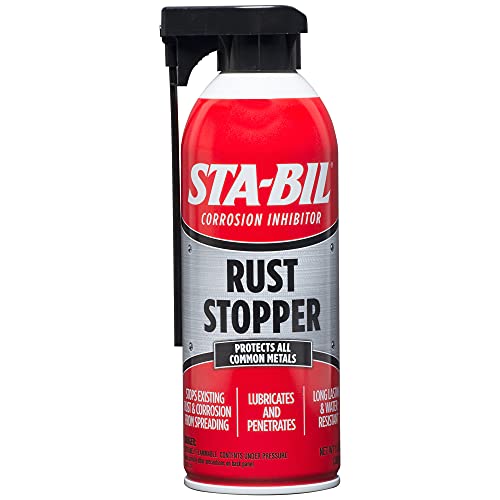
STA-BIL Rust Stopper Anti-Corrosion Spray 13 Oz

CorrosionX Heavy Duty Anti Rust Spray 12oz Aerosol

CorrosionX Rust Inhibitor 16oz Trigger Spray

Rust-Oleum 7830730 Stops Rust Rust Reformer 8 oz Black

Rust-Oleum Stops Rust 2-in-1 Rust Reform & Seal Coating Spray Black

B’Laster Surface Shield Lanolin Undercoating Spray Pack of 6
More Details On Our Top Picks
Garage maintenance becomes easier with a spray that handles both exposed metal and small electrical connection areas. STA-BIL Rust Stopper leaves a water-resistant protective film, so it suits battery terminals, painted metal, hinges, and hardware on cars, bikes, boats, and RVs.
Its quick-contact action also targets existing corrosion, although heavily scaled rust still calls for surface preparation rather than a casual spray pass. For most household garages, the 13-fluid-ounce format offers a practical middle ground between a pinpoint treatment and a thick undercoating.
Strong Points
- Protective inhibitors cover exposed or painted metal without requiring a dedicated paint finish.
- The water-resistant film helps reduce squeaking, sticking, and moisture-related wear on moving hardware.
- Battery-terminal use gives you a focused option for seasonal vehicle maintenance.
- The formula suits several equipment types, from bicycles to recreational vehicles.
Things To Consider
- The lubricant-like coating may attract dust on grimy workshop parts, so cleaning before application remains worthwhile.
- Its general-purpose format is less specialized than a thick barrier designed for constant saltwater exposure.
Key Specs
Who It Suits Best
Choose it for routine car, bicycle, RV, and battery-terminal upkeep across normal outdoor conditions.
Consider Something Else When
CorrosionX Heavy Duty Anti Rust Spray suits marine operators and farm equipment owners needing a thicker barrier for severe exposure.
Saltwater docks, boat trailers, agricultural gates, and outdoor machinery demand more than a light lubricant film. CorrosionX Heavy Duty uses a clingy, self-healing barrier, meaning the coating can continue covering small disturbed areas instead of drying into a brittle layer.
That distinction matters around vibration, rain, and routine washing. You may find the dense texture better suited to large terminals, grounding lugs, and structural hardware than to delicate mechanisms where a thin spray feels cleaner.
What We Like
- The barrier is designed to remain flexible rather than flake or crack as equipment moves.
- Water, seawater, and pressure-washing exposure are directly addressed in the feature set.
- Indoor protection is specified for up to 5 years, with outdoor protection listed for up to 2 years.
- The non-conductive formula fits larger electrical connection points such as battery posts and grounding lugs.
- Aerosol delivery helps reach awkward areas on trailers and machinery.
Trade Offs
- A thick coating can make cleanup more involved around dusty work areas and moving joints.
- The 12-ounce aerosol format offers less application control than a trigger sprayer for broad, delicate surfaces.
- Careful masking is sensible near surfaces that you want to keep residue-free.
At A Glance
Made For
It fits boat owners, agricultural operators, and industrial maintenance teams working around salt, rain, and vibration.
Not Your Match When
Rust-Oleum 7830730 Stops Rust Rust Reformer suits restoration work where a black, paintable converted surface matters more than a flexible lubricant barrier.
A trigger sprayer gives you a different working rhythm from the heavy aerosol above. CorrosionX Rust Inhibitor combines corrosion protection with lubrication and penetration, so it can serve hinges, bolts, cables, engine components, trailer hardware, and RV fittings from one 16-ounce container.
Dielectric protection means the liquid forms a non-conductive barrier around electrical areas, while the penetrant function helps it reach tight interfaces. In a busy workshop, that versatility can reduce the number of separate maintenance fluids on the shelf, though the broad application range doesn’t make it a dedicated paint system or rubberized undercoat.
Upsides
- The trigger format supports measured application and repeated spot treatment.
- Lubricating action benefits locks, hinges, cables, bolts, and other friction points.
- The dielectric barrier provides a moisture-focused approach around specified electrical and engine components.
Minor Gripes
- Broad trigger-spray coverage can create overspray around small parts, making a cloth or masking material useful.
- Its multipurpose design may feel less suitable than a surface converter for rust that needs a paint-ready black finish.
Feature Snapshot
Right Fit For
Use it for mixed workshop duties across automotive, marine, electronics, RV, and general equipment maintenance.
Look Elsewhere When
STA-BIL Rust Stopper Anti-Corrosion Spray 13 Oz is a more direct fit for routine battery-terminal care and lighter household vehicle upkeep.
Rust repair calls for a different type of chemistry than routine moisture displacement. Rust-Oleum 7830730 converts existing rust into a smoother black surface that can be painted, helping you move from cleanup to a finished restoration project with fewer bare-metal preparation steps.
The 8-ounce size suits smaller brackets, tools, hardware, and localized automotive repairs. You’ll still need to remove loose scale and follow the coating directions, and the resulting black finish may not match every final color without a compatible topcoat.
Bright Spots
- Rust conversion changes the surface for painting instead of leaving only an oily protective film.
- The black finish makes treated areas easy to identify during a repair sequence.
- Reduced sanding demand can help with brackets, panels, and small restoration tasks.
- Compatibility with most oil-based finishes expands finishing options.
Room For Improvement
- The 8-ounce container is better suited to targeted work than large vehicle panels or extensive underbody coverage.
- Surface preparation remains necessary where rust is loose, thick, or contaminated.
- As a paintable converter, it doesn’t provide the same flexible rubberized barrier as the Rust-Oleum 2-in-1 coating.
Technical Sheet
Who Will Love This
It suits DIY restorers handling localized rust on metal parts who want a paintable result rather than a lubricating residue.
Reach For A Different Pick When
Rust-Oleum Stops Rust 2-in-1 Rust Reform & Seal Coating Spray Black fits vehicle underbodies needing a flexible sealed layer over rusted or bare metal.
Vehicle underbodies and wheel wells need coverage that stays attached while the vehicle flexes and encounters road debris. Rust-Oleum’s 2-in-1 spray reforms rust and seals both corroded and bare metal beneath a flexible rubberized coating, giving you a finish that sits between a thin inhibitor and a hard paint layer.
The rubberized construction is designed for chemical and abrasion resistance, which may make it a sensible choice for automotive projects with broad exposed areas. Compared with the compact 7830730 formula, this spray is less about a small paint-ready repair and more about building a continuous protective skin.
Reasons To Buy
- The reform-and-seal approach combines rust treatment with a moisture-blocking surface layer.
- Rubberized flexibility suits underbodies and wheel wells where rigid finishes can be a poor fit.
- Resistance to chemicals and abrasion supports demanding automotive service areas.
- The spray format covers bare metal as well as already rusted surfaces.
- A black finish gives treated vehicle areas a consistent visual appearance.
Points To Note
- Rubberized coatings can be harder to remove during later repairs than a thin maintenance spray.
- Overspray control matters around suspension parts, exhaust components, brakes, and painted bodywork.
- Broad coverage requires more preparation and masking than a small spot treatment.
Quick Facts
Best Suited To
Select it for hands-on automotive projects involving wheel wells, underbodies, trucks, RVs, and other broad metal surfaces.
A Better Fit Elsewhere
CorrosionX Heavy Duty Anti Rust Spray 12oz Aerosol is better suited to marine hardware and electrical terminals where a clinging maintenance barrier matters more than a rubberized finish.
Road salt and repeated wet-dry cycles call for a coating that clings to broad vehicle surfaces. B’Laster Surface Shield uses lanolin, a wax-like wool-derived material, to create a thick undercoating that stays on metal without sagging or dripping under normal application.
The formula also displaces moisture and is designed to resist high-pressure washing, making it a strong match for seasonal vehicle care and exposed outdoor equipment. Cold weather can thicken the material, so thorough shaking becomes part of the application routine, not an optional detail.
Highlights
- The lanolin-based film clings to metal for underbody and equipment coverage.
- Moisture displacement helps address damp automotive, marine, and outdoor environments.
- Resistance to pressure washing supports vehicles that receive frequent exterior cleaning.
- The pack of 6 supports repeated treatment across multiple vehicles or maintenance seasons.
- The stated protection period reaches up to 2 years.
Honest Caveats
- The thick texture can collect dirt on exposed areas, so periodic visual inspection and surface cleaning remain sensible.
- Cold temperatures may thicken the formula and make thorough shaking especially important.
- Lanolin undercoating is less appropriate for a neat, paint-ready restoration finish.
Core Details
Whose Shelf It Belongs On
It suits vehicle owners in salt-affected regions and crews protecting exposed metal on marine or outdoor equipment.
Where A Sibling Pick Shines
CorrosionX Rust Inhibitor 16oz Trigger Spray is a cleaner fit for workshop users who need lubrication and targeted access around bolts, cables, and hinges.
How To Choose The Right Anti-Rust Sprays For Metal
Match The Formula To The Job
Start with the condition of the metal. A rust inhibitor leaves a protective film on clean or lightly corroded surfaces, making it suitable for hinges, terminals, tools, and seasonal storage. A rust reformer chemically changes existing rust into a paintable surface, while a seal coating adds a thicker barrier over treated or bare metal.
Thin lubricating sprays work well around locks, cables, and moving hardware because they can penetrate tight spaces. Thick lanolin or self-healing barriers make more sense beneath vehicles, on trailers, and around equipment exposed to water. You’ll trade easy cleanup and precise application for stronger surface cling.
Account For Water And Salt
Normal garage humidity is less demanding than saltwater, road brine, or agricultural exposure. Marine and coastal use favors a barrier described as water-resistant, flexible, or able to withstand washing. Those properties matter because a film that runs off leaves high-contact edges and fasteners exposed.
For a commuter vehicle, focus on wheel wells, underbody seams, brackets, and exposed fasteners. A trigger spray can make spot treatment easier, while an aerosol undercoating handles broader coverage with more masking and preparation.
Consider Electrical Compatibility
Electrical terminology can be confusing. A dielectric coating is non-conductive, so it can form a protective barrier around specified electrical connection areas without acting as a current path. That makes dielectric products relevant to battery posts, grounding lugs, and connectors, but you still need clean contact surfaces and careful application.
STA-BIL Rust Stopper focuses on battery-terminal protection for routine vehicle care. CorrosionX Heavy Duty targets larger terminals and connectors with a thicker barrier, so your choice should follow the size, exposure, and accessibility of the connection.
Plan The Maintenance
A coating isn’t a substitute for removing loose scale, oil, mud, or salt residue. Clean the surface, allow it to dry as directed, and mask nearby components that should remain free of residue. Thick films may hold dust, while rubberized finishes can complicate later access during repairs.
Pack size also affects the practical choice. A single small container suits occasional repairs, while a larger trigger bottle or multipack makes more sense for several vehicles, equipment bays, or recurring seasonal work.
Things Worth Knowing First
Mistakes Worth Dodging
Choosing a rust converter for a moving hinge can leave you with the wrong surface behavior, while using a thin lubricant beneath a vehicle may provide less coverage than you need. Match the finish to the task, then inspect the label for the specified surfaces and exposure conditions.
Skipping cleaning is another common setback. Salt, loose rust, and oily residue can interfere with adhesion, so surface preparation remains part of the corrosion-control job rather than an extra step.
Where The Extra Money Goes
Higher-tier formulas often add a specialized barrier, longer stated protection period, stronger resistance to washing, or compatibility with larger electrical hardware. Those attributes matter most around boats, trailers, farm machinery, and vehicles exposed to road salt.
Routine garage maintenance rarely requires the thickest coating. Paying more makes practical sense when reapplication is difficult, access is limited, or corrosion exposure is severe enough to justify a more persistent film.
Final Verdict
Your best match depends on the metal, the moisture, and the finish you need afterward. STA-BIL Rust Stopper covers everyday vehicle and battery care, while CorrosionX Heavy Duty handles harsher outdoor exposure. CorrosionX Rust Inhibitor adds useful lubrication, Rust-Oleum 7830730 targets paintable rust repair, and the two thicker coatings suit automotive underbody work. Start with the surface condition and maintenance setting, then choose the formula that fits your actual job rather than applying the same spray everywhere.
