

Home charging only feels simple after you’ve matched the station to your wiring, parking space, and daily driving habits. For a garage that sees one EV or a household juggling two, the right setup can save a lot of unplug, replug, and wait time.
This roundup focuses on station power, cable reach, app features, and adapter fit for Tesla and J1772 vehicles. You’ll also see where a portable option makes more sense than a hardwired unit, which matters more than the marketing copy suggests.
Quick Shortlist For Faster Home Charging

LEDVANCE 48 Amp Level 2 EV Charger

EMPORIA Level 2 EV Charger w/ J1772 Connector 48 Amp
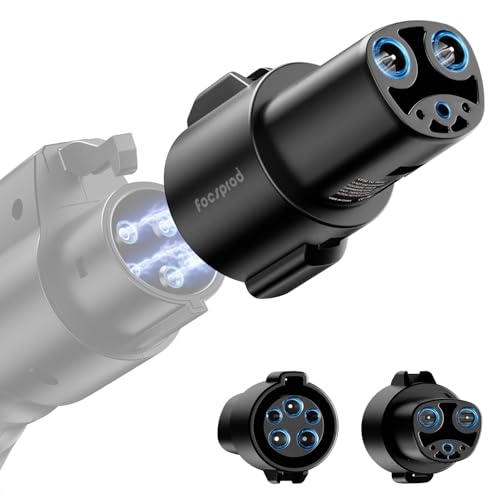
FOCSPROD J1772 to Tesla Charger Adapter Max 80A 250V

Lectron J1772 to Tesla Adapter 80 Amp 240V

Autel MaxiCharger Level 2 Electric Vehicle Charger up to 80 Amp

VEVOR Level 1+2 Portable EV Charger 16 Amp

NACS to J1772 Adapter Max 80Amp 250V
More Details On Our Top Picks
LEDVANCE leans toward the homeowner who wants a steady wall-mounted charger without a lot of fuss. The SAE J1772 connector suits most non-Tesla EVs, and the 25-foot cable gives you room to park a little off-center without stretching the cord like a ribbon.
WiFi and Bluetooth matter here because they turn a basic station into something you can check from the house or garage. The trade-off is that smart features add a little setup work, so a plug-and-forget user may never touch them.
Strong Points
- 25-foot cable helps with awkward parking angles in tighter garages.
- WiFi and Bluetooth support make scheduling and monitoring more convenient.
- 11.5 kW output gives faster home charging than a standard outlet setup.
- SAE J1772 fit keeps it practical for many non-Tesla EVs.
Things To Consider
- Smart features add setup steps you may never use in a simple routine.
- The hardwired-style home unit is less travel-friendly than a portable charger.
Feature Card
Who It Suits Best
You’re the right fit for a daily driver in a garage or carport who wants dependable Level 2 charging with app control.
A Better Fit Elsewhere
EMPORIA Level 2 EV Charger w/ J1772 Connector 48 Amp is a better match for you if you want a similar wall unit with a stronger focus on connected power management.
EMPORIA fits the garage where you care about visibility as much as charging speed. The 48 amp rating and 240V setup point to a serious home install, while WiFi control makes it easier to time charging around your routine instead of leaving it fully manual.
Compared with LEDVANCE, this one leans a bit harder into connected energy management. That can be a real plus for a household that tracks usage closely, though the hardwired install means you’ll want the placement planned before the first session.
What We Like
- WiFi support helps you manage charging without standing by the unit.
- 48 amp output suits higher-demand home charging needs.
- 25-foot cable makes it easier to reach a parked car that is not perfectly centered.
- Hardwired design supports a cleaner, more fixed installation.
Room For Improvement
- Hardwired installation asks more planning than a plug-in option.
- App features are useful, but only worth it for people who will actually use them.
Feature Rundown
Who Will Love This
You’re best served here if you want a fixed charger with app control and a tidy garage wall setup.
Another Choice May Suit
VEVOR Level 1+2 Portable EV Charger 16 Amp makes more sense for travelers or apartment parking spots that need a charger you can pack away.
This adapter changes the conversation for Tesla drivers who keep running into J1772 stations at work, at a hotel, or in a neighborhood garage. It supports Level 1 and Level 2 charging, so you’re not locked into a single charging pace, which is handy during long days away from home.
Compared with Lectron’s broader cross-vehicle fit, FOCSPROD feels more Tesla-centered and straightforward. The trade-off is obvious, you need a Tesla that matches the stated compatibility, but the upside is a compact piece of kit that lives easily in the car.
Upsides
- Works as a bridge between J1772 stations and Tesla charging needs.
- Supports both Level 1 and Level 2 charging.
- Small accessory form is easy to store in a glove box or tote.
- Useful for drivers who split time between home and public charging.
Softer Spots
- Compatibility needs a close look before you depend on it daily.
- Adapters add one more item to carry and keep track of.
Made For
You’re a good match for this adapter if you drive a Tesla and want extra station options without changing your home setup.
Where A Sibling Pick Shines
Lectron J1772 to Tesla Adapter 80 Amp 240V suits mixed garage use better, especially for households that want broader EV compatibility.
Lectron pushes farther than a single-brand adapter, since it’s aimed at Tesla models and other EVs in the NACS alliance. That makes it useful in a mixed household or for a driver who moves between home charging and a wider public network.
Compared with FOCSPROD, it reads as the more flexible everyday carry piece. The honest read is that adapters are still accessories, not magic, so the fit and charging-port routine need to stay simple enough for regular use.
Bright Spots
- Broad compatibility helps in mixed Tesla and NACS-friendly setups.
- Works with Level 1 and Level 2 charging situations.
- Compact adapter form makes it easy to keep in the vehicle.
- Good match for drivers who move between home and public charging points.
Small Caveats
- An adapter still adds one extra step at the charging station.
- People who only use one home charger may not need this much flexibility.
Right Fit For
You’re in the sweet spot here if you want a carry-along adapter for Tesla and NACS-compatible charging stops.
A Better Fit Elsewhere
FOCSPROD J1772 to Tesla Charger Adapter Max 80A 250V may suit you better if your needs stay Tesla-specific and simple.
Autel is the one in this lineup that sounds built for a more data-minded garage. The cloud-connected setup and AI-assisted app control make it feel less like a plain charger and more like a managed home energy tool, which suits households that like to plan around utility timing.
Relative to EMPORIA, this pick leans harder into higher-capacity control and remote oversight. That extra depth is helpful for multi-driver homes, though the setup and feature spread can feel like more than a casual plug-in user needs.
Reasons To Buy
- Up to 80 amp support puts it in a higher-capacity home category.
- Cloud-connected controls suit people who monitor charging habits closely.
- Remote start and stop functions add convenience from inside the house.
- Adjustable current settings help match charging to the available setup.
- Indoor and outdoor use broadens placement options around the home.
Areas To Watch
- The feature set feels more involved than a simple garage charger.
- Hardwired installation asks for planning and a fixed parking spot.
- The advanced app tools matter most to people who will use them regularly.
Core Details
The Right Fit
You’re best suited to this charger if you want a high-capacity, app-connected unit for a planned home install.
Another Choice May Suit
LEDVANCE 48 Amp Level 2 EV Charger is easier to justify for a household that wants smart features without going all the way up to 80 amp territory.
VEVOR is the practical pick for someone who wants one charger to travel with and keep at home as a backup. The dual-voltage design works through 120V or 240V, so you’re not stuck hunting for a single outlet type, and the 28-foot cable gives generous reach in odd parking situations.
Compared with the fixed wall units above, this one trades raw power for flexibility. That’s a smart exchange for apartment parking, shared driveways, or anyone who needs a charger that can move as easily as the car does.
Best Bits
- Works with both 120V and 240V outlets for more charging options.
- 28-foot cable gives strong reach around parking spots and garage corners.
- Portable format suits travel, backup duty, and changing parking setups.
- Included adapter broadens outlet compatibility for everyday use.
Points To Note
- Portable charging is handy, but it usually won’t match a hardwired wall unit for speed.
- You’ll need to keep track of the unit and cable during transport.
Whose Shelf It Belongs On
You’re the right match for this charger if you split time between home, travel, and spots where a fixed install isn’t practical.
Where Another Pick Suits Better
EMPORIA Level 2 EV Charger w/ J1772 Connector 48 Amp suits you better for a dedicated garage install with stronger connected control.
This adapter serves the J1772 EV owner who wants access to Tesla charging hardware without replacing the whole charging setup. It’s meant for Tesla wall connectors, home mobile chargers, and destination chargers, so the usefulness is tied closely to where you park and what stations are nearby.
That wider station access is the real draw, especially for commuters and road trippers who keep seeing Tesla equipment in the wild. The catch is simple, it’s not for every charging scenario, so the compatibility list deserves a careful read before you count on it.
Positives
- Lets J1772 EVs connect to several Tesla charging setups.
- Useful for drivers who want more stop-and-charge options on the road.
- Compact accessory format makes storage easy in a car or tote.
Honest Caveats
- Compatibility needs attention because it is not meant for every Tesla-related charge point.
- Adapters add another part to carry, store, and keep clean.
- It only helps when the station type matches the adapter’s intended use.
Built With In Mind
You’re a strong match if you drive a J1772 EV and want easier access to Tesla charging stations.
Look Elsewhere When
Autel MaxiCharger Level 2 Electric Vehicle Charger up to 80 Amp makes more sense for you if you want a full home charging station rather than a station adapter.
What Matters Most Before Choosing 80 Amp Home Ev Charging Stations
Mistakes Worth Dodging
Output matters, but so does the circuit and the plug style. A fast charger can still be a poor fit for your garage wall, parking distance, or vehicle connector.
Where The Extra Money Goes
Higher-tier units usually spend the money on stronger current support, smarter app controls, longer cables, and more flexible install options. That upgrade makes sense for multi-driver homes and regular overnight charging.
A Quick Reality Check
Common Shopping Slip Ups
People often focus on amp numbers and overlook whether the unit is hardwired, portable, or adapter-based. That’s where the mismatch shows up later, usually on the first parking routine.
The Upgrade Payoff
More expensive models often give you better control over schedules, current settings, and energy data. That matters most for households that charge often and want a setup that feels more like part of the home.
Frequently Asked Questions
What does 80 amp charging usually mean at home?
It points to a higher-capacity Level 2 setup, which can suit serious overnight charging. It also assumes your electrical setup can support that load.
Do all EVs use the same charging connector?
No, J1772 and NACS are different, and adapters exist to bridge that gap. Connector match is one of the first details you should check.
Is a portable charger enough for everyday use?
For some drivers, yes, especially in apartments or shared parking spaces. A fixed wall unit still makes more sense for a stable home charging routine.
Why use WiFi in a home charger?
WiFi can let you start sessions, adjust settings, or check charging status from inside the house. That helps more when you charge on a schedule.
What makes cable length worth paying attention to?
Longer cable reach helps when your parking spot is off-center or your charge port sits on the far side of the car. It can make daily plug-in use feel far less awkward.
Closing Thoughts
The best choice here depends on whether you want a fixed wall station, a portable backup, or an adapter that opens up more charging locations. For most homes, the right fit is the one that matches your parking layout and your EV connector first, then the app features after that.
