

Afr gauge setups matter most in cars that see tuning changes, mixed fuel blends, or daily road use with occasional spirited runs. A clear controller and display help make sense of air-fuel ratio data without forcing constant guesswork from the driver’s seat.
That is especially useful in garages where space is tight, wiring access is awkward, or the dash already carries several instruments. The seven picks below lean toward different needs, from cleaner factory-style integration to simpler universal installs.
Quick Shortlist for Afr Gauge Shoppers

AEM X-Series Wideband UEGO AFR Sensor Controller Gauge

30-0300 Wideband UGEO Air Fuel Ratio Gauge 52mm

GlowShift Tinted 7 Color Digital Wideband Air Fuel Gauge Kit

Universal Digital Wideband Air/Fuel Ratio AFR Gauge

Universal Digital Wideband Air/Fuel Ratio AFR Gauge Kit
AEM 30-0300-ACC X-Series Wideband UEGO AFR White Gauge Face & Silver Bezel
Wideband Air/Fuel Ratio AFR Gauge Kit with LSU 4.9 O2 Sensor
More Details On Our Top Picks
Factory-linked tuning setups tend to favor this AEM controller because it passes AFR data through OBDII support rather than relying on a standalone display alone. That makes it a strong fit for street cars with piggyback tuning or open-source software, where a cleaner data path matters more than flashy lighting.
The Bosch 4.9 LSU sensor reference and the option to use factory O2 calibration or free-air calibration add flexibility for different install habits. The trade-off is straightforward, it asks more from the installer than a bare-bones gauge, so it suits enthusiasts who want tighter integration rather than a quick weekend decoration for the dash.
Strong Points
- OBDII pass-through supports factory ECU data flow.
- Fits tuning-minded builds that need steadier AFR visibility.
- Calibration options give installers room to match the setup.
- Works well in cars that already run other electronics.
Things To Consider
- Install complexity sits above simpler universal gauges.
- Best results depend on a tidy wiring plan.
- The setup is more serious than casual dash styling.
Feature Rundown
Who It Suits Best
Tuning-focused drivers who want data integration with the vehicle’s existing electronics will get the most from it.
A Better Fit Elsewhere
GlowShift Tinted 7 Color Digital Wideband Air Fuel Gauge Kit suits dash-first builds that care more about display style than ECU pass-through.
Wideband gauges that can switch among AFR, lambda, and oxygen percentage give a dashboard more flexibility than a single-number display. The two-sided, reversible face is the practical detail here, since mixed cabin layouts often need the display to sit at a different angle than the wiring path.
The 24-color LED presentation helps the gauge stay readable in low light, and the four-digit center readout keeps the main value easy to catch at a glance. The honest read is that the visual package matters most in custom interiors, while plain utility remains the same story with the earlier AEM pick.
Upsides
- Three display modes cover AFR, lambda, and oxygen percentage.
- Reversible face helps with mounting direction.
- Color-coded lighting improves readability in dark cabins.
- 52mm size fits common gauge pods.
- Useful for drivers comparing more than one fuel metric.
Worth Noting
- More display options can feel busy in a simple build.
- Custom interiors may need extra care during placement.
- The style leans more visual than minimal.
Quick Facts
Made For
Custom dash builds and tuners who want multiple readings in one compact face will find the layout useful.
Reach For A Different Pick When
AEM X-Series Wideband UEGO AFR Sensor Controller Gauge makes more sense for setups that need OBDII-oriented integration instead of display variety.
GlowShift leans into nighttime visibility with a tinted lens and seven color display, which suits drivers who want the gauge to blend into the dash until it lights up. That kind of presentation can be a better match than the more technical look of the AEM face when the cabin already has a strong visual theme.
The 2-1/16 inch size stays in the common gauge category, so fitting it into an existing pod is usually simpler than redesigning the whole dashboard. The trade-off is that style takes a clear role here, so shoppers who prefer a stripped-down instrument may find the visual emphasis a bit much.
Best Bits
- Tinted lens gives the gauge a cleaner daytime look.
- Seven color display helps match interior lighting.
- Common 52mm format eases pod selection.
- Useful for gasoline or E85 tuning plans.
Minor Gripes
- The styling focus may not suit minimalist builds.
- Bright color options can be more visual than subtle.
- Cabin match matters more here than on plain gauges.
Technical Sheet
Whose Shelf It Belongs On
Street cars and show-oriented interiors benefit from the blend of color, size, and tuner-friendly layout.
Swap It Out When
Universal Digital Wideband Air/Fuel Ratio AFR Gauge suits drivers who care more about straightforward reading than tinted styling.
This ZHSYMX gauge keeps the pitch simple, with real-time feedback and a fast digital readout aimed at tuning work rather than ornament. In a garage where the car sees regular changes, that kind of directness matters more than decorative extras.
The 52mm housing should suit many common pods, and the source notes that free-air calibration is not needed with the matching wideband setup. That makes installation easier to digest for weekend wrenching, though the trade-off is a plainer presentation than the GlowShift or AEM options above.
Highlights
- Fast-response digital readout suits active tuning sessions.
- Standard 52mm housing fits many common mounts.
- No free-air calibration keeps setup simpler.
- Works well in straightforward street builds.
Areas To Watch
- Design is more functional than styled.
- Plain presentation may feel sparse in show builds.
- Installation still depends on careful wiring.
Core Details
Best Suited To
Drivers who want a direct universal gauge for regular tuning sessions will find the layout easy to live with.
Another Choice May Suit
GlowShift Tinted 7 Color Digital Wideband Air Fuel Gauge Kit suits interiors that benefit from a more customized look.
Starter tuning kits often need two things at once, a clear gauge face and an install path that does not overcomplicate the weekend. This ZHSYMX kit leans into that middle ground, and the LSU 4.9 sensor detail points toward a setup built for live AFR monitoring rather than decoration.
The 52mm housing keeps it compatible with common mounting spaces, while the claim of no free-air calibration should reduce one step in the setup chain. The honest read is that this belongs with practical street builds, not show cars that demand a more distinctive face like the AEM accessory or GlowShift display.
Reasons To Buy
- LSU 4.9 sensor support adds tuning credibility.
- Standard housing helps with common pod installs.
- Simple setup suits first-time gauge installs.
- Useful for builds where function comes first.
Small Caveats
- Visual styling stays basic.
- Owners seeking a richer faceplate may want another pick.
- Installation quality still depends on the harness and routing.
Feature Card
Who Will Love This
DIY tuners who want a direct kit without a lot of extra styling will find the approach appealing.
Where A Sibling Pick Shines
30-0300 Wideband UGEO Air Fuel Ratio Gauge 52mm works better for shoppers who want AFR, lambda, and oxygen percentage on one face.
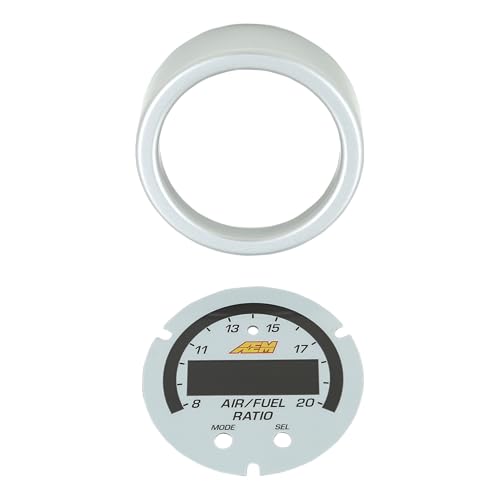
This AEM accessory is for the driver who wants the instrument panel to look more deliberate, not busier. A white AFR and lambda faceplate with a silver bezel changes the visual tone without asking for a full controller swap, which is useful in cabins that already run a matching color theme.
At only 0.352 ounces in the source context, it is a light cosmetic piece rather than a heavy hardware change. The trade-off is obvious: this is about finish and readability, not new sensing behavior, so it makes the most sense as an upgrade to an existing X-Series setup.
Positives
- White faceplate improves contrast in brighter interiors.
- Silver bezel gives the gauge a cleaner finish.
- Works well as a visual refresh for matching dashboards.
- Light accessory adds style without changing core function.
Points To Note
- Only useful for existing compatible AEM setups.
- Does not change the gauge’s sensing hardware.
- Best treated as a finish upgrade, not a new controller.
Details At A Glance
Right Fit For
Owners of matching AEM X-Series hardware who want a tidier cockpit presentation will find it easy to justify.
Skip It When
AEM X-Series Wideband UEGO AFR Sensor Controller Gauge is the better spend for anyone starting from scratch and needing the full controller.
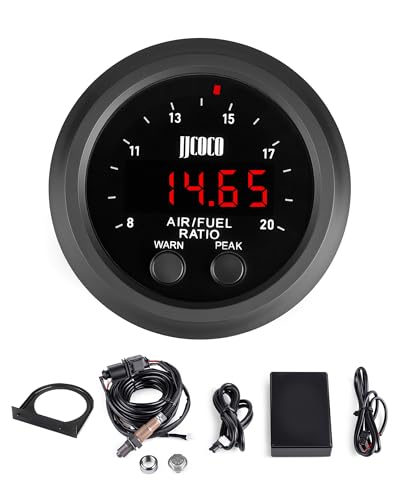
This JJCOCO kit keeps the footprint tight with a 52mm, 2-1/16 inch format and an LED display, which makes it easier to work into smaller gauge clusters. That compact size matters in cars where the dash already carries boost, temperature, or voltage instruments, and every opening has to earn its place.
The LSU 4.9 sensor reference points to a setup aimed at real-time AFR monitoring rather than a decorative readout. Compared with the more style-heavy GlowShift unit, this one feels more utilitarian, which is exactly why it suits compact track cars and stripped interior builds.
Best Bits
- 52mm format works in tight pod spaces.
- LED display keeps the readout visible.
- LSU 4.9 sensor suits tuning-oriented installs.
- Compact layout helps crowded dashboards stay organized.
Room For Improvement
- Compact format leaves less room for extra styling.
- Cabin placement needs a little care in crowded dashes.
- Plain presentation will not suit every interior theme.
Core Details
The Right Fit
Track builds and cramped dash layouts suit this kit best, especially where space is already under pressure.
Look Elsewhere When
AEM 30-0300-ACC X-Series Wideband UEGO AFR White Gauge Face & Silver Bezel makes more sense for an existing AEM setup that needs a visual refresh.
What Matters Most Before Choosing Afr Gauge
Display Style Versus Reading Speed
Afr gauge displays solve different problems. Some cabins need a simple needle-like glance, while others benefit from numbered readouts, color bands, or multiple modes such as AFR and lambda, where lambda means the fuel ratio expressed as a normalized value around stoichiometric balance.
Fit, Size, And Mounting Space
Most of the group sits around 52mm, which is the common 2-1/16 inch gauge size. That matters in cars with existing pods, because a clean fit usually beats a cramped custom trim job.
Sensor And Calibration Path
Wideband sensing and LSU 4.9 sensor references point to tuning-oriented hardware. More advanced systems may ask for a more involved setup, while simpler kits reduce friction for weekend installs.
Key Trade-Offs Across These Afr Gauge Picks
Mistakes Worth Dodging
Matching the gauge to the dashboard matters more than chasing the busiest display. A cluttered face can be hard to read in motion, and a mismatched size creates install headaches that last longer than the tuning job.
The Upgrade Payoff
Higher-tier models usually spend more on integration, display quality, and sensor setup options. That extra cost makes sense for custom builds, frequent tuning changes, or setups that need cleaner data handling through the vehicle’s electronics.
Frequently Asked Questions
What does Afr gauge measure?
An Afr gauge measures air-fuel ratio, which shows how much air and fuel are present in the mixture. Wideband versions give more useful detail for tuning than basic narrowband units.
Is a 52mm gauge size common?
Yes, 52mm and 2-1/16 inch housings are widely used in aftermarket gauge pods. That size works well in many dash pods and pillar mounts.
Why choose a wideband setup?
Wideband hardware is better suited to tuning work because it reads a broader range of mixture data. That makes it more useful for modified engines than a simple warning-style gauge.
Do all Afr gauge kits need the same install effort?
No, some kits are more direct while others involve more wiring and calibration steps. ECU-linked options usually ask for a more careful setup than a basic standalone display.
Which Afr gauge suits a compact interior?
Wideband Air/Fuel Ratio AFR Gauge Kit with LSU 4.9 O2 Sensor fits compact cabins well because of its 52mm format. Universal Digital Wideband Air/Fuel Ratio AFR Gauge also works for a simple, space-conscious layout.
