

Boat fiberglass damage rarely stays cosmetic for long. A chipped gel coat, a soft spot around hardware, or a crack near a seam can spread, especially on craft that see regular trailering, docking, or sun exposure.
This roundup focuses on repair kits that fit different repair styles, from structural filling to surface finishing and cloth reinforcement. You get a clearer path whether you handle small weekend fixes, rebuild damaged edges, or want a cleaner finish before primer or paint.
Quick Look At The Shortlist

TotalBoat Polyester Structural Repair Putty

Gator Patch Fiberglass Reinforced Repair Patch

Marine Coat One ISO/NPG Gel Coat White with Wax

West System 105-K Fiberglass Boat Repair Kit

TotalBoat TotalFair Epoxy Fairing Compound 2 Pint Kit

SIMPLYHARDWARE Fiberglass Woven Mat Cloth 50 Inch x 4 Yard

J-B Weld Fiberglass Resin Quart
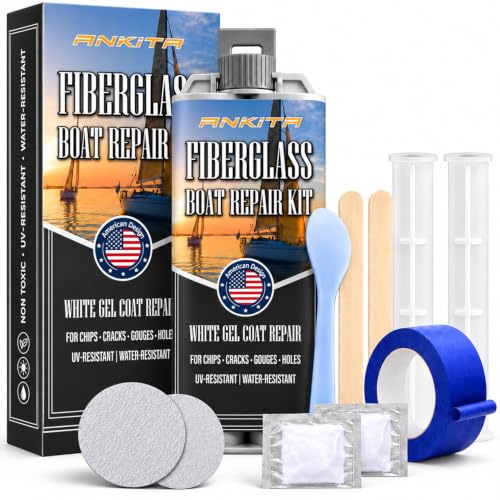
Ankita Fiberglass Boat Repair Kit
More Details On Our Top Picks
This putty leans toward structural work rather than cosmetic touch-ups, and that makes it a strong match for hull-to-deck joints, bulkheads, stringers, and hardware bedding. The long-strand fiber blend gives it the feel of a material meant to stay put, not slump into corners and leave you chasing shape.
On fiberglass, wood, metal, and polyester laminates, it fits the kind of repair that has to hold shape before it has to look pretty. The trade-off is simple, it’s not the right route over epoxy surfaces, and cosmetic fairing still asks for a separate finishing compound.
Strong Points
- Long fibers add strength in thicker fills.
- Paste-like texture helps it stay where you place it.
- Works for bonding, filling, and radius shaping.
- Useful above and below the waterline on compatible substrates.
- Comes with MEKP catalyst, so you can mix for the task at hand.
Things To Consider
- Polyester compatibility matters, so epoxy repairs need a different path.
- It’s aimed at structural filling, not a show-surface finish.
- Catalyst control affects working time, so batch size matters in warm conditions.
Feature Snapshot
Who It Suits Best
Boat owners handling stringers, bulkheads, or hardware bedding will get the most from this kind of structural fill.
Where A Sibling Pick Shines
Marine Coat One ISO/NPG Gel Coat White with Wax fits you better for visible surface repair where color match matters more than structural build.
Gator Patch is the shortest route in this roundup from damaged surface to usable repair. The peel-and-stick format suits a kayak, canoe, or small boat that needs a tidy patch without mixing pots, brushes, or layered cloth work.
Its sun cure brings a very different ownership experience than the putties above, and that’s the point, especially for trailered craft or paddlesports gear stored outdoors. The honest trade-off is finish control, since you still need sanding and paint if you want the patch to disappear visually.
Highlights
- Prep, peel, stick, and sun cure keeps the process simple.
- Adheres to fiberglass, aluminum, wood, and plastic surfaces.
- Made for kayaks, canoes, SUPs, and small boats.
- Rated by the brand for a 500 PSI repair strength.
- Paintable after finishing, which helps it blend into the hull.
Minor Gripes
- Sunlight curing means outdoor conditions matter.
- It suits patching more than shaping or rebuilding joints.
- Cosmetic blending still takes sanding and paint.
Core Details
Made For
Weekend paddlers and small-boat owners who want a fast, straightforward patch will find the setup especially sensible.
Another Choice May Suit
West System 105-K Fiberglass Boat Repair Kit fits better for deeper fiberglass repair work that needs cloth, fillers, and full epoxy control.
This kit is aimed at the finish layer, where scratches, scrapes, and shallow gouges need to disappear without shouting for attention. Gel coat with wax cures tack-free, so it suits a repair path where you want a surface that’s ready to move toward final finishing rather than stay sticky.
The six tinting pigments matter for boats with white gel coat that isn’t quite pure white anymore, and that’s a real-world detail, not a brochure flourish. It won’t replace structural filler, though, so you’ll get the best result when the shape has already been restored underneath.
Bright Spots
- White gel coat is practical for visible hull and deck repairs.
- Waxed formula leaves a tack-free surface after cure.
- Six pigments help you move closer to a matching shade.
- Built for UV and blister resistance, which matters on sun-exposed craft.
- Works well as the final layer after structural repair.
Points To Note
- It is a finish product, not a structural rebuild material.
- Color matching still takes patience and a careful hand.
- Gel coat work usually rewards a cleaner prep routine than quick patch jobs.
Details At A Glance
Built With In Mind
Boat owners focused on visible finish repair, especially on white fiberglass, are the best match here.
Swap It Out When
TotalBoat Polyester Structural Repair Putty makes more sense if the damage is deep and the priority is strength before appearance.
West System takes the most complete-kit approach in the group, and that helps when your repair is bigger than a patch but smaller than a full rebuild. You get resin, fast hardener, cloth, fillers, mixing gear, a syringe, gloves, and illustrated instructions, so the workflow stays organized from the first mix onward.
That breadth makes sense for cracks, loose hardware, delaminated panels, and small holes in solid laminate. The trade-off is simple enough, it asks a little more setup than the faster patch-and-go choices, but that usually buys you more control over the repair.
What We Like
- Comes with the materials needed for a full repair sequence.
- Includes fiberglass fabric and fillers for reinforcement and shaping.
- Fits cracks, scrapes, blisters, loose hardware, and small holes.
- The included instructions help keep the process organized.
- Good match for owners who want a single kit instead of piecing parts together.
Areas To Watch
- The kit is more involved than a simple patch.
- Repairs still depend on careful surface prep and mixing discipline.
- Best results come from matching the kit to fiberglass and composite jobs.
Quick Facts
Who Will Love This
Hands-on boat owners who want a single, well-equipped epoxy kit for serious fiberglass repairs are the clearest fit.
Where Another Pick Suits Better
Gator Patch Fiberglass Reinforced Repair Patch fits better for quick outdoor fixes on small boats, kayaks, or SUPs.
TotalFair sits in the middle ground between structural putty and final paint prep, which is why it matters in a boat repair lineup. It’s meant to level dents, voids, gouges, and rough spots while keeping the cured surface smooth enough for primer or paint work.
The 1-to-1 mix ratio and color change cue make it easier to follow than some resin systems, and that matters on repairs that happen in a garage with plain tools, not a full shop bench. The catch is also clear, it’s a fairing compound, so it’s the wrong layer for any job that still needs structural reinforcement.
Upsides
- Lightweight epoxy filler helps smooth damaged areas.
- Mixes by color change, which keeps setup straightforward.
- Stays put on vertical and overhead surfaces.
- Cures waterproof and can be used above or below the waterline.
- Sands well and accepts compatible primers and paints.
Room For Improvement
- It is not the right layer for structural rebuilding.
- Gel coat should not go directly on top of it.
- Surface prep still matters, especially cleaning off contaminants first.
Feature Rundown
The Right Fit
Boat owners who want a smoother base layer before primer or paint will get the most value here.
Look Elsewhere When
West System 105-K Fiberglass Boat Repair Kit is the better call when the repair needs cloth reinforcement and a deeper structural fix.
This is reinforcement material first and repair product second, which makes it a different kind of purchase from the putties and resins above. A 50 inch by 4 yard roll gives you enough coverage for larger layups, so it suits projects where you want to build thickness rather than just cover a blemish.
Because it’s compatible with epoxy, polyester, and vinyl ester resin, it fits a wide repair workflow across boats and other composite work. The trade-off is obvious, you still need the matching resin and a little more working know-how, so it’s better for hands-on owners than for quick fixes.
Best Bits
- Large roll size helps with broader repair areas.
- Plain weave construction supports even coverage in layups.
- Compatible with epoxy, polyester, and vinyl ester resin.
- Useful for boats, surfboards, canoes, and similar composite projects.
- E-glass fiber gives you a familiar reinforcement material for marine work.
Small Caveats
- This is cloth, so resin has to be added separately.
- Cutting, wet-out, and layering ask for some practice.
- Storage matters, since clean cloth is easier to work with than a damp or misshapen roll.
Core Details
Whose Shelf It Belongs On
Hands-on repairers planning larger composite work will make the most of this roll.
Where A Sibling Pick Shines
J-B Weld Fiberglass Resin Quart is the easier match for smaller, mixed-surface repairs that need a liquid resin rather than cloth by itself.
J-B Weld’s fiberglass resin lands as a straightforward resin base for repairs that need cloth or mat added on top. That makes it useful beyond boats, since the same quart can support work on tubs, showers, rigid plastic, metal, and even concrete repairs where the material stack calls for resin first.
The 2-hour dry time is handy in a garage or boathouse where the repair window is tight, though the final pace still depends on surface prep and reinforcement choices. It’s not a stand-alone patch in the way Gator Patch is, but that’s also why it stays flexible for different jobs.
Positives
- Two-part resin format suits reinforcement repairs.
- Works with fiberglass cloth or mat for stronger fills.
- Covers fiberglass, rigid plastics, metal, and concrete.
- Quart size is practical for a range of repair tasks.
- Dry time of 2 hours supports a quicker next step.
Softer Spots
- You still need cloth or mat for the strongest marine repairs.
- It is a resin system, so finishing still takes extra materials.
- Storage and mixing habits matter more once the container is opened.
At A Glance
Right Fit For
You’ll get the most from this resin if you already plan to pair it with cloth or mat for a layered repair.
Not Your Match When
Gator Patch Fiberglass Reinforced Repair Patch suits quicker outdoor fixes where you want a peel-and-stick route.
Ankita keeps the focus tight, which is useful when the damage is limited to chips, cracks, pits, scratches, gouges, or screw holes on white fiberglass and gel coat. That narrow scope can actually help, because you’re not paying for a broad kit when all you need is a clean surface repair on a hull, deck, transom, jet ski, kayak, or sailboat.
The trade-off is the same one that comes with many focused repair kits, it’s not trying to be a full structural system. For small cosmetic work, though, that specificity is exactly why it belongs in this list.
Reasons To Buy
- Targets common surface damage without extra bulk.
- Works across fiberglass and gel coat surfaces.
- Fits boats, jet skis, kayaks, and sailboats.
- Good match for smaller fix-it jobs around the dock or driveway.
Honest Caveats
- It is aimed at surface repair rather than deep reinforcement.
- White finish focus may suit some hulls better than others.
- Large structural damage calls for a more complete epoxy system.
Spec Overview
Best Suited To
Owners dealing with small white gel coat repairs and simple touch-up jobs will find this the easiest fit.
Where Shoppers Go Wrong
West System 105-K Fiberglass Boat Repair Kit is the better match once the repair needs cloth, fillers, and a more complete epoxy workflow.
How To Choose The Right Boat Fiberglass Repair Kits
Match The Kit To The Damage
Surface chips and gel coat scratches call for a different product than a split seam or a soft deck edge. A patch kit or gel coat kit handles cosmetic damage well, while structural putty, epoxy resin, and cloth matter more when the repair has to restore strength.
Think in layers. The first layer builds structure, the second levels shape, and the last one handles appearance.
Check The Base Material Before You Start
Polyester products and epoxy products are not interchangeable in every repair. TotalBoat Polyester Structural Repair Putty works on polyester-compatible surfaces, while West System and TotalBoat TotalFair sit in epoxy territory and serve different jobs.
That matters on older boats, where previous repairs may already be part of the surface. A quick material check saves a lot of sanding later.
Decide How Much Control You Want
Pre-mixed patches and simple gel coat kits move fast, which suits small jobs near the dock or in a driveway. Resin, cloth, filler, and fairing systems take longer, but they give you more control over shape, reinforcement, and finish quality.
For a weekend boater, speed may be enough. For a craft that sees rough use or regular trailering, the more involved route usually makes more sense.
Look At Finishing Needs, Not Just Cure Time
Some repairs disappear better under paint or primer, while others are meant to stay visible only after color matching and sanding. Gel coat products, fairing compounds, and structural putties each solve a different part of that process.
A smooth finish matters, but only after the repair beneath it is sound. That order keeps you from treating a cosmetic layer like a structural one.
What To Weigh Before You Decide
Mistakes Worth Dodging
A common slip-up is choosing a finish product for a structural job. Another is ignoring compatibility, especially on polyester versus epoxy surfaces, where the wrong match can turn a repair into extra labor.
Storage and prep matter too. Clean surfaces and sealed containers usually make the job easier, especially when you use a kit in stages rather than all at once.
The Case For Spending Up
Higher-tier kits usually pay for more complete material sets, better control over mixing, and fewer missing pieces on the workbench. That matters on boat repairs because a cloth, filler, brush, or syringe can decide whether the project feels organized or improvised.
The upgrade is worth it when you’re rebuilding damaged laminate, blending visible surfaces, or handling a repair you don’t want to revisit soon. Basic patches still have a place, but they don’t replace a fuller epoxy system.
Final Thoughts
The right boat fiberglass repair kit depends on the damage in front of you, not on the longest product list. For structural fixes, TotalBoat Polyester Structural Repair Putty and West System 105-K deserve your attention, while Gator Patch and Ankita make more sense for faster surface work. If your goal is a smoother hull finish, TotalBoat TotalFair and Marine Coat One fill a different need entirely. Choose the kit that matches the repair layer you actually have to restore, and the job gets simpler fast.
