

Small paint marks can appear around door handles, bumpers, wheels, and trunk lids after ordinary commuting, parking, or loading cargo. You need the right repair type for the damage: a polishing compound suits light surface marks, while paint pens and filler address deeper or more visible defects. This shortlist covers five options for quick touch-ups, paint correction, dark finishes, and minor body repair, so you can match the treatment to your vehicle instead of using one formula for every flaw.
The Shortlist At A Glance

Mothers California Gold Scratch Remover 8 oz. (08408)

Carfidant Scratch and Swirl Remover

SENVEN Black Paint Touch Up Repair Pen 30ML
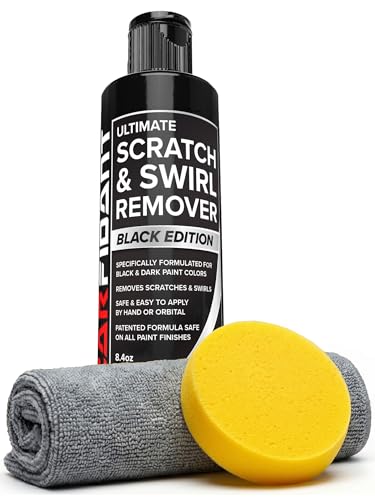
Carfidant Black Scratch and Swirl Remover
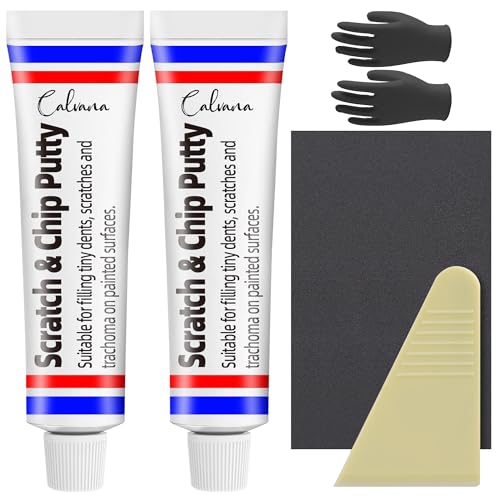
Calvana 2 Pack 20g Car Body Filler Repair Kit
More Details On Our Top Picks
Light scuffs around a door handle or a faint paint transfer on a trunk lid call for a surface polishing compound, not body filler. Mothers California Gold Scratch Remover comes in an 8 oz. bottle and is intended for paint and clearcoat, the transparent protective layer over a vehicle’s color coat.
That makes it a sensible starting point for routine exterior care, especially across several small marks rather than one deep gouge. You may find it improves the look of deeper damage without fully hiding it, so the honest fit is cosmetic correction for surface-level wear, not a replacement for color-matched paint.
Strong Points
- Targets light scratches, scuffs, and transferred paint on painted exterior surfaces.
- The 8 oz. size gives you a practical amount for recurring touch-ups around high-contact areas.
- Paint-and-clearcoat compatibility suits routine care across many standard exterior panels.
- A liquid compound is easier to spread over broad scuffed sections than a narrow paint pen.
- Owners commonly find polishing compounds easier to store and clean up than filler-based repair materials.
Things To Consider
- Deep scratches can remain visible because surface polishing doesn’t replace missing color or clearcoat.
- Repeated use requires a clean applicator and careful panel preparation to avoid dragging grit across the finish.
Key Specs
Who It Suits Best
You’ll get the most appropriate fit as a daily driver owner handling light scuffs, surface scratches, and paint transfer on painted panels.
Where Another Pick Suits Better
SENVEN Black Paint Touch Up Repair Pen 30ML suits you more when the damage reaches through the finish or sits on a black wheel or bumper.
Convenience matters during a weekend driveway detail, and Carfidant packages its polishing compound with a buffer pad and towel. The pad is the hand-contact tool that helps distribute the compound, while the towel handles final residue removal.
Compared with Mothers California Gold Scratch Remover, this kit gives you more of the basic process in one package. You may find that setup friendlier for a first repair, although deep scratches that catch firmly on a fingernail remain outside the realistic reach of a surface compound.
What We Like
- Combines a scratch-and-swirl compound with a pad and towel for a more complete starting setup.
- Suitable for light scratches, swirls, and general paint wear on routine exterior surfaces.
- The hand pad supports controlled application around doors, fenders, and other localized areas.
- The included towel helps you remove leftover product without reaching for a separate finishing cloth.
Trade Offs
- Very deep marks may still show because polishing works on the surface rather than rebuilding missing paint.
- The pad and towel need cleaning and dry storage after use, particularly after working on a dusty panel.
- Hand application takes more time across a large vehicle than a machine-assisted process.
Feature Snapshot
Made For
This suits you as a beginner who wants a straightforward hand-polishing kit for light paint wear on a commuter vehicle.
Consider Something Else When
Calvana 2 Pack 20g Car Body Filler Repair Kit suits you more for pits, gouges, or uneven spots that need material to level the surface.
A narrow paint pen makes more sense for a stone mark on a wheel or a small scratch across a black bumper than a broad polishing treatment. The SENVEN option provides 30ML of high-gloss black touch-up paint for vehicle bodies, wheels, and bumpers.
Its stated multi-surface use also extends to bright motorcycle, yacht, and furniture surfaces, giving you broader utility than Carfidant Black Scratch and Swirl Remover. Depending on the original finish, color matching can still be noticeable, so you’ll want careful application and a clean, dry surface.
Highlights
- Designed for black touch-ups on vehicle bodies, rims, and bumpers.
- The pen format gives you more control over small chips than a liquid compound spread across a panel.
- High-gloss black paint supports a visually consistent approach on glossy black surfaces.
- Use across motorcycles, yachts, and bright furniture surfaces adds flexibility beyond automotive upkeep.
- A 30ML container provides a clearly stated quantity for repeated small-area applications.
Room For Improvement
- Black paint may not match every black finish, especially across metallic or faded panels.
- Brush-style touch-up work can leave visible edges without careful feathering and surface preparation.
Quick Facts
Right Fit For
You’ll find the strongest match as a DIY owner correcting small black chips and scratches on wheels, bumpers, or body panels.
Not Your Match When
Mothers California Gold Scratch Remover 8 oz. (08408) suits you more for widespread light scuffs and paint transfer that don’t need added color.
Dark paint reveals wash swirls and fine scratches quickly, which is where Carfidant’s Black Edition compound earns its place. The formula is intended for black and dark-colored paint, and the included buffer pad gives you a focused hand-application method.
Compared with the general Carfidant Scratch and Swirl Remover, this version narrows its purpose around darker finishes. You may find that specialization useful on a black sedan or SUV, though it won’t correct damage that extends beyond the paint surface.
Upsides
- Formulated for black and dark paint, where fine swirls tend to stand out.
- Compatible with clearcoat, single-stage, and multi-stage paint systems according to the supplied product information.
- The included buffer pad makes localized hand correction more accessible in a home garage.
- Its color-specific focus makes the choice easier to narrow for a dark-finish vehicle.
Minor Gripes
- Dark-finish specialization offers less reason to choose it for a light-colored vehicle.
- Surface polishing cannot rebuild paint lost from a deep scratch or gouge.
- The pad needs clean storage between uses so embedded grit doesn’t affect later paint correction.
Core Details
Who Will Love This
This fits you as a dark-car owner who regularly sees fine wash marks and light swirls across glossy painted panels.
Look Elsewhere When
SENVEN Black Paint Touch Up Repair Pen 30ML suits you more for isolated black chips on rims, bumpers, and exposed edges.
Some damage needs filling before paint can look even again. Calvana supplies two 20g portions of automotive body filler, a putty-like material used to level pits, gouges, and uneven shallow damage before sanding and finishing.
The two mixing boards and available sandpaper-kit configuration give you a more hands-on repair process than either Carfidant compound. One thing worth considering is the extra preparation: you’ll need patience for mixing, shaping, drying, and sanding, but that work suits deeper surface irregularities better than polishing alone.
Best Bits
- Two 20g filler portions support separate small repairs or staged touch-up work.
- Designed for pits, gouges, scratches, and uneven spots that need material added to the surface.
- Quick-drying characteristics can shorten the wait before sanding and finishing.
- Two mixing boards make small-batch preparation more manageable during driveway repairs.
- The available sandpaper-kit configuration helps you shape the dried filler toward a smoother panel.
- Filler can bridge a gap in the repair process that a scratch-removing compound cannot address.
Points To Note
- Application is less forgiving than spreading a polishing compound because uneven filler needs additional sanding.
- Quick drying means you’ll want your mixing and placement steps organized before opening the material.
- Filler alone doesn’t provide the final color match, so a painted finishing step may still be necessary.
At A Glance
Whose Shelf It Belongs On
This is suited to you as a patient DIY repairer handling minor gouges, pits, or uneven body damage rather than only fine surface swirls.
Another Choice May Suit
Carfidant Scratch and Swirl Remover suits you more for light marks and wash swirls where you want a simpler hand-polishing routine.
How To Choose the Right Auto Scratch Repairs
Match the Material to the Damage
Start by identifying whether the mark sits in the surface or has removed paint. Polishing compounds such as Mothers California Gold Scratch Remover and both Carfidant formulas address light scratches, swirls, scuffs, and transferred paint by refining the outer finish. Filler takes a different route, adding material to shallow pits and gouges before sanding.
A paint pen belongs between those two categories for small areas where color is missing. SENVEN’s black touch-up format makes sense for a chip on a rim or bumper, while a compound is more efficient across a broad panel with hazy surface wear.
Check Color and Finish Compatibility
Color matters more than many first-time repairs suggest. Black and dark paint can show fine circular marks clearly, making Carfidant Black Scratch and Swirl Remover a logical match for dark vehicles, while SENVEN targets high-gloss black touch-ups.
A paint pen won’t automatically match every black finish, especially across metallic, faded, or differently textured surfaces. For a light-colored vehicle, a general compound may be more useful than a black-specific repair item, provided the damage remains superficial.
Consider the Work Area
Your repair space affects the most practical format. A liquid compound works well on a clean section of a garage or driveway, but you need an applicator, towel, and room to wipe residue. Carfidant’s pad-and-towel kit reduces the number of separate supplies you need for a small hand-polishing job.
Filler demands more preparation. You need mixing space, controlled placement, drying time, and sanding access, so Calvana better suits a planned weekend repair than a quick touch-up before a commute.
Set the Right Depth Expectation
A fingertip test offers a useful starting point, though it isn’t a complete diagnosis. Marks that feel shallow may respond to polishing, while a deep groove, exposed substrate, or dented edge usually calls for paint or filler work.
You’ll get better results by cleaning the panel first and keeping grit away from the applicator. None of these options replaces a full body-shop refinishing process for extensive damage, but the right match can improve small flaws without turning a minor repair into a large project.
Things Worth Knowing First
Mistakes Worth Dodging
Choosing a polishing compound for a deep gouge is the most common mismatch. Surface formulas can improve the surrounding finish, but they don’t add missing material or restore color that has been removed.
Color selection also deserves attention. A black pen may look close in the bottle yet remain visible on metallic or weathered paint, so reserve it for targeted areas where the color and sheen are reasonably compatible.
Where the Extra Money Goes
Higher-tier repair kits generally add convenience through included pads, towels, mixing boards, or sanding materials rather than changing the repair category. That extra equipment matters during a first driveway project because you can move from application to cleanup without gathering as many separate supplies.
For occasional light scuffs, a single compound may be all you need. Paying more makes sense for repeated repairs, dark-finish maintenance, or filler work where the supporting tools reduce preparation friction.
Closing Remarks
You’ll make the better choice by matching the repair material to the damage depth and finish color. Mothers California Gold Scratch Remover handles light exterior marks, Carfidant gives you compound-based options with different finish focuses, SENVEN targets black touch-ups, and Calvana addresses uneven damage with filler. Clean preparation and realistic expectations matter just as much as the formula you choose. Start with the least aggressive approach that fits the mark, then move to paint or filler when surface polishing no longer matches the problem.
