

Road salt, coastal humidity, rain, and trapped moisture can turn small metal blemishes into expensive-looking corrosion. You need an inhibitor that matches the job, whether you’re protecting battery terminals, treating existing rust, coating an underbody, or maintaining marine equipment. This shortlist covers thin lubricating sprays, thick lanolin barriers, dielectric protectants, and rust-converting coatings. You’ll also find practical trade-offs around cleanup, storage, surface preparation, and long-term ownership.
The Shortlist At A Glance
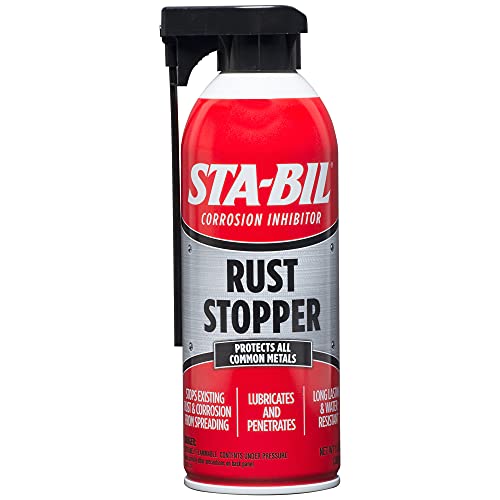
STA-BIL Rust Stopper Anti-Corrosion Spray 13 Oz

CorrosionX Heavy Duty Anti Rust Spray 12oz Aerosol

CorrosionX Rust Inhibitor 16oz Aerosol

Rust-Oleum 7830730 Stops Rust Rust Reformer 8 oz Black

Rust-Oleum Stops Rust 2-in-1 Rust Reform & Seal Spray Black

B’Laster Surface Shield Rust Prevention Spray Lanolin Undercoating
More Details On Your Top Picks
Daily-driver maintenance calls for a coating that can cover more than one small problem. STA-BIL Rust Stopper combines corrosion inhibition with lubrication, so you can use it on exposed or painted metal, battery terminals, and hardware prone to squeaking or sticking.
The water-resistant film makes sense for cars, bikes, boats, and RVs that face ordinary rain or splash exposure. You may find it easier to manage than the thicker CorrosionX Heavy Duty Anti Rust Spray, though severe saltwater equipment may benefit from that heavier barrier instead. The honest read is that this is a versatile garage spray, not a dedicated underbody coating.
Strong Points
- Leaves a protective layer on both exposed and painted metal.
- Supports battery-terminal maintenance by covering metal and electrical connection areas.
- Water resistance helps the film remain useful through ordinary weather exposure.
- Lubricating action can help reduce squeaking and sticking on suitable hardware.
- The 13-fluid-ounce format suits routine vehicle and equipment touch-ups.
Things To Consider
- A spray film can attract grime, so covered areas may need periodic wiping and reapplication.
- The formula is less purpose-built for thick underbody coverage than B’Laster Surface Shield Rust Prevention Spray.
Key Specs
Who It Suits Best
Daily drivers, home mechanics, and RV owners needing one general-purpose spray for light corrosion control and lubrication.
Consider Something Else When
Choose CorrosionX Heavy Duty Anti Rust Spray for marine hardware, large terminals, or equipment facing persistent saltwater exposure.
Harsh outdoor service is where a thick, clinging barrier earns its place. CorrosionX Heavy Duty Anti Rust Spray uses a flexible, non-conductive film that stays bonded around larger battery posts, grounding lugs, barn hardware, and boat-trailer components.
The self-healing barrier is designed to remain intact through rain, seawater, vibration, and pressure washing. For most garage projects, that level of persistence may feel like more coating than you need, and cleanup deserves planning. Compared with STA-BIL Rust Stopper, this CorrosionX option is the more specialized choice for demanding environments.
What We Like
- Thick coverage helps shield large terminals and connectors from moisture.
- The flexible film is designed to resist cracking as equipment vibrates or shifts.
- Water resistance supports use on marine and agricultural equipment.
- Source specifications state protection lasting up to five years indoors and two years outdoors.
Worth Noting
- Thicker coatings can be messier to apply and remove than a lighter maintenance spray.
- Careful surface preparation remains important around dirt, loose rust, and grime.
- The non-conductive formula suits protective coverage, not direct treatment of a dirty electrical contact.
At A Glance
Made For
Boat owners, farmers, and equipment managers working around saltwater, rain, vibration, and larger metal connections.
Not Your Match When
Reach for Rust-Oleum 7830730 Stops Rust Rust Reformer 8 oz Black for a small rusty repair that needs a paintable black surface.
One spray that protects, lubricates, and penetrates can simplify a busy workshop. CorrosionX Rust Inhibitor forms a dielectric barrier, meaning a moisture-blocking layer that does not conduct electricity, while also reaching into bolts, hinges, cable pulleys, locks, and engine hardware.
The 16-ounce trigger-spray format comes with a 4-ounce precision applicator, giving you a broader spray for trailers and a narrower approach for small mechanisms. You may find this versatility more useful than STA-BIL Rust Stopper during repair work, though a dedicated reforming coating makes more sense for heavily rusted surfaces that need a paintable finish.
Highlights
- Combines corrosion protection with penetrating action for seized or frozen hardware.
- Includes both a 4-ounce precision applicator and a 16-ounce trigger spray.
- Long-lasting lubrication suits hinges, locks, pulleys, and marine components.
- Useful across automotive, marine, electronics, RV, and tool-storage scenarios.
- The bonded barrier is designed to resist friction, pressure, and washout.
Trade Offs
- Penetrating formulas can spread beyond the target area, so nearby surfaces may need protection during application.
- Owners commonly need to keep the applicator clean and stored securely to preserve precise delivery.
Technical Sheet
Right Fit For
DIY mechanics, boat owners, and maintenance users who need corrosion control alongside penetrating lubrication.
Look Elsewhere When
Choose Rust-Oleum Stops Rust 2-in-1 Rust Reform & Seal Spray Black for a rubberized coating over rusty or bare automotive metal.
Small rust repairs need a different approach from an oily maintenance spray. Rust-Oleum 7830730 Stops Rust Rust Reformer reacts with existing rust and leaves a smooth black surface that can be painted, making it a sensible choice for brackets, tools, garden hardware, and localized vehicle repairs.
Because it reduces the need to sand all the way back to bare metal, the preparation burden may feel lighter for a weekend project. You still need to remove loose scale and clean the area carefully, and the 8-ounce container is better suited to focused repairs than broad underbody work. Compared with CorrosionX Rust Inhibitor, this option emphasizes surface conversion and follow-up painting rather than lubrication.
Upsides
- Converts existing rust into a smoother surface suitable for top-coating.
- Black finish makes treated areas easier to identify during a repair.
- Can be followed with most oil-based finishes or a primer.
Room For Improvement
- It is a treatment coating rather than a general-purpose lubricant for hinges or cables.
- Surface preparation still affects the final finish, especially over loose or flaky corrosion.
- Brush-on application may take longer to cover large panels than the aerosol choices.
Feature Snapshot
Best Suited To
DIY beginners and restoration users handling small rusty parts that need a paintable base instead of a wet protective film.
A Better Fit Elsewhere
STA-BIL Rust Stopper Anti-Corrosion Spray 13 Oz suits daily vehicle upkeep better when you need lubrication and battery-terminal coverage.
Underbodies and wheel wells benefit from a coating that does more than leave a thin oily residue. Rust-Oleum Stops Rust 2-in-1 Rust Reform & Seal Spray combines rust reforming with a flexible rubberized layer, so you can address existing corrosion while adding a moisture barrier to bare or rusty automotive metal.
The spray format covers larger areas more efficiently than the 8-ounce Rust Reformer formula, and the rubberized finish is designed to resist chemicals and abrasion. That thicker surface can complicate later inspection or removal, so careful cleaning and masking matter during installation. For vehicle-specific coverage, you may find it more suitable than CorrosionX Heavy Duty Anti Rust Spray, which focuses on a clinging protective film rather than a paint-like coating.
Bright Spots
- Two-in-one action addresses rusted metal and adds a sealing layer.
- Rubberized coating provides flexibility around automotive panels and wheel-well surfaces.
- Resistance to chemicals and abrasion supports demanding vehicle locations.
- Spray delivery makes broad coverage more manageable than a small brush-on container.
Points To Note
- Thorough cleaning and masking are important because overspray and textured coating can be difficult to remove.
- A sealed surface can hide later corrosion, so periodic visual checks remain sensible.
- The coating approach is less useful for moving hardware, battery terminals, or seized bolts.
Quick Facts
Who Will Love This
DIY vehicle owners managing underbody, wheel-well, truck, or RV metal that needs a flexible protective coating.
Swap It Out When
B’Laster Surface Shield Rust Prevention Spray suits salt-belt maintenance better when you prefer a thick lanolin barrier that remains serviceable for repeat applications.
Salt-belt vehicles often need a clinging underbody film rather than a light spray that disappears after repeated exposure. B’Laster Surface Shield uses a thick lanolin-based coating, and lanolin is a wool-derived material used here to create a flexible moisture barrier over metal.
The coating is designed not to sag or drip, while moisture displacement and pressure-wash resistance support exposed automotive, marine, and outdoor equipment. Cold temperatures can thicken the formula, so thorough shaking becomes part of the application routine. Compared with Rust-Oleum Stops Rust 2-in-1 Rust Reform & Seal Spray, this choice leans toward renewable protective maintenance rather than a hard rubberized finish.
Reasons To Buy
- Thick lanolin coverage clings to metal for underbody and equipment protection.
- Moisture displacement suits wet automotive, marine, and outdoor environments.
- Resistance to high-pressure washing supports use on exposed vehicle surfaces.
- The coating remains flexible rather than forming a rigid shell.
- The pack of six supports repeated seasonal maintenance across multiple vehicles or machines.
Small Caveats
- Cold conditions may thicken the formula, making thorough shaking important before spraying.
- A heavy lanolin film can collect road grime and may require more cleaning during later service.
- It is less appropriate for a neat, paint-ready finish than Rust-Oleum 7830730 Stops Rust Rust Reformer.
Details At A Glance
Whose Shelf It Belongs On
Vehicle owners in snowy, salted, or coastal regions who want recurring underbody protection with a thick, flexible film.
Where A Sibling Pick Shines
CorrosionX Rust Inhibitor 16oz Aerosol suits workshop repairs better when penetrating seized bolts and lubricating moving hardware matter as much as corrosion protection.
How To Choose The Right Auto Rust Inhibitors
Match The Formula To The Surface
Thin inhibitor sprays work well for battery terminals, hinges, locks, exposed fasteners, and routine touch-ups because they spread into narrow gaps. Thick films suit underbodies, trailer frames, marine hardware, and outdoor equipment where washout is a concern. Rust reformers serve a different purpose, converting existing rust into a paintable base rather than acting as a general lubricant.
Separate Prevention From Rust Treatment
A preventive film belongs on clean, dry metal before corrosion becomes extensive. Existing flaky rust needs loose scale removed first, followed by a reforming coating or a barrier designed to cover treated metal. A spray cannot replace surface preparation, and trapping dirt beneath any coating can make later maintenance harder.
Consider Moisture, Salt, And Movement
Road salt and seawater demand stronger adhesion than a sheltered garage tool. Flexible coatings make sense around vibration, while penetrating lubricants help with seized bolts and moving cables. Dielectric protection, which uses a non-conductive barrier, can suit specified electrical components, but the connection area still needs proper cleaning before protective coverage.
Plan Application And Maintenance
Aerosols offer convenient coverage, but overspray requires masking and ventilation suited to the work area. Lanolin and heavy films may collect dirt, so expect periodic inspection and cleaning around service points. Storage also matters: B’Laster Surface Shield can thicken in cold conditions, while STA-BIL specifies use within two years after opening, making a dated bottle easier to manage.
Things Worth Knowing First
Mistakes Worth Dodging
Choosing a rust reformer for a moving hinge leaves you without the lubrication that hardware needs. Picking a thin spray for a constantly pressure-washed underbody can also create extra maintenance. Start with the surface, exposure level, and desired finish, then select the formula.
Skipping loose-rust removal is another common misstep. A coating bonds more predictably to a clean, stable surface than to flaky scale, road dirt, or trapped moisture.
What Separates Premium From Basic
Higher-tier formulas often add specialized adhesion, flexible barriers, targeted applicators, or resistance to washout and vibration. Those attributes matter around boat trailers, heavy equipment, grounding lugs, and vehicle undersides that face repeated moisture.
Routine garage touch-ups rarely need every advanced feature. Paying more makes sense for equipment exposed to saltwater, pressure washing, or long storage intervals, while a straightforward maintenance spray can cover lighter vehicle upkeep.
Final Verdict
You’ll get the best result by matching the inhibitor to the metal, moisture level, and finish you need. STA-BIL Rust Stopper suits broad garage maintenance, CorrosionX options cover demanding marine and mechanical work, and Rust-Oleum formulas handle rust conversion or flexible automotive sealing. B’Laster Surface Shield stands out for thick lanolin undercoating across salt-exposed vehicles. Clean the surface first, apply the right film for the job, and plan periodic inspection so your corrosion-control routine stays practical.
