

A capable polisher can shorten a long Saturday of waxing, paint cleanup, or boat maintenance, but the wrong motion, pad size, or speed range can make the job harder. You’ll find rotary and random-orbital options here for driveway detailers, boat owners, beginners, and experienced hobbyists. Motor output, speed control, handle design, backing-plate size, and included accessories all shape how each tool fits your routine. Cordless operation adds freedom around an RV or motorcycle, while larger discs can cover broad panels faster.
The Shortlist At A Glance

GEVEELIFE Buffer Polisher 6 Inch/7 Inch 1600W Rotary

AVID POWER Car Rotary Buffer Polisher Waxer 1200W 6 Speeds

AVID POWER Car Rotary Buffer Polisher 1200W 1600-3500 RPM
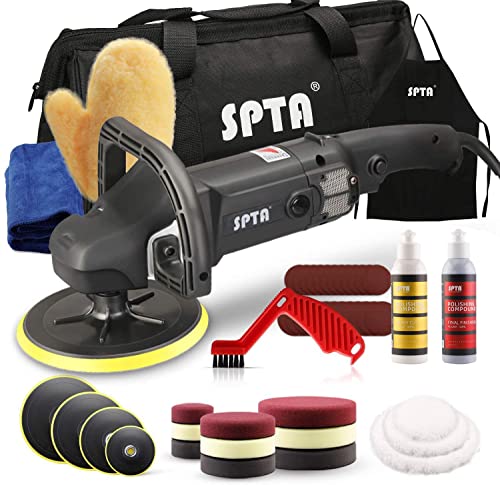
SPTA 7 Inch 180mm Rotary Polisher
THINKWORK Buffer Polisher 10 Inch Car Polisher Set
GEARLASSO Car Buffer Polisher 8-Speed Cordless 21V
More Details On Our Top Picks
Large vehicle panels call for steady power, and the GEVEELIFE brings a 1600W motor to a 6-inch or 7-inch rotary format. Rotary motion means the pad spins on a fixed axis, so you get direct cutting action for oxidation, stains, and heavier surface correction, though technique matters more than with a random-orbital tool.
Seven settings from 1000 to 3500 RPM give you room to start gently with wax and increase speed for more demanding work. The detachable handle suits car doors, boat sides, and sanding jobs, while the constant-power control board may appeal to anyone working across several panels. In our view, the honest trade-off is a more demanding learning curve for beginners.
Strong Points
- The 1600W motor gives experienced detailers substantial working capacity across cars and boats.
- The 6-inch and 7-inch size options let you balance panel coverage against access around mirrors and trim.
- Seven speed positions make low-speed waxing and faster correction part of the same workflow.
- A removable handle can improve control during long side-panel sessions.
- The constant-power control design is suited to extended work, subject to sensible breaks and ventilation.
Things To Consider
- Rotary action demands careful pad movement and pressure control, especially around edges.
- The larger motor and corded format can feel less convenient in a crowded garage.
Key Specs
Who It Suits Best
Experienced DIY detailers handling regular car, boat, or sanding projects benefit most from its strong motor and broad control range.
Where Another Pick Suits Better
Beginners seeking a less demanding motion may find the GEARLASSO Car Buffer Polisher 8-Speed Cordless 21V easier to manage around a driveway.
Accessory coverage is the defining angle here. The 1200W rotary tool includes 6-inch and 7-inch backing plates, four 6-inch polishing pads, sanding papers, and a wool bonnet, giving you a practical starting set for paint care rather than a bare machine.
Its six speed levels span 1000 to 3500 RPM, a range that suits slow product application and more active correction. The listing also describes a precision-aligned motor shaft for steadier rotation, which could help during long hood or roof sessions. Compared with the GEVEELIFE, you give up some motor output but gain a more immediately useful accessory spread.
What We Like
- The included plates accommodate two common pad sizes without requiring an immediate accessory search.
- Sanding papers and a wool bonnet support several stages of a garage detailing routine.
- The 1000 RPM starting point gives you a gentler entry for wax and finishing products.
Trade Offs
- A rotary machine remains technique-sensitive, so beginners need controlled passes around curves and panel edges.
- Multiple pad types require organized storage and prompt cleaning after compound or wax work.
- The 1200W output is lower than GEVEELIFE’s 1600W motor for demanding, repeated correction.
Feature Snapshot
Made For
DIY detailers who want one corded kit for waxing, polishing, sanding, and occasional paint work should consider this option.
Consider Something Else When
Users prioritizing extra motor capacity for frequent correction may prefer the GEVEELIFE Buffer Polisher 6 Inch/7 Inch 1600W Rotary.
Two handle positions make this AVID POWER version particularly adaptable. A detachable handle and side handle give you alternate control points for a roof, vertical door, boat hull, or sanding task, while the 1200W motor keeps the tool in the same general power class as the second pick.
The six-speed control runs from 1600 to 3500 RPM, so its floor is higher than the other AVID POWER model’s 1000 RPM setting. That narrower lower range may suit active polishing more than delicate product spreading. You may find the replaceable carbon brushes useful for long-term ownership, although brush access adds a maintenance task absent from simpler cordless designs.
Highlights
- The two handle choices help you maintain a stable stance on vertical and overhead panels.
- Constant-speed and constant-power functions are suited to consistent passes across a full vehicle.
- Replaceable carbon brushes offer a serviceable wear component for frequent hobby use.
- Six settings let you adjust the tool instead of relying on one fixed pace.
Minor Gripes
- The 1600 RPM minimum leaves less room for very gentle finishing than the 1000 RPM AVID POWER model.
- Cord management and brush access add practical upkeep in a small garage.
Quick Facts
Right Fit For
Hands-on hobbyists working on cars, boats, and sanding projects will get the most from its adjustable grip and serviceable motor design.
Not Your Match When
Wax-focused users wanting the lowest available starting speed may prefer the AVID POWER Car Rotary Buffer Polisher Waxer 1200W 6 Speeds.
The SPTA takes a more deliberate approach than the high-output GEVEELIFE. Its 7-inch, 180mm pad format covers broad doors and hoods, while the 1200W motor and all-ball-bearing construction target regular garage use.
A digital screen shows the selected setting, and six speed positions span 500 to 3000 RPM. That low starting point is valuable for controlled product spreading, while the upper limit remains suitable for routine polishing. The side handle and D-handle offer two grip styles, though a 7-inch disc can feel cumbersome around tight trim and smaller panels.
Upsides
- The 500 RPM minimum gives beginners more room to establish controlled pad movement.
- The digital indication makes speed selection easier to repeat between panels.
- The 180mm disc covers large vehicle surfaces efficiently.
- Two handle formats let you choose a side grip or top-mounted D-grip.
- Ball-bearing construction is intended to support long-term mechanical use.
Points To Note
- The 7-inch working size is less agile around mirrors, pillars, and narrow trim.
- Pad cleaning and storage remain important because the included polishing set can collect compound residue.
- The 3000 RPM ceiling is lower than several picks here.
Technical Sheet
Best Suited To
DIY users who value low-speed control, repeatable settings, and broad panel coverage will find this SPTA a sensible match.
A Better Fit Elsewhere
Detailers needing a smaller cordless tool for tight spaces should look at the GEARLASSO Car Buffer Polisher 8-Speed Cordless 21V.
Large panels are where a 10-inch disc earns its place. The THINKWORK uses random-orbital motion, meaning the pad rotates while moving in a changing path, a format that generally feels more forgiving for casual waxing than fixed-axis rotary action.
Its six-speed dial spans 1500 to 3600 RPM, and the front switch keeps start and stop control within reach. Four bonnets and a double-handle layout add practical value for broad vehicle surfaces. One thing worth considering is the supplied guidance to work in sessions of no more than 30 minutes, which makes this a better match for staged weekend care than uninterrupted shop work.
Bright Spots
- The 10-inch disc can reduce the number of passes across a hood, roof, or boat side.
- Random-orbital movement is a friendlier format for beginners learning pad pressure and overlap.
- Four bonnets provide useful rotation during a multi-panel waxing session.
- The double-handle design supports two-handed control on larger surfaces.
Room For Improvement
- The 10-inch footprint is awkward around headlights, door handles, and narrow body contours.
- A 1500 RPM minimum offers less low-speed flexibility than the SPTA.
- The 30-minute working guidance calls for breaks during larger vehicles.
- Bonnets need washing and thorough drying before storage to avoid residue buildup.
At A Glance
Who Will Love This
Casual car owners focused on broad-panel waxing and a more forgiving random-orbital motion should consider this THINKWORK set.
Swap It Out When
Users correcting tight areas or needing stronger rotary control will suit the AVID POWER Car Rotary Buffer Polisher 1200W 1600-3500 RPM more closely.
Driveway detailers gain the clearest convenience from the GEARLASSO because cordless operation removes the extension-cord problem around an RV, motorcycle, or boat. The 6-inch random-orbital format combines a manageable footprint with a pad path that may feel less intimidating than the rotary tools above.
Eight speed settings run from 2800 to 6000 RPM, and two 21V 2000mAh batteries support work away from a wall outlet. The 17-piece polishing kit gives you a broad starting assortment, although battery runtime depends on speed, pressure, surface size, and pack condition. For most single-vehicle sessions, the convenience is compelling, but corded tools remain more predictable for extended correction.
Reasons To Buy
- Cordless operation simplifies work in driveways, parking areas, and outdoor storage lots.
- The 6-inch disc reaches around tighter body contours more easily than the 10-inch THINKWORK.
- Eight settings offer more adjustment steps than the six-speed corded choices.
- Two 21V 2000mAh batteries reduce the need to stop for a single recharge.
- The 17-piece kit gives beginners several accessories to organize for different polishing tasks.
Honest Caveats
- The 2800 RPM minimum is relatively high for delicate product spreading.
- Battery runtime is workload-dependent, so large boats or RVs can still require planning.
Feature Rundown
Whose Shelf It Belongs On
Mobile detailers, RV owners, and driveway users who value cord-free access around smaller vehicles should choose this GEARLASSO option.
Reach For A Different Pick When
Long correction sessions near an outlet suit the SPTA 7 Inch 180mm Rotary Polisher better because its corded design avoids battery planning.
How To Choose The Right Auto Buffers And Polishers
Match The Motion To Your Skill
Rotary polishers spin the pad around a fixed center point. That direct action suits oxidation, sanding, and heavier paint correction, but you need steady movement around edges and contours. Random-orbital tools add a changing path to the rotation, which generally gives beginners a more forgiving way to spread wax and polish across a hood.
The THINKWORK and GEARLASSO use random-orbital movement, while the GEVEELIFE, AVID POWER, and SPTA options use rotary formats. Experienced detailers may prefer rotary control, while occasional driveway work often feels more manageable with random orbital motion.
Read The Speed Range Carefully
RPM means revolutions per minute, or how quickly the pad moves around its axis. Lower settings help with product spreading and controlled finishing, while higher settings support more active polishing and sanding. A wide range isn’t automatically better for every task, since a high minimum can make delicate work harder.
SPTA starts at 500 RPM, and the two AVID POWER models begin at 1000 and 1600 RPM. GEARLASSO starts at 2800 RPM but offers eight adjustment steps through 6000 RPM, making it more oriented toward faster cordless work.
Choose Disc Size And Grip For Your Panels
A 10-inch disc covers broad surfaces quickly, but it becomes cumbersome around trim, pillars, and door handles. Six-inch pads reach tighter areas and reduce the working footprint, while 7-inch formats sit between coverage and control. Your vehicle size, panel shape, and storage space should guide the choice.
Handle design matters during vertical and overhead work. Detachable, side, or D-handles give you more ways to position your wrists, while double-handle formats can steady a larger disc. Corded tools suit long sessions near an outlet, and cordless designs simplify outdoor work but bring battery planning into the routine.
Things Worth Knowing First
Mistakes Worth Dodging
A large disc can look efficient on paper, yet it won’t suit every panel. Match the pad diameter to the surface, and keep a smaller option available for mirrors, pillars, and tight trim. Speed also deserves attention, since starting too aggressively can make product control harder for a beginner.
Accessory count shouldn’t replace material compatibility. Check the included pads and bonnets against the compound or wax you plan to use, then clean and dry each cover before storage. Corded models need organized cable storage, while cordless models need charged battery rotation for larger vehicles.
What Separates Premium From Basic
Higher-tier tools generally justify their position through stronger motors, finer speed adjustment, steadier control, multiple handle arrangements, or a broader accessory package. Those details matter most during repeated vehicle work, large boat surfaces, and jobs where consistent pad movement saves effort.
Occasional waxing doesn’t require every extra. Paying more makes sense for frequent correction, large panels, serviceable wear parts, or cordless mobility that removes a recurring setup problem. A lower-output model with the right disc and motion can remain the more sensible fit for light weekend care.
Final Verdict
Your ideal choice depends on the work in front of you. GEVEELIFE suits experienced users wanting 1600W rotary power, SPTA offers a low 500 RPM starting point, and THINKWORK favors broad-panel random-orbital waxing. GEARLASSO brings the easiest outdoor setup, while the two AVID POWER models balance rotary control with different speed floors and handle arrangements. Start with pad motion, disc size, and working location, then choose the motor and accessories that match your routine rather than chasing specifications that will sit unused.
