

Marine growth can add maintenance work, drag, and unwanted buildup beneath your boat. You need a coating matched to hull material, water type, launch schedule, and the way you store or trailer your boat. This shortlist includes copper-based, copper-free, ablative, hard-finish, and deck-traction options for sailboats, powerboats, fishing boats, and routine restoration work. You’ll also find a clear explanation of where each formula fits, plus the trade-offs that matter before preparation and application.
The Shortlist At A Glance

Rust-Oleum Marine Boat Bottom Flat Black Antifouling Paint Quart

TotalBoat JD Select Water-Based Boat Antifouling Paint Black Quart

Interlux YBD101/1 Micron CF Green Gallon

Rust-Oleum Marine Clear Anti-Slip Additive Half Pint
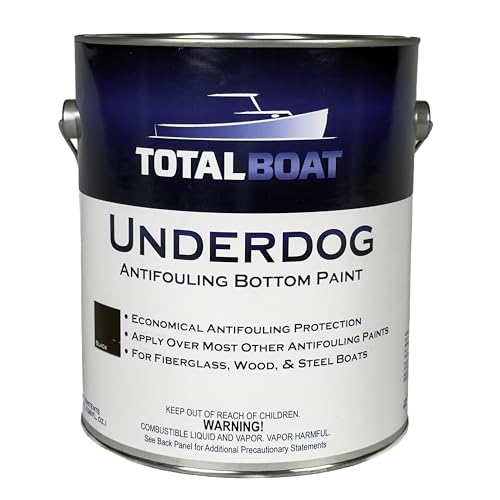
TotalBoat Underdog Antifouling Bottom Paint Black Gallon

TotalBoat Krypton Copper-Free Antifouling Paint White Quart
More Details On Our Top Picks
Fiberglass, wood, and steel hull owners get a straightforward below-waterline coating here. Its copper-release formula works gradually, making it suited to boats that remain in freshwater or saltwater between outings rather than spending most of the season on a trailer.
The quart covers up to 110 square feet, and the listed four-hour recoat window helps keep a maintenance day moving. You may find the 16-hour launch interval easier to plan than a longer cure schedule, although the hard finish demands careful surface preparation and compatibility checks over older coatings.
Strong Points
- Works across fiberglass, wood, and steel hull surfaces.
- Gradual copper release suits routine fouling-control maintenance.
- Up to 110 square feet of coverage helps estimate material needs before painting.
- A four-hour recoat period supports a compact preparation schedule.
Things To Consider
- The quart format may require multiple containers for larger hulls.
- A hard coating can leave more accumulated material to manage during future surface preparation than a polishing ablative finish.
Key Specs
Who It Suits Best
You’ll get the most practical fit for a small or medium fiberglass, wood, or steel boat needing a hard below-waterline coating in mixed water conditions.
Consider Something Else When
TotalBoat Underdog suits you better when frequent trailering or beaching makes a durable, single-season ablative gallon more useful.
For a seasonal DIY project, the water-based JD Select takes a different path from Rust-Oleum’s hard coating. An ablative paint gradually wears as the hull moves, exposing fresh active material during use and reducing the heavy buildup associated with repeated hard layers.
Brush, roller, and spray application give you flexibility in a home workshop or busy marina yard. The honest read is that a single-season formula favors predictable annual maintenance, while the quart size and 25.5% copper biocide specification make careful quantity planning important for broad hulls.
What We Like
- Water-based formulation is suited to straightforward brush or roller cleanup.
- Application by brush, roller, or spray accommodates different project setups.
- Fiberglass, wood, and steel compatibility covers common hull materials.
Worth Noting
- Single-season ablative wear means you’ll plan for recurring bottom-paint maintenance.
- A quart may be limiting for large boats, especially after extra coats or surface repairs.
- Spray application adds equipment-cleaning and masking work compared with a small brush job.
At A Glance
Made For
You’ll find the right fit for a hands-on boat owner preparing a fiberglass, wood, or steel hull for one planned season.
Not Your Match When
Interlux YBD101/1 Micron CF suits you more when a gallon-sized, multi-season polishing system aligns with extended use and larger maintenance cycles.
Extended storage and larger hulls call for a different maintenance rhythm, and Micron CF is positioned around multi-season use. Its polishing action means the coating wears and smooths over time, a useful contrast to Rust-Oleum Marine Boat Bottom Antifouling Paint Quart’s hard-finish approach.
Biolux Slime Blocking Technology and Econea are named components in the formula, while the gallon container makes more sense for broad coverage needs. You may find this system appealing for a frequently used sailboat or powerboat, though polishing paint requires attention to application buildup and the correct preparation between seasons.
Highlights
- Multi-season design can reduce the frequency of complete repainting.
- Polishing behavior helps the coating wear progressively rather than accumulating as a rigid layer.
- Biolux technology addresses slime, while Econea targets barnacle and mussel attachment.
- Gallon packaging suits larger hulls and extensive bottom areas.
- High-solids formulation supports a substantial coating with reduced solvent emissions listed by the source.
Trade Offs
- The gallon format can be excessive for a small boat or isolated repair.
- Multi-season polishing paint calls for more deliberate surface planning than a quick annual touch-up.
Technical Sheet
Right Fit For
You’ll benefit most as a boat owner managing a larger hull or longer in-water season who prefers a multi-season polishing coating.
Look Elsewhere When
TotalBoat JD Select suits you better for a smaller, single-season DIY project where a water-based quart and flexible application matter more.
Unlike every bottom coating here, this Rust-Oleum item is an additive for deck paint, not a standalone hull treatment. You mix its clear pumice material into latex or oil-based paint, creating a light texture for wood, metal, fiberglass, or concrete surfaces around the deck and cockpit.
That distinction matters during a refit: the blend-in approach lets you keep the selected paint color instead of covering the surface with a separate traction layer. For most boat-maintenance projects, you’ll want measured mixing and an even application, since too much texture can change the feel and appearance of a painted walking surface.
Upsides
- Clear additive keeps the underlying paint color visible.
- Compatible with latex or oil-based paint.
- Works across wood, metal, fiberglass, and concrete surfaces.
- Half-pint packaging fits targeted deck and cockpit projects.
Minor Gripes
- It doesn’t replace a below-waterline antifouling coating.
- Texture consistency depends on careful mixing and uniform application.
Feature Snapshot
Whose Shelf It Belongs On
You’ll appreciate this option as a boat renovator improving painted deck traction while preserving the chosen surface color.
A Better Fit Elsewhere
Rust-Oleum Marine Boat Bottom Antifouling Paint suits you more for actual below-waterline hull maintenance and marine-growth control.
Trailered boats need a bottom coating that tolerates movement between water and land, and Underdog is shaped around that routine. Its ablative action gradually wears during use, while the stated finish is designed to handle trailering and beaching more readily than traditional ablative coatings.
The gallon covers up to 500 square feet, a useful planning figure for broad hulls and workboats. You may find the 24% copper biocide formula especially suitable for boats used often in saltwater, although brush, roller, and spray application each bring different preparation and cleanup demands.
Reasons To Buy
- Gallon size and 500-square-foot coverage suit sizeable bottom-paint jobs.
- Compatible with fiberglass, wood, steel, and iron hull bottoms.
- Ablative wear reduces the buildup that can complicate next season’s preparation.
- The finish is positioned for frequent trailering and beaching.
- Brush, roller, and spray options let you match application to the work area.
Points To Note
- Single-season wear means annual recoating remains part of ownership.
- Spray application requires the specified thinning approach and suitable equipment.
- The gallon container may be more material than a small repair requires.
Feature Rundown
Built With In Mind
You’ll find the strongest match as a frequent trailer-boater, fishing-boat owner, or workboat operator needing broad seasonal coverage.
Swap It Out When
TotalBoat Krypton Copper-Free Antifouling Paint suits you better for aluminum hulls or metal components where a copper-free formula is the priority.
Aluminum hulls and metal hardware change the coating conversation, which gives Krypton a clear role in this shortlist. Its copper-free dual-biocide ablative formula is intended for aluminum, fiberglass, and wood hulls, plus outdrives and other metals.
Freshwater, saltwater, and brackish-water use broaden the application range, while the white quart finish offers a brighter alternative to the black coatings above. Depending on your boat size, the quart may suit a targeted job better than TotalBoat Underdog’s gallon, but smaller packaging also means less coverage for a full-size hull.
Bright Spots
- Copper-free formula fits aluminum hulls and metal components.
- Dual-biocide ablative design addresses barnacles, weeds, algae, and slime.
- Suitable for fresh, salt, and brackish water environments.
- Brush, roller, or spray application supports different maintenance setups.
Room For Improvement
- The single-season format calls for planned recurring maintenance.
- A quart may not cover a complete large-hull repaint.
- Spray work adds equipment and surface-protection requirements around the boat.
Quick Facts
Who Will Love This
You’ll benefit most as an aluminum-boat owner or mixed-metal maintenance specialist working across fresh, salt, or brackish water.
Where A Sibling Pick Shines
Interlux YBD101/1 Micron CF suits you more for a gallon-sized, multi-season coating on a larger boat.
How To Choose The Right Anti-Fouling Paints
Match The Formula To Your Hull
Start with hull material. Copper-based coatings suit many fiberglass, wood, and steel boats, while a copper-free option such as TotalBoat Krypton is the more appropriate direction for aluminum and mixed-metal applications listed by the manufacturer. A mismatch can create compatibility concerns, so existing coating condition and manufacturer guidance deserve attention before you open a can.
Choose Hard Or Ablative Wear
Ablative paint gradually wears as water movement exposes fresh active material. That behavior can simplify future preparation by limiting heavy layer buildup, but it also means seasonal wear is part of the ownership plan. Hard finishes hold their film more firmly and can make sense for boats with specific speed, storage, or local-maintenance requirements, though old layers may need more preparation later.
Calculate Coverage Before Application
Coverage determines whether a quart is a focused repair size or an inefficient format for the whole hull. TotalBoat Underdog lists up to 500 square feet per gallon, while Rust-Oleum Marine Boat Bottom Antifouling Paint lists up to 110 square feet per quart. Measure the painted area, account for the number of coats specified for your project, and keep the finish below the waterline.
Consider Water And Storage Patterns
Saltwater, freshwater, and brackish water create different fouling pressures, so match the stated environment to your usual launch location. Frequent trailering or beaching also favors a finish designed for that handling pattern, such as Underdog. A boat kept in the water for long periods may justify a multi-season polishing system, while a lightly used trailer boat may favor simpler annual maintenance.
Things Worth Knowing First
Mistakes Worth Dodging
A common mistake is treating every item labeled for marine paint as a bottom coating. Rust-Oleum Marine Clear Anti-Slip Additive belongs in deck paint, not beneath the hull, so separate walking-surface traction work from below-waterline fouling control.
Surface preparation also deserves more attention than color selection. Remove loose material, inspect the existing coating, and confirm compatibility before applying a new layer. Mixing hard and ablative systems without checking instructions can create avoidable adhesion and buildup issues.
The Upgrade Payoff
Higher-tier formulas often add a broader water-environment range, multi-season behavior, specialized active ingredients, or compatibility with aluminum and metal components. Interlux Micron CF’s multi-season polishing design and TotalBoat Krypton’s copper-free approach show how the added formulation complexity serves distinct maintenance problems.
Paying more makes sense for large boats, extended in-water storage, or difficult hull materials. A smaller trailer boat may gain more from TotalBoat JD Select’s manageable water-based application or Underdog’s trailering-oriented finish than from a higher-complexity coating.
Final Verdict
You’ll find the strongest match by starting with hull material and storage habits rather than color or container size. Rust-Oleum offers a direct hard-finish route, TotalBoat JD Select keeps seasonal DIY work approachable, and Underdog targets broad coverage with frequent trailering. Interlux Micron CF belongs with larger, multi-season projects, while Krypton addresses copper-free applications. For deck traction, Rust-Oleum’s clear additive fills a separate role. Choose the formula that fits your water, hull, and maintenance calendar, then plan surface preparation before application.
