

Choosing among Aluminum Boat Paints gets easier once you separate bottom protection, deck traction, fiberglass repair, barrier priming, and aluminum adhesion. You need the right coating for the surface and water exposure, especially during seasonal maintenance, trailer storage, or a full hull refresh. This shortlist covers six distinct jobs, from antifouling paint for submerged surfaces to a compact spray primer for bare aluminum. You’ll also find practical trade-offs for cleaning, preparation, application, and long-term upkeep.
The Shortlist At A Glance




More Details On Our Top Picks
Seasonal hull care calls for a coating made for the submerged area, not a general-purpose finish. This flat black antifouling paint uses gradual copper release to address marine buildup on fiberglass, wood, or steel below the waterline, making it a practical fit for freshwater and saltwater boats.
The listed coverage reaches 110 square feet per quart, while a four-hour recoat window helps keep a weekend maintenance schedule moving. You may find the hard, smooth finish easier to blend over an existing antifouling layer than a textured deck coating such as Tuff Coat, though surface preparation still determines the final result.
Strong Points
- Works across fiberglass, wood, and steel hull surfaces.
- 110-square-foot coverage gives you useful reach for a quart.
- Four-hour recoat timing suits staged maintenance in a home driveway.
- The flat black appearance can produce a consistent look over older bottom coatings.
Things To Consider
- Its purpose is below-waterline fouling control, so it isn’t the right finish for topside aluminum panels or walking surfaces.
- Copper-based bottom coatings need careful surface preparation and periodic maintenance as the existing layer wears.
Key Specs
Who It Suits Best
You’ll get the most practical value from this option for seasonal freshwater or saltwater hull maintenance on fiberglass, wood, or steel boats.
Consider Something Else When
TotalBoat JD Select Water-Based Bottom Paint suits you better for a gallon-sized, water-based application using a brush, roller, or spray setup.
A gallon container makes this TotalBoat formula more appropriate for a larger hull or a multi-coat seasonal project than Rust-Oleum’s quart. Its ablative design means the coating gradually wears at the surface, while the 25.5% copper content supports its antifouling purpose in fresh or salt water.
Water-based cleanup can simplify work in a garage or driveway, and you can apply it with a brush, roller, or spray equipment. The honest trade-off is that broad compatibility doesn’t remove the need to follow surface-preparation steps, especially on a hull carrying an older coating.
What We Like
- Gallon packaging fits larger boats and planned seasonal recoating.
- Water-based cleanup is more manageable around a home workshop.
- Brush, roller, and spray compatibility gives you application flexibility.
Worth Noting
- Ablative paint wears gradually, so you’ll need to inspect the bottom during future haul-outs.
- The blue color may not suit you when matching an existing black or neutral hull finish.
- Spray application requires suitable equipment and careful masking around the work area.
At A Glance
Made For
This choice fits DIY boat owners handling larger fiberglass, wood, or steel hulls across a single seasonal maintenance cycle.
Where Another Pick Suits Better
Rust-Oleum Marine Boat Bottom Antifouling Paint Quart is a better fit for you when a smaller container and black finish make more sense.
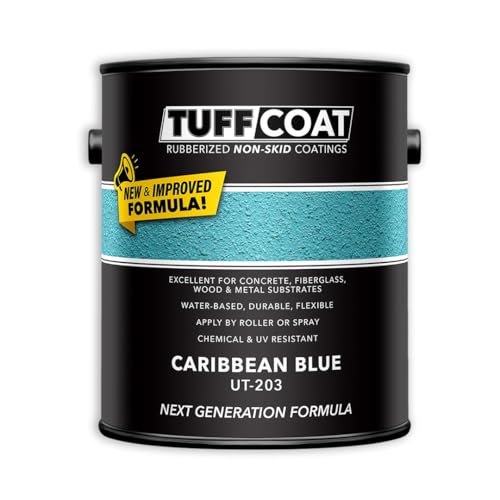
Boat decks, docks, and ramps need a different answer from submerged hulls. Tuff Coat uses a medium rubberized texture in a flexible water-based coating, giving you a surface designed for traction rather than copper-based marine growth control.
Caribbean Blue adds a visible design change for a dock or open deck, while the textured finish can help define walking areas in a busy marina setting. You may find the texture harder to clean than a smooth coating, particularly around dirt-catching grooves, but that compromise makes sense for high-traffic surfaces.
Highlights
- Medium texture creates a more tactile surface for decks and ramps.
- Flexible rubberized construction suits areas exposed to impact and repeated foot traffic.
- Water-based chemistry simplifies routine cleanup after application.
- Caribbean Blue gives you a clear color option for docks, patios, and boat decks.
- Single-component use avoids measuring a separate catalyst before application.
Trade Offs
- This is a deck coating, not a below-waterline antifouling paint.
- Medium texture can collect grime and may require more brushing during cleaning.
Feature Snapshot
Right Fit For
You’ll appreciate this option most for a dock, ramp, boat deck, patio, or walkway where textured traction matters more than hull fouling protection.
Look Elsewhere When
TotalBoat JD Select Water-Based Bottom Paint is the stronger match for you when the project involves a submerged hull and seasonal antifouling coverage.
Scratches, chips, and shallow gouges in a fiberglass boat call for gel coat, the pigmented outer resin layer used to finish many fiberglass surfaces. Marine Coat One supplies white Iso/NPG gel coat with wax, MEKP catalyst, and six tinting pigments, so you can work toward a closer match than plain white alone.
The wax helps the repair cure without a tacky surface, which is useful during a focused weekend touch-up. Still, color blending takes patience, and you may find this kit better suited to careful repair work than broad-area repainting; Rust-Oleum Marine Boat Bottom Antifouling Paint Quart serves a completely different maintenance role.
Upsides
- Waxed gel coat is designed to cure with a non-tacky surface.
- Six included pigments give you more flexibility for matching an aged fiberglass finish.
- MEKP catalyst provides the hardening component needed for the repair process.
- A quart quantity suits repeated small repairs rather than a single tiny blemish.
Room For Improvement
- Color matching can remain difficult when your hull has faded unevenly from sunlight.
- Working with catalyst and gel coat requires careful measuring, mixing, and cleanup.
- The kit addresses fiberglass repair, not aluminum adhesion or below-waterline fouling control.
Quick Facts
Who Will Love This
This kit suits you best for hands-on fiberglass repairs where scratches, scrapes, cracks, or gouges need a color-adjustable finish.
Another Choice May Suit
Rust-Oleum Professional Aluminum Primer Spray Paint fits you better for small bare-aluminum areas that need a paint-ready base.
A full hull restoration often needs a foundation coat before you apply bottom paint, topside paint, or fairing compound. TotalProtect is a high-build epoxy primer, meaning its thicker two-part film is intended to form a substantial barrier over fiberglass and underwater metal.
The 3-to-1 mix ratio and 15-minute induction period add preparation steps, yet that process makes sense for a serious restoration rather than a quick touch-up. Depending on your hull condition, you may value its above- and below-waterline versatility more than the faster handling of Rust-Oleum Professional Aluminum Primer Spray Paint.
Bright Spots
- High-build epoxy construction helps create a substantial barrier coat.
- Suitable for fiberglass and underwater metals, giving you broad restoration coverage.
- Compatible with topside paint, bottom paint, and fairing compound.
- Gray color provides a practical base beneath a later finish coat.
Points To Note
- Two-part mixing demands accurate ratios and thorough preparation before application.
- The 15-minute induction period extends the setup stage of a repair day.
- Large restoration work requires careful storage of the remaining components and proper cleanup after use.
Technical Sheet
Built With In Mind
You’ll benefit most from TotalProtect during a substantial fiberglass or metal hull restoration that needs a compatible base for later marine coatings.
Swap It Out When
Marine Coat One Iso/NPG Gel Coat Repair Kit suits you better for localized fiberglass scratches and gouges rather than full-surface barrier preparation.
Small bare-aluminum repairs don’t need a gallon of mixed epoxy. This 15-ounce oil-based aerosol primer is designed to prepare aluminum for a topcoat, and its high-output tip sprays at any angle, a useful detail for rail sections, brackets, trim, and awkward boat hardware.
The listed coverage reaches 14 square feet, with a touch-dry time of 15 minutes and immediate topcoat readiness. That makes it a convenient choice for contained indoor or outdoor jobs, though a spray can offers less practical coverage for a full hull than TotalBoat TotalProtect Marine Barrier Coat Epoxy Primer.
Best Bits
- Designed specifically for bare aluminum preparation.
- Angled spraying capability helps you reach uneven or difficult surfaces.
- Fast touch-dry timing suits small repair windows.
- Indoor and outdoor use expands its usefulness around a boat and trailer.
Small Caveats
- 14-square-foot coverage limits its practicality for large boat surfaces.
- Oil-based aerosol cleanup and storage require more care than a water-based coating.
- You still need a compatible topcoat for the completed finish.
Details At A Glance
The Right Fit
This primer is suited to you for small bare-aluminum touch-ups on boats, trailers, hardware, and other indoor or outdoor metal surfaces.
Reach For A Different Pick When
TotalBoat TotalProtect Marine Barrier Coat Epoxy Primer is better for you when a large fiberglass or underwater-metal restoration needs a high-build two-part base.
How To Choose the Right Aluminum Boat Paints
Match the Coating to the Surface
Start with the material beneath the coating. Fiberglass gel coat repair products, such as Marine Coat One, address scratches and gouges in the outer fiberglass finish, while TotalBoat TotalProtect creates a primer layer over fiberglass or underwater metal. Bare aluminum needs an adhesion-focused primer, not a copper-based bottom coating.
You’ll also need to identify the location. A walking deck, dock, or ramp benefits from Tuff Coat’s medium texture, whereas a submerged hull calls for antifouling paint. Treating those categories as interchangeable can leave you with poor adhesion, unwanted texture, or the wrong type of protection.
Consider Water Exposure and Paint Wear
Antifouling paint is intended to manage marine growth below the waterline. Rust-Oleum’s formula gradually releases copper, while TotalBoat JD Select uses an ablative structure. Ablative means the outer coating slowly wears during service, so you should expect future inspection and maintenance rather than a permanent film.
Freshwater and saltwater use both appear in the source details for the two bottom paints, but your local conditions still affect maintenance frequency. A boat kept in a marina has a different exposure pattern from a small craft that spends most of its time on a trailer.
Plan the Application Process
Your application method shapes the project. JD Select supports brush, roller, or spray equipment, giving you flexibility on a larger hull. The Rust-Oleum aluminum primer arrives as an aerosol, which is convenient for narrow areas but less efficient for broad coverage.
Two-part epoxy systems require more planning. TotalProtect uses a 3-to-1 mix ratio and a 15-minute induction period, meaning you allow the mixed components to rest before application. Gel coat repairs also require catalyst handling and color adjustment, so patience matters more than speed.
Think About Cleanup and Future Maintenance
Water-based coatings generally simplify cleanup around a home workspace, which gives JD Select and Tuff Coat an advantage for DIY maintenance. Oil-based aerosol primer offers fast handling but calls for more deliberate ventilation, masking, and storage practices. Gel coat and epoxy work demand organized tools because cured residue becomes harder to remove.
Your best match depends on project scale. A quart of gel coat makes sense for targeted fiberglass repairs, a gallon of bottom paint suits broader seasonal coverage, and a 15-ounce primer can keeps a small aluminum repair from turning into a full renovation.
Things Worth Knowing First
Mistakes Worth Dodging
Choosing by color alone can send you toward the wrong coating. Black or blue bottom paint belongs below the waterline, while Tuff Coat addresses deck traction and Marine Coat One addresses fiberglass finish repairs.
Skipping surface preparation creates avoidable problems with adhesion and appearance. Remove loose material, clean the working area, and follow the product’s preparation requirements before applying a new layer over an older coating.
What Separates Premium From Basic
Higher-tier marine coatings often justify their position through a more specialized chemistry or a broader restoration role. A two-part epoxy barrier coat demands more mixing work, but it gives you a dedicated foundation beneath later marine finishes.
Spending more makes sense for a full hull restoration, repeated exposure, or a large fiberglass and metal project. Small aluminum touch-ups usually need the focused aerosol format, while a minor fiberglass blemish benefits more from a gel coat kit than from a large primer system.
Closing Remarks
You’ll get the right result by treating each coating as a tool for a specific surface and location. Rust-Oleum Marine Boat Bottom Antifouling Paint and TotalBoat JD Select cover submerged hull maintenance, Tuff Coat handles textured walking areas, Marine Coat One addresses fiberglass repairs, TotalProtect supports deeper restoration, and Rust-Oleum Professional Aluminum Primer prepares bare aluminum. Start with your boat’s material, water exposure, repair size, and application method, then choose the option that fits the actual job rather than the label alone.
