

Heavy-duty battery load testers matter when you need more than a quick voltage guess. You get a clearer read on starting power, charging behavior, and whether a battery still has enough muscle for real use, whether that’s a commuter car, a weekend boat, or equipment that sits between jobs.
This roundup focuses on tools that fit different working habits, from simple analog-style gear to digital analyzers with reporting features. You’ll see which ones suit basic driveway checks, which ones lean toward shop work, and which ones make sense for mixed 6V, 12V, and 24V setups.
The Shortlist At A Glance

FJC 45118 Carbon Pile Battery Tester

Battery Tender Battery Load Tester 12V 100A / 6V 50A

TOPDON BT600 12V 24V Battery Tester with Printer

Battery Load Tester 100A 6/12V Metal Switch

KAIHENG Car Battery Load Tester 6V 12V

VDIAGTOOL BT300 6V 12V Battery Tester

Acclope BT90 Pro Battery Tester with Cloud Printing

VDIAGTOOL BT500 6V 12V 24V Battery Tester
More Details On Our Top Picks
FJC’s 45118 sits in the lane you’d expect for shop work, not casual roadside guessing. The carbon pile setup gives you a straightforward way to put a real electrical load on the system, and the separate volt and amp meters help you read what’s happening without much mental gymnastics.
You’ll appreciate the long 56-inch copper cables with heavy-duty clamps in a busy bay, where reaching across a hood or trailer battery matters. Compared with the smaller handheld picks below, this one makes more sense for someone who regularly checks 6V, 12V, and 24V batteries, along with alternators, regulators, and starters.
Strong Points
- Handles 6V, 12V, and 24V systems, so you can cover a wider mix of vehicles.
- Carbon pile loading gives you a more hands-on diagnostic feel than simple quick-check tools.
- Separate amp and volt meters make the readings easier to follow in real use.
- 56-inch copper cables help in roomy garages and around larger vehicles.
- Heavy-duty clamps suit frequent shop handling better than lighter-duty leads.
Things To Consider
- The physical style is more shop bench than glovebox, so storage takes planning.
- Carbon pile tools usually ask for a steadier, more attentive workflow than digital analyzers.
- It’s less convenient for quick driveway checks on the go.
Key Specs
Who It Suits Best
You’ll get the most from this pick in a garage, repair bay, or home workshop where you handle mixed vehicle types and want a direct, old-school load test.
Where A Sibling Pick Shines
TOPDON BT600 suits you better if you want printed results and a more digital workflow for customer-facing work.
This Battery Tender unit keeps the feature set focused, which helps in a home garage or driveway setup. It checks load condition, starter draw, and charging-system behavior, so you’re not guessing whether the issue lives in the battery or farther down the line.
The rubber-insulated handle and color-coded clamps are the practical touches here, especially when the job happens around a muddy truck, a boat, or a motorcycle battery tucked into a tight spot. Compared with the FJC carbon pile model, it feels more approachable for occasional use and less like a bench tool built for constant shop duty.
What We Like
- Covers 12V and 6V batteries, which fits a broad mix of everyday vehicles and equipment.
- Checks battery load, starter draw, and charging-system behavior in one unit.
- Color-coded clamps make hookup simpler during quick driveway diagnostics.
- The insulated handle adds a reassuring touch for regular handheld use.
Minor Gripes
- It does not bring the same report-style workflow as more digital picks.
- The fixed use pattern suits straightforward checks better than deeper data logging.
- Large workshop routines may outgrow it faster than smaller home setups do.
At A Glance
Made For
You’ll like this most if you want a clear, no-fuss tester for home vehicles, weekend projects, and occasional battery checks.
Another Choice May Suit
VDIAGTOOL BT300 fits better for you if you want deeper digital diagnostics and wider CCA coverage.
The BT600 stands out because it adds a built-in printer, which matters more than it sounds like in a shop that hands diagnostics to customers. The 3.5-inch screen and cranking-and-charging checks turn it into a more document-friendly tool than the simpler analog options earlier in the list.
You may find the extra hardware worth it if you keep records, explain jobs to fleet contacts, or want printed proof attached to a repair conversation. Compared with the Battery Tender tester, this one pushes farther into professional documentation, though it also asks you to live with a more complex interface.
Positives
- Built-in printing helps you create a paper trail without extra steps.
- The 3.5-inch screen gives you room to read results more comfortably.
- Supports both 12V and 24V systems, which broadens vehicle coverage.
- Works on 100 to 2000 CCA batteries, a useful span for many automotive setups.
- Fits well in customer-facing spaces where documentation matters.
Points To Note
- The added features make it less minimal than the simpler driveway units.
- Shop users will get more from it than casual one-off users.
- The printer adds another part to keep supplied and tidy.
Details At A Glance
Best Suited To
You’ll appreciate this most in a repair shop, fleet bay, or any setting where written documentation helps move decisions along.
Swap It Out When
FJC 45118 suits you better if you want a simpler carbon pile tool for direct bench-style testing.
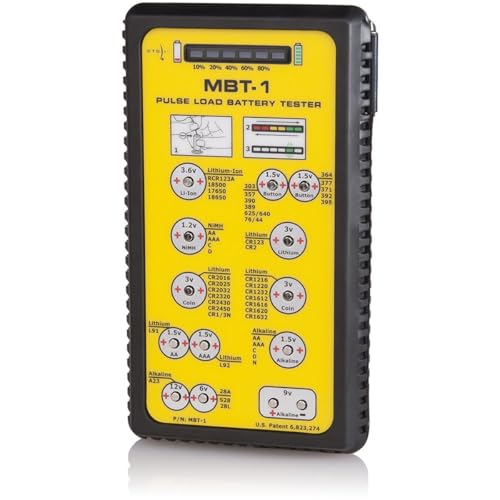
ZTS goes in a different direction from the automotive-heavy picks above, and that’s useful to keep in mind. The no-switch, no-setting layout makes it feel almost immediate to use, which is a relief when you need to sort batteries quickly instead of studying a long menu.
Its real value shows up in battery management work, cell matching, and quick triage across many battery types. For someone dealing with a collection of batteries rather than just one vehicle, that’s a clean, low-friction way to work, though it isn’t the kind of tool that centers on shop-style alternator testing.
Highlights
- No switches or settings keep the workflow simple.
- Designed for more than 30 battery types, which is a major help in mixed inventory.
- Quickly separates weak cells from healthy ones in routine management work.
- Helpful for matching batteries in sets, where consistency matters.
Areas To Watch
- The focus is broader battery management, not just vehicle diagnostics.
- It does not lean into the same alternator and charging-system emphasis as some car-specific tools.
- Users who want a large-screen digital report may prefer a different pick.
Core Details
Who Should Grab It
You’ll get the most from this pick when you manage many battery types and want something quick, direct, and easy to read.
Look Elsewhere When
Battery Tender’s tester fits better if your work stays centered on 6V and 12V vehicle batteries rather than mixed battery management.
This Q-Tech tester keeps things plain, and that’s part of the appeal. It handles 6V and 12V batteries up to 1000 CCA, so you can use it for cars, light trucks, RVs, motorcycles, ATVs, boats, and lawn tractors without adding complexity.
One thing worth considering is how well that simplicity fits a basic garage toolkit, especially if you just want to decide whether a battery needs charging or replacement. Compared with the more feature-rich TOPDON and VDIAGTOOL units, this one is the leaner choice for straightforward voltage-and-load checks.
Upsides
- Works with both 6V and 12V batteries.
- Up to 1000 CCA coverage suits many common small-vehicle batteries.
- Good fit for cars and light-duty equipment around the home.
- Simple layout keeps routine checks moving.
Softer Spots
- It lacks the richer diagnostics you get from higher-tier digital models.
- The tool is best for basic decision-making, not deeper report work.
- Metal hardware helps durability, but the overall experience is still utilitarian.
Feature Snapshot
The Right Fit
You’ll like this best for routine garage checks where you want a basic answer without extra menus or paperwork.
Reach For A Different Pick When
VDIAGTOOL BT300 suits you better if you want more detailed electrical analysis and a wider operating range.
For a modest garage setup, this KAIHENG tester lands in a comfortable middle ground. The voltmeter plus alligator clips make it feel familiar, and the 100A load for 12V batteries, plus 50A for 6V batteries, covers the sort of day-to-day checks many home mechanics actually do.
You may find it especially handy when you want a readable, meter-first workflow without stepping into printer or software territory. Compared with the Q-Tech pick, it adds a voltmeter and broader alternator-check usefulness, while staying simpler than the digital analyzers farther down the list.
Best Bits
- Voltmeter gives you a clearer read on system behavior during a test.
- 100A and 50A load ratings match common 12V and 6V checks.
- Alligator clips keep hookup straightforward in a garage or driveway.
- Useful for cars, RVs, motorcycles, ATVs, and boats.
Small Caveats
- The tool still lives in the basic-mechanics category, not the high-data category.
- Clip-based tools benefit from clean storage so the leads stay tidy.
- It’s a good fit for clear yes-or-no checks, less so for reporting.
Quick Facts
Whose Shelf It Belongs On
You’ll appreciate this if you want a familiar, no-frills tester for mixed household and garage use.
Where A Sibling Pick Shines
Battery Tender’s tester fits better if you want a simpler, more established path for starter and deep-cycle checks.
BT300 leans hard into diagnostic depth, which is exactly why it sits above the simpler meter-style picks. It checks voltage, load, internal resistance, ripple, state of charge, state of health, CCA, plus charging and cranking performance, so you get a wider picture before a battery leaves you stuck in the driveway.
For anyone maintaining motorcycles, trucks, SUVs, ATVs, or boats, that broader read can save time by narrowing down whether the problem is the battery, the starter path, or the charging side. The trade-off is that this much information can feel like overkill for someone who only wants a fast go-or-no-go answer.
Reasons To Buy
- Wide diagnostic coverage reaches beyond basic load testing.
- 5 to 3000 CCA support stretches across many battery sizes.
- Reads internal resistance and ripple, which helps reveal deeper electrical issues.
- Useful across several vehicle types, from motorcycles to trucks.
- Strong fit for anyone who values a fuller diagnostic picture.
Room For Improvement
- The long feature list can feel busy for quick casual checks.
- Users who want a simpler on-off result may prefer a more basic tester.
- More features usually mean more time spent learning the interface.
Feature Rundown
Built With In Mind
You’ll get the most from this if you want deeper electrical insight for mixed vehicle upkeep and don’t mind a more advanced tool.
Skip It When
Q-Tech’s simpler load tester suits you better if you only need a basic battery verdict for routine use.
The BT90 Pro feels built for people who need evidence, not just a screen result. Cloud printing gives you a QR-based report path, and the system folds in SOH, SOC, voltage, resistance, cranking, charging, and ambient temperature, so the output is much more presentation-ready than a plain handheld readout.
That matters in shops, fleets, or service routes where you want a shared record without photographing a display or rewriting numbers by hand. Compared with TOPDON’s printer-equipped BT600, this one reaches farther on analysis depth and battery compatibility, though that also makes it a more serious tool to learn.
Positives
- Cloud-linked reporting makes result sharing easier.
- Supports 6V, 12V, and 24V batteries for wider coverage.
- Reads SOH, SOC, voltage, resistance, cranking, and charging data.
- Ambient temperature is part of the process, which helps contextualize results.
- Works across AGM, EFB, gel, and lithium-listed battery types in the source data.
Honest Caveats
- The richer workflow suits organized work more than quick casual checks.
- Cloud reporting and multiple modes add learning time.
- Shops will likely get more out of it than occasional home users.
Core Details
Perfect Match For
You’ll like this most if you run a shop, manage a fleet, or want a battery tester that produces shareable records.
A Better Fit Elsewhere
TOPDON BT600 suits you better if you want printable results with a slightly simpler digital setup.
BT500 rounds out the list with the broadest voltage coverage here, and that gives it obvious appeal for mixed vehicle ownership or fleet use. It handles flooded, AGM flat plate, AGM spiral, gel, and EFB battery types, so the fit is broader than the smaller 6V and 12V tools.
For a long commute, a work truck, or a garage that sees several battery chemistries, that flexibility saves you from juggling multiple testers. The honest read is that lithium and deep-cycle battery use is limited by the source data, so this one makes the most sense for conventional automotive coverage rather than every battery under the sun.
Best Bits
- Supports 6V, 12V, and 24V systems.
- Covers several common battery constructions, including flooded, AGM, gel, and EFB.
- 5 to 3000 CCA coverage gives it a wide working range.
- Useful for cars, trucks, motorcycles, SUVs, ATVs, and boats.
- Good fit when your garage sees mixed battery setups.
Trade Offs
- The source data limits lithium and deep-cycle use, so check your application carefully.
- Broader support usually brings a more involved setup than basic testers.
- Casual users may not need this much range for one household vehicle.
Technical Sheet
Right Fit For
You’ll benefit most from this if you want broad compatibility for household vehicles, work trucks, and mixed garage maintenance.
Look Elsewhere When
The ZTS Multi-Battery Tester suits you better if your priority is fast battery sorting rather than automotive system analysis.
How To Choose The Right Heavy Duty Battery Load Testers
Start With The Battery Types You Handle
Voltage compatibility comes first because the wrong range wastes time fast. A tester built for 6V and 12V covers many cars, motorcycles, and light trucks, while a 24V-capable model makes more sense for heavier equipment or mixed fleets.
Battery chemistry matters too. Flooded lead-acid, AGM, gel, and EFB each behave differently under load, so a broader compatibility list gives you more breathing room in a garage that sees varied vehicles.
Match The Tool To Your Workflow
Some testers are built for a quick answer, while others are closer to a full diagnostic station. A carbon pile unit gives you direct control and a very hands-on feel, while digital analyzers often present state of health, resistance, or cranking data in a cleaner package.
Choose the style that fits how you work on a normal day. A home mechanic usually wants something straightforward, while a shop or fleet setting benefits from clearer records and a deeper read.
Look At Current Range And Reporting Depth
CCA, or cold cranking amps, tells you how much starting current a battery is rated to provide in cold conditions. A wider CCA range makes the tester useful across small cars, larger trucks, and equipment with very different battery sizes.
Reporting depth matters just as much. Simple meters are fine for many jobs, but printed or shareable reports help when you need to explain a finding to a service contact, track repeat issues, or keep records tidy.
Don’t Ignore Handling And Storage
Lead length, clamp quality, and the shape of the housing affect day-to-day comfort. A bench-style tester can be a strong choice in a fixed workspace, while a more compact unit wins in a small garage or a service van.
Cleaning and cable storage also deserve attention. Heavy clamps and longer leads usually last longer when they’re wrapped carefully and kept dry, especially in busy spaces where tools get moved around a lot.
Things Worth Knowing Before You Order
Common Shopping Slip Ups
One frequent mistake is overbuying features you won’t use. A driver who only wants to check a sedan battery doesn’t need cloud reports or multiple chemistry modes, and that extra complexity can get in the way.
Another slip-up is underbuying voltage coverage. A tester that handles only 6V and 12V works fine for many garages, but it leaves you stuck the moment a 24V system enters the picture.
The Upgrade Payoff
Higher-tier models usually cost more because they add deeper diagnostics, better displays, report generation, or printing hardware. Those features take more engineering, and they make sense when you work on many vehicles or need a clean record of the result.
Spending up pays off most in shops, fleet maintenance, and busy garages where every saved minute matters. For occasional home checks, a simpler tester often gives you the cleaner ownership experience.
Closing Thoughts
The right heavy-duty battery load tester depends on how much information you need and how often you’ll use it. A simple load tester can be a smart everyday tool, while a digital analyzer with reporting belongs in a busier workflow. Match the voltage range, clamp style, and output style to your own garage habits, and the tool will feel useful instead of overbuilt. That’s the real win here, choosing the one that fits your routine without adding clutter.
