

Dual battery setups matter most when your vehicle has to start reliably and still power extras like fridges, lights, radios, or winches. The right isolator keeps the starting battery protected while helping the auxiliary battery charge in step with the engine, so you’re not gambling with a flat start after a long day out.
This roundup focuses on straightforward, voltage-sensitive relay kits and a few more flexible options for RVs, boats, trucks, and overland rigs. You’ll see where each one fits best, what trade-offs come with the price tier, and which features actually help in daily use.
Quick Look At The Shortlist

VEVOR Split Charge Relay Kit 6mtr 12V Automatic Dual Battery Isolator Kit

150 Amp Dual Battery Isolator Kit 12V/24V Smart VSR Relay Switch

Dual Battery Isolator Kit 12V 140 Amp Voltage Sensitive Relay VSR

Smart Dual Battery 140A Isolator Model VSR12

Dual Battery Isolator Kit 12V 140amp Voltage Sensitive Relay VSR

Nilight 12V 140A Smart Dual Battery Isolator VSR Voltage Sensitive Relay
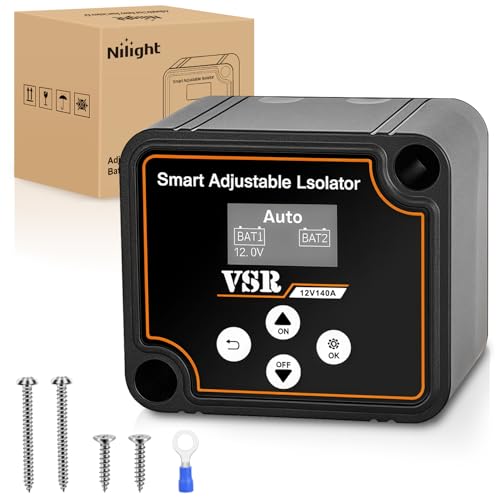
Nilight Dual Battery Isolator Kit Smart Adjustable 12V 140 AMP Waterproof

Nilight 12V 140A Smart Dual Battery Isolator VSR with LED Voltage Display

Nilight 12V 140A Dual Battery Isolator Kit W Smart VSR 6AWG Cable RV
More Details On Our Top Picks
The 6-meter cable run sets this VEVOR kit apart right away, especially for RVs, caravans, and longer vehicle layouts where a short harness would feel cramped. Its 140A voltage-sensitive relay, or VSR, switches based on battery voltage instead of manual guesswork, so it suits people who want a hands-off setup for weekend touring or workshop use.
The nylon housing and stainless M6 power studs point to a practical, corrosion-aware build, while the IP65 rating adds some reassurance in damp engine bays or marine spaces. The trade-off is simple, this is more about flexible installation than extra dashboard features, so you benefit most when cable length and straightforward automation matter more than readout extras.
What We Like
- Six-meter cable length helps with larger vehicles and spread-out battery locations.
- 140A capacity suits many 12V auxiliary charging setups.
- Stainless M6 studs are a sensible touch for secure connections.
- IP65 sealing offers better confidence in wet or dusty locations.
- Simple automatic switching keeps daily use low-fuss for touring rigs.
Minor Gripes
- No onboard voltage screen, so you’ll lean on the vehicle’s own monitoring or a separate meter.
- The longer cable kit can take more planning during installation than a compact relay.
- Owners who want manual override controls will find this more basic than some rivals.
Feature Snapshot
Who It Suits Best
You’ll get the most from this kit in an RV, caravan, boat, or workshop setup where cable reach and straightforward automatic charging matter more than extras.
A Better Fit Elsewhere
Nilight Dual Battery Isolator Kit Smart Adjustable 12V 140 AMP Waterproof suits you better if you want auto and manual control in the same unit.
Dual-voltage support gives this GMURA kit a wider lane than the VEVOR pick above, since 12V and 24V systems can live in the same shortlist without much fuss. The LED monitor is handy in trucks, RVs, or mixed fleet use, because a quick glance tells you how both batteries are behaving without opening the hood.
The emergency start button is the useful extra here, and it makes sense for long trips or work vehicles where a flat main battery can turn into a morning headache. The honest read is that the extra controls add value only for people who actually want them, so minimalist installs may prefer something simpler.
Reasons To Buy
- Works with both 12V and 24V setups, which broadens its fit.
- LED battery display makes status checks quick in daily use.
- Emergency start button gives you a practical backup path.
- 150A rating leaves room for heavier accessory loads.
- Useful for mixed vehicle garages where voltage needs vary.
Points To Note
- The extra controls add complexity compared with plain relay units.
- Dashboard or panel placement takes a little planning because the display should be easy to see.
- Users who only need simple automatic charging may not use the full feature set.
Core Details
Who Should Grab It
You’re the best match for this one if you run a truck, RV, or work rig that may shift between 12V and 24V needs.
Where A Sibling Pick Shines
KeyLine Chargers Dual Battery Isolator Kit 12V 140 Amp Voltage Sensitive Relay suits you better if a compact 12V-only setup matters more than display features.
KeyLine Chargers keeps this one plain and useful, which is a strength for people who want the relay to do its job without extra screens or switching modes. Its compact 2.6-inch footprint matters in crowded engine bays, and that smaller shape can make battery-relocation projects feel less awkward.
The 140A VSR design suits a standard 12V dual-battery build, especially in trucks, RVs, and marine installs where automatic disconnect behavior is the whole point. Compared with GMURA’s display-heavy kit, this feels more stripped back, so it suits you best when simplicity beats feature clutter.
Best Bits
- Compact body is easier to place in tight engine compartments.
- Automatic disconnect behavior keeps starting power protected with less effort from you.
- 140A rating works for many common auxiliary charging setups.
- Simple layout usually means less to learn during installation.
Softer Spots
- No voltage display, so status checks need another tool or a separate gauge.
- The compact form can be a little less forgiving if cable routing is messy.
- People who want manual control will likely prefer a more adjustable option.
At A Glance
Right Fit For
You’ll appreciate this most in a compact 12V build where clean installation matters more than extras.
Another Choice May Suit
Nilight Dual Battery Isolator Kit Smart Adjustable 12V 140 AMP Waterproof is better for you if you want auto and manual operation in one package.
JayCorp’s VSR12 keeps the focus on straightforward charging control for boats, RVs, and vehicles that need a dependable relay without a lot of extra fuss. Compared with the more feature-heavy Nilight options, it reads like a classic fit for people who just want the auxiliary battery to come along for the ride once the engine is running.
That older-school simplicity can be a plus in systems where less screen time and fewer controls are better, though it also means you give up the visibility and flexibility that newer kits bring. For most weekend rigs, that trade feels reasonable, especially when you value a known 140A format over gadget extras.
Highlights
- 140A design suits many everyday dual-battery installs.
- Simple relay approach keeps the learning curve low.
- Works well as a calm, no-drama fit for boat or RV power.
- Less clutter in the system can make later maintenance easier.
Areas To Watch
- No display or control extras, so it feels basic beside newer kits.
- People who like more feedback during setup may want a model with a screen.
- Availability details can vary by listing, so double-check mounting needs before you commit.
Quick Facts
The Right Fit
You’re in the sweet spot for this one if you want a familiar 140A relay for a boat, RV, or vehicle and don’t need extra controls.
Skip It When
Nilight 12V 140A Smart Dual Battery Isolator VSR with LED Voltage Display suits you better if live voltage readout matters on the dash.
UCkasayfy makes this one feel like a straightforward workhorse, with the voltage thresholds called out clearly enough to help you understand how the relay behaves during charge and disconnect cycles. The inclusion of voltage display support is useful in daily use, especially on trail rigs or boats where you want a quick read without adding another device.
The note about lithium compatibility matters too, because it narrows the field in a helpful way rather than leaving you to guess. The trade-off is that this kind of clarity still depends on a conventional 12V setup, so it’s best for people running lead-acid style systems and wanting a clean, watchable relay.
Plus Points
- Clear cut-in and cut-out points help you understand how it behaves.
- Voltage display support adds useful everyday visibility.
- IP67 sealing suggests stronger protection in wet or dusty environments.
- Automatic disconnect behavior helps preserve starting power.
Worth Noting
- Not meant for lithium battery setups, so compatibility needs attention before purchase.
- The display adds another part to mount and keep visible.
- Owners who want a very basic relay may see the display as extra clutter.
Details At A Glance
Built With In Mind
You’re the best match for this kit if you run a 12V vehicle, boat, or camper and want visible voltage feedback.
Look Elsewhere When
VEVOR Split Charge Relay Kit 6mtr 12V Automatic Dual Battery Isolator Kit suits you better if long cable reach matters more than display features.
This Nilight relay sticks to the core formula that works for a lot of daily drivers and utility rigs, namely a 12V, 140A VSR that brings the auxiliary battery online once the starting side is ready. In a busy garage or a modest overland build, that kind of simplicity can feel like a steady hand on the wheel.
Compared with the LED-equipped Nilight model later in the list, this one keeps the visual side quieter, so it makes sense for people who prefer a cleaner dash and fewer distractions. The honest trade-off is that you get a competent relay without the quick-read extras, which is fine for many installs.
Strong Points
- Plain 12V VSR layout keeps the system easy to understand.
- 140A rating covers many standard dual-battery applications.
- Works well for installers who prefer a less cluttered setup.
- Simple operation is appealing for everyday vehicle use.
Room For Improvement
- No voltage display, so monitoring may require a separate meter.
- It offers fewer convenience features than some of the more recent kits.
- People with very long cable runs may prefer a kit built around a fuller accessory bundle.
Feature Rundown
Whose Shelf It Belongs On
This fits you best if you want a no-drama 12V relay for a truck, car, boat, or RV and don’t need a screen.
Swap It Out When
Nilight 12V 140A Smart Dual Battery Isolator VSR with LED Voltage Display makes more sense if a live readout is high on your list.
This is the most flexible pick in the group, because it combines auto and manual modes in a single unit and adds a voltage display that spans 5V to 20V. That matters in real use for truck, van, RV, and marine owners who want to see what’s happening and still keep a hand on the switch logic.
The delay setting is useful too, since not every electrical system behaves the same way at startup, and a little control can smooth out awkward moments. Compared with the simpler Nilight relay above, this one asks for a bit more attention during setup, but the payoff is more control once it’s in place.
What We Like
- Auto and manual modes give you more control over battery linking.
- LED display reads across a broad 5V to 20V range.
- Delay setting helps tailor the relay to your setup.
- Waterproof design suits tougher outdoor and marine conditions.
- Good match for people who want more say in system behavior.
Small Caveats
- More settings mean more setup time than a basic relay.
- The display and controls can feel like overkill for minimalist builds.
- Mounting needs a bit of forethought so the display stays visible.
Technical Sheet
Who Will Love This
You’ll like this most if you want a 12V dual-battery setup with both automation and manual control.
Where Another Pick Fits Better
KeyLine Chargers Dual Battery Isolator Kit 12V 140 Amp Voltage Sensitive Relay is a cleaner match if you want a simpler, more compact relay.
The LED voltage display is the reason this Nilight version earns attention, especially for people who like fast confirmation during a road trip or a dockside check. It keeps the 12V, 140A VSR formula familiar, but the screen gives you a more visible read on what the batteries are doing without adding much complexity.
That makes it a sensible middle ground between the bare-bones Nilight relay and the more adjustable model earlier in the list. The trade-off is that the display is the main event here, so you’re paying for visibility more than for extra operating modes.
Bright Spots
- LED readout makes live voltage checks simple.
- Familiar 140A VSR design keeps the core operation easy to understand.
- Useful in vehicles where a quick glance saves time.
- Well suited to people who like visible system feedback.
Things To Consider
- The display adds another component to keep visible and protected.
- No manual mode is called out here, so control stays more automatic.
- Installers who want a lighter, simpler relay may prefer a plainer option.
Core Details
Made For
You’re the right fit for this one if you want a 12V relay with a clear display for quick battery checks.
A Better Fit Elsewhere
Nilight Dual Battery Isolator Kit Smart Adjustable 12V 140 AMP Waterproof suits you better if you want a manual override alongside the display.
This Nilight kit stands out because the 6AWG cable bundle gives the install a more substantial feel, and thicker cable can matter in RV layouts where the battery run is longer or the routing is less tidy. In practical terms, that can reduce some of the strain that comes from stretching a system across a larger vehicle.
It keeps the same 12V, 140A Smart VSR behavior as the rest of the family, so you still get the familiar automatic charge-and-separate routine. The trade-off is that this version is more about the cable package than fancy controls, which makes it a sensible fit for people who value a stronger install kit over screen-heavy extras.
Best Bits
- 6AWG cable bundle is helpful for fuller installations.
- Good match for RVs and larger routing paths.
- 140A relay keeps the core charging setup familiar.
- Feels more complete for a fresh dual-battery installation.
Minor Gripes
- Less focused on readout or control extras than some of the other Nilight kits.
- The thicker cable package can take a little more room during routing.
- People with short, simple wiring runs may not need this much cable.
Key Specs
Who It Suits Best
You’ll get the most value from this kit in an RV or other larger build where a fuller cable package helps the install feel more complete.
A Better Fit Elsewhere
VEVOR Split Charge Relay Kit 6mtr 12V Automatic Dual Battery Isolator Kit suits you better if the extra-long cable run matters more than a thicker cable bundle.
How To Choose The Right Dual Battery Isolators
Match The Relay To The Vehicle
The first choice is voltage. Most of these kits are built for 12V systems, but the GMURA option also handles 24V, which makes it more useful in mixed truck or fleet setups.
That matters because the wrong voltage match can turn a simple install into a headache. A standard car, SUV, or boat usually doesn’t need the extra range, while a work truck or larger rig may.
Look At Control Style, Not Just Current Rating
Current rating tells you how much charging load the relay can handle, but the control style shapes the day-to-day feel. A basic voltage-sensitive relay keeps things automatic, while a model with manual mode or an emergency start button gives you more say when conditions get messy.
That extra control can help during long trips, off-grid stays, or workdays where the auxiliary battery gets used hard. The trade-off is more setup and, sometimes, more parts to mount.
Think About Cable Length And Layout
Cable length becomes a big deal in RVs, caravans, boats, and battery-relocation jobs. VEVOR’s 6-meter run and Nilight’s 6AWG cable bundle show two different ways to solve the same problem, distance between the relay and the batteries.
Shorter, tighter engine bays usually benefit from compact units like the KeyLine Chargers kit. Larger layouts call for more planning, and the install often feels smoother when the wiring package matches the space instead of fighting it.
Decide How Much Feedback You Want
Some people want a clean relay that disappears into the system, while others like a display they can check at a glance. The GMURA and Nilight display models make voltage easier to follow, which helps on trips where you want reassurance without extra gear.
That screen adds convenience, but it also adds something to mount and protect. For a bare-bones build, a simpler relay often feels calmer.
What To Weigh Before You Choose
Hidden Buying Traps
Many people focus on amperage alone and miss the voltage match, cable length, or battery chemistry limits. The UCkasayfy note about lithium compatibility is a good reminder that a relay can look universal and still have a hard stop built into the fine print.
You’ll also want to think about where the unit lives. A display is useful only when you can see it, and long cable runs are helpful only when the kit actually gives you enough wire to work with.
The Upgrade Payoff
Higher-tier kits usually cost more because they add control, visibility, or installation convenience. That can mean a display, manual override, longer cable runs, thicker cable, or a waterproof housing that feels more suited to rough environments.
Those extras make the most sense in RVs, boats, and overland builds where the relay has to do more than sit under a hood. For a simple commuter or weekend vehicle, a plain 140A relay often covers the job without asking for more attention.
Closing Thoughts
The right dual battery isolator depends less on brand name and more on how your setup lives day to day. A compact relay suits a tidy engine bay, while a display, manual control, or longer cable run helps in vehicles that carry more gear or stretch farther between battery locations. For most people, the clearest path is the one that matches the vehicle layout first and the extra features second. That keeps the install sensible, and it keeps the starting battery protected without turning the system into a project of its own.
