

Battery relocation work gets messy fast, especially in a truck, UTV, RV, or race setup where space is tight and access matters. The right kit can make cable routing cleaner, charging easier, and future maintenance less awkward. You also want parts that match your cable size, mounting space, and terminal style, because the wrong fit turns a useful upgrade into a frustrating afternoon. Here, you’ll find eight practical picks sorted for different jobs, from cable prep to remote jump posts and sturdy trays.
Quick Look At Our Shortlist
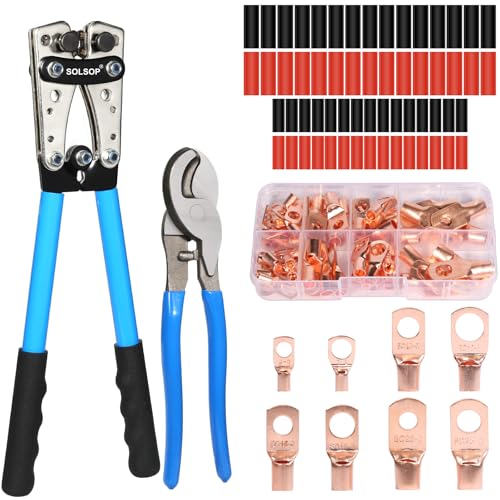
Solsop Battery Cable Crimper Tool for AWG 10, 8, 6, 4, 2, 1/0 Gauge

Kaas 8-Way Lead Acid Battery Terminal Connector

KEMIMOTO UTV Car Battery Jump Post Starter Relocation Kit

1/0 Gauge Battery Cable Wire CCA Amp Wiring Kit 40FT Black/Red

Metal Steel Battery Mounting Box Tray Bracket DIY

Joinfworld Remote Battery Terminals 3/8′ Stud Battery Jump Post

Universal Battery Tray Hold Down Trunk Battery Relocation Box Aluminum
Universal Battery Mounting Tray, Battery Holder Bracket Compatible with RV Trailer Car Boat Truck
More Details On Our Top Picks
Crimping your own battery leads starts to make sense the moment you need clean cable ends for a relocation job, solar run, or accessory power line. This Solsop tool covers AWG 10 through 1/0, so you’re not boxed into one narrow wire size, and the rotating head means you don’t have to juggle loose die pieces mid-project.
The included copper lugs and heat-shrink tubing make it friendlier for a garage build than a bare tool alone, especially for someone setting up a trunk-mounted battery or refurbishing an older cable run. The honest trade-off is that a crimper like this asks you to work carefully and match wire size to die size, which is normal but easy to rush past on a weekend install.
Strong Points
- Covers a broad range from small battery leads to heavier cabling, which keeps one tool useful across several projects.
- The rotating head speeds up size changes, so your workflow stays smoother during repetitive crimps.
- Hex-style crimps help the connection sit snugly on the lug, which matters for vehicle wiring that gets vibration.
- The included lugs and tubing save you a separate parts run for a basic cable build.
Small Caveats
- You’ll want to confirm die selection carefully, since a mismatch can leave the crimp sloppy.
- Tool storage matters here, because keeping the dies and accessories together avoids wasted time later.
- It suits cable work best, not every kind of electrical job around the house.
Feature Card
Who Should Grab It
DIY cable builders and weekend garage installers who need one crimper for several wire sizes will get the most out of it.
Swap It Out When
Kaas 8-Way Lead Acid Battery Terminal Connector is the better match for someone who wants distribution and post adaptation more than cable-end crimping.
The Kaas set makes sense in setups where the battery post needs to do more than hold one cable. With multiple connection points and the included OEM top-post adapter, it aims at vehicles that need tidy power distribution without forcing you to cut into the factory clamp.
That matters in daily-use trucks, work vehicles, or project cars with a growing list of accessories, because extra leads can be routed more cleanly at the battery itself. The trade-off is straightforward, though, as this kind of terminal hardware rewards careful tightening and periodic checking more than a simple single-cable post.
Highlights
- Multiple connection points help you keep accessory wiring organized at the battery.
- The adapter approach reduces the need to modify the original clamp, which is useful on newer or well-kept vehicles.
- Works across a broad cable range, so it can fit a variety of build styles.
- The paired positive and negative pieces suit a full terminal refresh instead of a partial patch.
Points To Note
- More connection points also mean more hardware to tighten and keep tidy.
- You’ll want to leave enough room around the post for cable routing and terminal boots.
- It’s best suited to vehicles that truly need distribution, not a single simple lead.
Core Details
Made For
Drivers adding several accessories or replacing a crowded battery post will get the clearest benefit here.
Where A Sibling Pick Shines
Solsop Battery Cable Crimper Tool is the smarter match for someone building cables from scratch rather than reorganizing terminals.
UTV and side-by-side owners often care less about fancy extras and more about reach, and this KEMIMOTO kit leans into that need. By moving jump and charging access to a more accessible point, it can save you from digging through body panels every time the battery needs attention.
That’s especially helpful in off-road machines, RVs, tractors, and work rigs where the battery lives in a less friendly spot. One thing worth considering is cable routing, because a remote post only feels convenient when the mounting location leaves enough room for clean access and service later.
Upsides
- Remote access helps make charging and jumping less awkward in machines with buried batteries.
- It suits several vehicle types, which gives it broader use than a single-purpose mount.
- The format can simplify routine maintenance in dirty or tight compartments.
- Owners of utility rigs may appreciate the faster access during seasonal storage or service checks.
Softer Spots
- You’ll still need to plan the mounting spot carefully so the post stays easy to reach.
- Remote access hardware adds another point to keep clean and checked over time.
- It works best in setups where the battery is genuinely hard to reach.
Details At A Glance
Whose Shelf It Belongs On
You’ll get the most value from this in off-road and utility vehicles where battery access is inconvenient.
Look Elsewhere When
Joinfworld Remote Battery Terminals suit someone who wants a heavier-duty mounting-bracket setup and included wire set.
A relocation job usually needs cable, and this Taukealugs kit bundles the parts that turn a rough plan into a workable install. You get red and black 1/0-gauge wire, an ANL fuse holder, lugs, and adhesive-lined heat-shrink tubing, so the package feels aimed at a full run rather than a piecemeal fix.
The CCA wire, meaning copper-clad aluminum, keeps the bundle lighter and more value-oriented than pure copper cable, which can matter in long runs to a trunk or hatch area. The trade-off is the usual one with CCA, since you’re choosing economy and practicality over the heavier feel of all-copper wiring.
Reasons To Buy
- The complete parts mix saves you from matching wire, fuse hardware, and terminals one by one.
- Black and red cable simplify positive and negative routing in a vehicle install.
- Heat-shrink tubing with adhesive lining helps finish the ends cleanly and protect them from a messy-looking splice.
- It works well for a relocation run where you want one kit to cover most of the basics.
Areas To Watch
- CCA is a practical choice, but it isn’t the same as full copper cable.
- You’ll want to route and secure a 40-foot package carefully so the install stays tidy.
- It’s strongest as a wiring bundle, not a mount or terminal solution by itself.
Feature Rundown
Right Fit
This suits vehicle and audio installs where you need a complete cable kit for a battery move or power run.
Another Choice May Suit
Metal Steel Battery Mounting Box Tray Bracket DIY is the better match for someone who already has cable and needs a physical battery base instead.
When the battery itself needs a sturdy home, a steel tray like this feels more grounded than a lightweight accessory piece. The adjustable bolt style and the stated fit size point it toward DIY installs where you want a strong base for a battery up to 10.63 by 7.06 by 7.5 inches.
The multiple round openings are a sensible touch for airflow and drainage, and that can matter in damp engine bays or work vehicles that spend time outside. The honest catch is that steel can be unforgiving to poor fitment, so measuring the battery and available space first saves a lot of frustration later.
What We Like
- Steel construction gives the tray a solid feel under the battery’s weight.
- Adjustable bolts help it suit more than one mounting situation.
- Airflow openings are useful in messy environments where moisture can collect.
- It works well for a DIY battery move where a straightforward bolt-in tray is the goal.
Honest Caveats
- Accurate measuring matters, since battery fit is the whole point here.
- Steel hardware usually rewards a careful installation and periodic checking.
- You may need matching hold-down pieces depending on your vehicle layout.
Quick Facts
The Right Fit
DIY installers who want a sturdy tray for a defined battery size will find this easier to work with than a more flexible universal bracket.
Where A Sibling Pick Shines
XIKOBY Universal Battery Mounting Tray is the better match for someone who wants an alloy-steel tray with a lighter visual style and a broader vehicle list.
Joinfworld takes the remote-post idea and makes it feel a little more complete, since the kit includes the mounting bracket, 4-gauge wires, boots, shrink tubing, and hardwares. That kind of bundle helps in boats, RVs, trucks, and off-road machines where you want charging access without opening a buried battery compartment every time.
The 3/8-inch stud gives you a clear post style for jump and charging work, and the 250A rating points it toward practical vehicle use rather than light hobby wiring. The trade-off is that a more complete kit also asks for a more thoughtful install, because all those included pieces only pay off when the mounting spot is chosen well.
Best Bits
- The included bracket and accessories make the kit feel self-contained.
- Remote access is useful on machines where the battery sits in an awkward place.
- 4-gauge wires give it a more substantial feel than ultra-light terminal-only kits.
- Boots and shrink tubing help finish the installation more neatly.
Worth Noting
- The extra parts are helpful, but they also make the setup more install-dependent.
- You’ll want to keep the terminal area clean so the remote post stays easy to use.
- It’s most sensible where a fixed charging point really solves a real access problem.
Technical Sheet
Built With In Mind
Vehicle and marine owners who want a remote charging point with a more complete hardware bundle should find this especially useful.
Where Shoppers Go Wrong
KEMIMOTO UTV Car Battery Jump Post Starter Relocation Kit is the more natural fit for people focused on off-road machines first.
Some relocation setups need a tray that leans more toward fit flexibility than brute force, and this Bonbo aluminum option does that job well. Its compatibility list covers several Optima sizes, which makes it appealing for trunk-mounted or race-style installs where battery dimensions matter just as much as hold-down strength.
The package includes base and top plates, all-thread hold-downs, sleeves, and matching nuts, so you’re closer to a complete mounting solution than with a bare bracket. The practical limitation is that universal fit still depends on careful measuring, because “fits many” does not mean every battery shape will sit perfectly.
Positives
- The Optima size coverage is useful for common performance-battery shapes.
- The aluminum build keeps the tray lighter than many steel-only options.
- Included hold-down parts make the package more install-ready.
- It suits trunk and race setups where a neat hold-down matters as much as the tray itself.
Minor Gripes
- Fit still depends on battery dimensions, so measuring first is non-negotiable.
- You may need to spend extra time on alignment for a clean trunk installation.
- Universal hardware helps, but it isn’t a substitute for checking your exact battery footprint.
At A Glance
Perfect Match For
Performance builds, trunk-mounted batteries, and owners of common Optima-style batteries will get the most out of this tray.
Skip It When
Generic Battery Mounting Tray by XIKOBY is the better fit for someone who wants a broader RV and utility-vehicle tray instead of an Optima-focused piece.
XIKOBY’s tray lands in the middle ground that many utility setups need, with alloy steel construction and a shape meant to support a battery securely without feeling overbuilt. The laser-cut and welded build gives it a more finished look, and the hollowed-out design keeps it from looking bulky in a cargo area, trailer tongue, or boat compartment.
For RV, trailer, car, boat, and truck use, that broad fit list makes it a flexible stop on this roundup. The trade-off is familiar for universal trays, though, since you still need to check battery box dimensions and mounting space before you count on a clean fit.
Bright Spots
- The alloy-steel build balances strength with a less bulky feel.
- It works across several vehicle types, which gives it useful reach.
- The welded construction should suit owners who want a more substantial mounting base.
- The open design can make the tray look cleaner in visible install areas.
Room For Improvement
- Universal fit still depends on your battery box size and mounting space.
- You’ll want to measure carefully before putting it into a tight compartment.
- It’s a tray solution, so the rest of the relocation setup still needs matching parts.
Core Details
The Right Fit
You’ll likely appreciate this most in RVs, boats, trailers, and utility trucks where a flexible, sturdy tray is the main need.
Where Shoppers Go Wrong
Metal Steel Battery Mounting Box Tray Bracket DIY is the better choice for someone who wants a more size-specific steel tray with a defined battery footprint.
How To Choose The Right Battery Relocation Kits
Match The Kit To The Job
Battery relocation kits split into a few clear jobs, and picking the wrong type is where most headaches start. A tray solves mounting, a remote post solves access, and a cable kit solves routing, so the best match depends on whether you’re moving the battery, exposing the terminals, or rebuilding the wiring path. In a UTV, for example, remote jump access often matters more than a fancy tray, while a trunk install usually needs cable length and solid hold-down hardware first.
Measure The Space Before You Commit
Fit is the quiet detail that decides whether a relocation setup feels finished or fiddly. Battery case dimensions, cable reach, stud size, and mounting footprint all need to line up with the vehicle’s available space, especially in trunks, engine bays, boats, and enclosed utility compartments. A universal label sounds convenient, but you still need the numbers to work in your favor.
Don’t Skip The Supporting Parts
A bare tray or post can look complete online and still leave you short once the tools come out. Lugs, fuse hardware, heat-shrink tubing, mounting brackets, and adapter pieces all affect how tidy and serviceable the final result feels. For daily drivers and work rigs, those small pieces matter because they reduce the odds of a loose-looking install that becomes annoying later.
Spend For Convenience, Not Just Material
Higher-tier kits usually cost more because they include more of the system, not just one piece of it. Better brackets, extra terminals, bundled fuse holders, and more complete accessory sets can save time on a full install and reduce the number of separate parts you need to source. That upgrade makes the most sense for vehicles you service often, or for custom builds where you want fewer weak links in the chain.
What To Weigh Before You Decide
Common Shopping Slip Ups
A common mistake is choosing a tray, cable kit, or terminal set without checking the battery’s actual size and post style. Another one is forgetting the installation path, which matters a lot in trunk relocations and buried UTV compartments. You can avoid both by measuring twice and matching the kit to the exact job, not the label on the product page.
The Case For Spending Up
Paying more tends to buy you a fuller bundle, sturdier mounting hardware, and a cleaner end result. That pays off in vehicles where you want repeated access, like RVs, marine setups, and work trucks that don’t have room for improvised wiring. For occasional use, a simpler tray or terminal piece can be enough, but the higher-tier route usually feels smoother during install and maintenance.
Final Thoughts
The best battery relocation kit for you depends on what’s actually being moved, mounted, or made easier to reach. If you need cable prep, the Solsop crimper makes sense; if you need remote access, the KEMIMOTO and Joinfworld kits stand out for different reasons. For a full battery move, the Taukealugs wiring kit, the steel tray options, and the Bonbo and XIKOBY mounts cover the core needs without overcomplicating the job. Choose the piece that fits your vehicle first, and the install will feel far less like a puzzle.
