

You know the drill, a battery sits too long, the engine turns sluggish, and a simple maintenance charger starts looking like a very smart shelf staple. This roundup focuses on units that fit real garage life, from motorcycles and lawn tractors to trucks, boats, and weekend cars that don’t get daily use. You’ll see clear differences in charge rate, battery compatibility, and how much control each model gives you.
Quick Look At The Shortlist

CRAFTSMAN 12A Car Battery Charger Maintainer CMXCESM258

Huiaipaic 12-Amp Smart Battery Charger 12V 24V

PCHH 12V 24V Car Battery Charger Heavy Duty 0-15A

PZ.P 15-Amp 12V 24V Smart Battery Charger

E-FAST Battery Charger 0-20A 12/24V Lifepo4 Lead Acid

Aorika 2 Pack 3 AMP Battery Charger 6V 12V
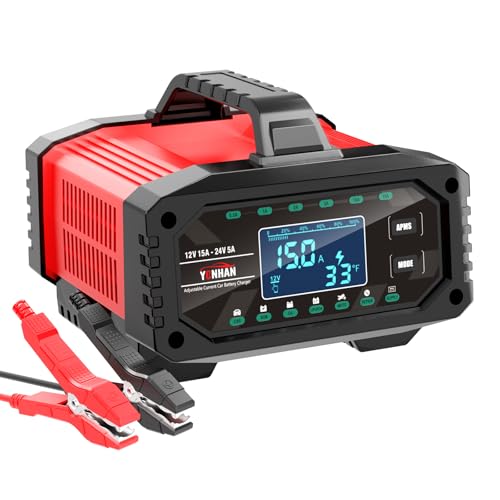
YONHAN Battery Charger 0-15A 12V 24V Adjustable Current
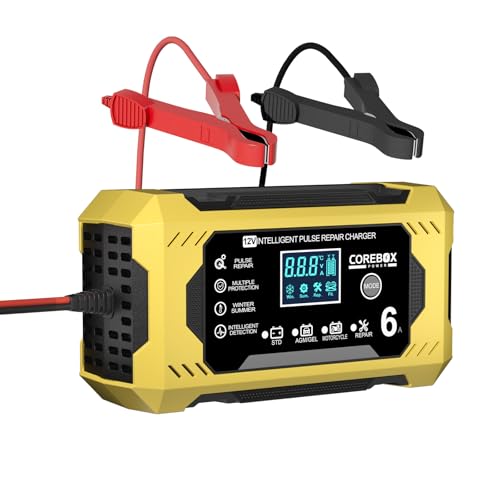
Corebox Battery Charger 6-Amp 12V Automatic Smart

E-FAST 25A Smart Car Battery Charger 12V 24V
More Details On Our Top Picks
That 12-amp ceiling gives this CRAFTSMAN a useful middle ground for garage chores, not just long-term storage. It fits the kind of car, SUV, or seasonal vehicle that sits for stretches and then needs a steady recharge, and the 6V plus 12V support broadens its reach.
The honest read is that you’re paying for a straightforward, familiar setup rather than a pile of extras. Compared with the more configurable Huiaipaic and E-FAST models, this one is easier to approach, which helps in a busy garage where you want fewer decisions before the charging starts.
Strong Points
- 12-amp output gives you a solid middle path between slow maintenance and aggressive charging.
- 6V and 12V support helps cover older toys, lawn gear, and standard vehicles.
- Automatic behavior keeps the day-to-day routine simple for occasional use.
- Good fit for storage upkeep, so a parked vehicle doesn’t sit ignored for weeks.
Things To Consider
- It does not bring the adjustable-current flexibility you get with YONHAN or E-FAST.
- Owners wanting very fast recovery for large batteries may want more output headroom.
- The simpler feature set may feel plain next to the more multi-mode chargers in this list.
Feature Snapshot
Who It Suits Best
Home mechanics who want one dependable charger for a mix of standard vehicles and light equipment will get the most from it.
Where A Sibling Pick Shines
YONHAN Battery Charger 0-15A 12V/24V Adjustable Current suits you better if you want finer current control for different battery sizes.
This Huiaipaic stands out because it reaches across lithium and lead-acid battery families, which matters in garages that hold both newer recreational gear and older machines. The 12V and 24V support gives it a wider job list than the CRAFTSMAN, and the pulse-repair wording points toward more than basic topping off.
In a boat shed, motorcycle corner, or mixed-vehicle driveway, that broad compatibility can save you from keeping separate chargers around. The trade-off is that a feature-heavy unit usually asks for a little more attention to settings, so it suits organized storage better than a grab-and-go drawer.
What We Like
- Covers lithium and lead-acid chemistries, which helps in mixed equipment setups.
- 12V and 24V support makes it more flexible than simple 6V/12V maintainers.
- Pulse-repair and maintainer roles add usefulness beyond one-off charging.
- Works well for vehicles that spend part of the year parked.
Small Caveats
- The wider feature set can feel a little busier than simpler maintenance-only chargers.
- It’s better suited to deliberate setup than quick, no-thought use.
- Owners with just one ordinary 12V car may not need this much flexibility.
Details At A Glance
Who Should Grab It
You get the most value from it in a mixed garage where lithium gear and lead-acid equipment live side by side.
Another Choice May Suit
Corebox Battery Charger 6-Amp 12V Automatic Smart is the calmer choice for someone who wants a simpler maintainer for one or two parked vehicles.
The PCHH feels built for heavier use, with a metal and ABS casing and a copper coil inside the design. That kind of construction matters in a workshop or detached garage where equipment gets handled often and stays out of sight for long stretches.
Compared with the lighter-duty Aorika pair, this is the one you’d expect to sit closer to a truck battery, boat battery, or a larger automotive setup. One thing worth considering is the 12.2-pound weight, which adds substance but also makes it less convenient to move around a shelf or workbench.
Highlights
- Heavy construction gives it a more planted feel for regular garage use.
- 0 to 15A charging range supports both faster charging and gentler upkeep.
- Automatic 12V and 24V detection reduces guesswork during routine use.
- Lead-acid compatibility spans several common battery styles, including AGM and deep-cycle.
Areas To Watch
- Its weight makes it less handy for frequent carrying between vehicles.
- The larger body takes more storage space than compact maintainers.
- Owners looking for a light everyday charger may prefer a smaller unit.
Core Details
Built With In Mind
This suits owners of trucks, boats, and heavier garage equipment who want a charger that feels substantial rather than lightweight.
Skip It When
Aorika 2 Pack 3 AMP Battery Charger 6V/12V makes more sense for a household that wants two simple maintainers instead of one bulky unit.
Fast recovery is the main story here, because this PZ.P pushes 15 amps on 12V systems and 8 amps on 24V systems. The 9-stage charging process also gives it a more measured feel than plain trickle units, which helps when you want structured charging for LiFePO4 or lead-acid batteries.
Compared with the CRAFTSMAN, this one leans harder into speed and charge control, so it suits drivers who move between stored gear and active vehicles more often. The trade-off is that the added pacing can feel like overkill for someone who only needs a bare-bones maintainer for one seasonal car.
Reasons To Buy
- 9-stage charging gives the unit a more deliberate charging sequence.
- 15A on 12V systems helps cut wait time for larger batteries.
- Supports both LiFePO4 and lead-acid batteries, so it fits modern and older setups.
- Temperature compensation helps the charger respond better in hot or cold storage spaces.
Worth Noting
- It asks a little more from the user than basic one-button maintainers.
- Its stronger output makes it less necessary for tiny batteries or occasional topping off.
- The feature set is richer than a simple garage standby charger.
Technical Sheet
Right Fit For
You’ll appreciate it most in a garage that needs quicker turnaround on mixed battery chemistry and voltage setups.
Look Elsewhere When
Corebox Battery Charger 6-Amp 12V Automatic Smart is the calmer choice for basic seasonal maintenance and smaller storage needs.
This E-FAST moves into higher-output territory with up to 20A on 12V and 10A on 24V, so it has a stronger case for larger batteries and faster turnaround. The 7-stage structure and pulse-repair function also make it feel more complete than the simpler maintainers lower in the list.
That makes sense for a garage with trucks, boats, or RVs that benefit from more charging headroom. The catch is that this level of capability is more than a small weekend car usually needs, so it’s better viewed as a serious utility tool than a casual shelf charger.
Upsides
- Higher current output helps reduce wait time on larger batteries.
- Supports both 12V and 24V systems, which broadens its reach.
- Pulse-repair and maintainer roles add more than simple charging.
- Useful for vehicles that see seasonal storage and occasional heavy use.
Minor Gripes
- Its capabilities are broader than many casual home users need.
- Feature density can make the setup feel less casual than a basic maintainer.
- Storage space matters more with a larger, more capable charger.
Feature Card
Who Will Love This
You should gravitate toward it when your garage includes large batteries and you want more than basic maintenance.
A Better Fit Elsewhere
CRAFTSMAN 12A Car Battery Charger Maintainer CMXCESM258 is the steadier choice for someone who wants a simpler everyday charger.
Two chargers in one package changes the math for a home with more than one dormant battery. Each unit runs at 3 amps and supports 6V and 12V batteries, which makes the set useful for motorcycles, lawn gear, or a pair of parked vehicles that need slow attention.
Unlike the single heavier units above, this Aorika set suits a household that values coverage over raw speed. That’s the smart trade here, because you can leave one by the mower and one by a garage car without shuffling a single charger back and forth.
Best Bits
- Two chargers in the box give you immediate coverage for more than one machine.
- 3-amp output is gentle enough for routine maintenance work.
- 6V and 12V support helps with smaller equipment and standard vehicles.
- Useful for garages that like a tidy, dedicated charger at each parking spot.
Points To Note
- Three amps is not aimed at rapid recovery for large batteries.
- Owners of a single vehicle may not need the second unit.
- The set makes most sense where storage and coverage matter more than speed.
Quick Facts
Made For
This suits you best when your garage includes two or more machines that sit for long stretches between uses.
Where Another Pick Shines
E-FAST Battery Charger 0-20A 12V 24V LiFePO4 Lead Acid fits better for large-battery owners who care more about faster charging than about getting two units.
Adjustable current is the headline here, and that matters more than it sounds. You can dial the charge level down for a motorcycle or up for larger batteries, so the unit makes sense in a garage where one charger needs to serve different jobs without feeling oversized for the small ones.
Compared with the CRAFTSMAN, this YONHAN gives you more control over how it works, which is helpful once your storage space includes everything from weekend bikes to heavier vehicles. The honest read is that the adjustment range adds flexibility, but it also asks you to think a bit more about the battery in front of you.
Standout Traits
- 0 to 15A adjustment lets you match output to the battery size.
- 12V and 24V support broadens use across vehicles and equipment.
- Works well when one charger needs to cover both light and heavier tasks.
- Useful for users who want more control than a fixed-output maintainer.
Trade Offs
- The flexibility adds another decision point before charging starts.
- It’s not as set-and-forget as the simplest low-amp maintainers.
- Owners with a single battery type may never use the full range.
At A Glance
Best Suited To
You’ll like it most in a mixed garage where one charger needs to cover both small and medium batteries.
Swap It Out When
Corebox Battery Charger 6-Amp 12V Automatic Smart makes more sense for people who want one simpler charger for seasonal upkeep.
This Corebox keeps things calm and practical, with a 6-amp output that suits regular maintenance more than quick recovery. The temperature compensation feature matters in real garages, because winter storage and hot sheds both change how a battery behaves over time.
Compared with the more aggressive PZ.P and E-FAST units, this one is the quieter, more basic choice for seasonal upkeep. It makes sense for you when a single parked vehicle, mower, or marine battery just needs a steady guardian, not a speed-focused charger.
Best Bits
- 6-amp output lands in the comfortable middle for upkeep tasks.
- Temperature compensation gives it a practical edge in hot or cold storage.
- Desulfator role adds usefulness for batteries that sit unused.
- Good fit for winter garage duty and vacation storage periods.
Minor Gripes
- It’s built more for maintenance than for urgent charging.
- The 12V focus keeps it narrower than the 12V/24V models above.
- Owners with larger equipment may want more current.
Feature Rundown
The Right Fit
This belongs with you if your main job is keeping one or two 12V batteries ready through the off-season.
Consider Something Else When
YONHAN Battery Charger 0-15A 12V 24V Adjustable Current is better for someone who wants more control and wider voltage support.
This E-FAST sits at the powerful end of the list, with 25A on 12V systems and 15A on 24V systems. That gives it a clear edge for larger batteries, and the 200-second booster mode adds another layer for situations where you want more immediate starting support.
Compared with the PZ.P, it leans even harder into raw output, so it fits trucks, RVs, and boats that need serious charging muscle. The trade-off is plain enough, you’re getting capability that can feel excessive for a small garage car, and that makes it a better specialist than a casual maintainer.
What We Like
- 25A on 12V systems brings strong charging headroom.
- 15A on 24V systems extends its usefulness to bigger equipment.
- Booster mode adds flexibility beyond standard maintenance duty.
- Supports lead-acid and LiFePO4 batteries, which broadens the fit.
Areas To Watch
- Its power level is more than many ordinary cars need.
- The stronger feature set makes it a larger commitment in storage and handling.
- It makes most sense for owners who actually need the extra output.
Core Details
Whose Shelf It Belongs On
This belongs on the shelf of someone who keeps larger vehicles or equipment and wants strong output, not just maintenance.
Reach For A Different Pick When
CRAFTSMAN 12A Car Battery Charger Maintainer CMXCESM258 is the calmer choice for everyday garage upkeep and simpler charging needs.
How To Choose The Right Battery Maintenance Chargers
Start With Voltage And Battery Type
Voltage is the first filter, because a charger built for 12V systems won’t serve every job in a truck-and-toy garage. You also want chemistry support to line up with the battery on hand, whether that’s lead-acid, AGM, gel, SLA, LiFePO4, or another supported type. A mismatch can mean wasted features or a charger that simply doesn’t suit the machine you keep parked.
The practical move is to match the charger to your most common vehicle first, then widen from there. For a motorcycle shed, a low-amp 6V or 12V maintainer can be enough, while mixed garages often benefit from a 12V/24V model like Huiaipaic, YONHAN, or E-FAST.
Pick The Right Charging Speed
Amps tell you how quickly the charger can move energy back into the battery, and that matters more than many shoppers expect. A 3A unit such as Aorika is gentle and steady, 6A to 12A lands in the useful middle, and 15A to 25A is better suited to larger batteries or faster turnaround. Faster isn’t always better, because small batteries rarely need heavy current.
Think about how often you use the vehicle and how long it typically sits. Seasonal cars, lawn tractors, and boats usually benefit from maintainers, while trucks or RVs can justify stronger output. The right pace should feel matched to the battery, not forced onto it.
Look For Charging Modes That Fit Real Use
Automatic shutoff, maintainer mode, trickle mode, pulse repair, desulfation, and temperature compensation all sound technical, but each one solves a day-to-day problem. Maintainer mode keeps a stored battery ready, trickle charging stays gentle, and temperature compensation adjusts behavior in cold garages or hot sheds. Desulfation or pulse repair can be useful for batteries that have spent too long sitting, though results depend on the battery’s condition.
You do not need every mode on every charger. What matters is whether your garage life calls for simple storage upkeep or a more involved multi-step unit like PZ.P or E-FAST. The more complicated the battery mix, the more useful those extra controls become.
Balance Convenience Against Flexibility
Simple chargers are easier to grab, connect, and forget, which suits owners who want fewer decisions. Adjustable-current models and multi-stage units offer more control, but they also ask for more attention at the start. That trade-off shows up clearly between the easygoing Corebox and the more configurable YONHAN or E-FAST picks.
Storage matters too. A lightweight charger works well on a crowded shelf, while a heavier unit like PCHH may feel more at home on a bench or wall space. In most garages, the best choice is the one you’ll actually keep within reach and use regularly.
Things Worth Knowing First
Wrong Turns To Avoid
One common mistake is choosing output that’s too high for a small battery, which adds unnecessary complexity. Another is ignoring whether the charger supports your battery chemistry, especially with LiFePO4 gear or mixed lead-acid setups. A third is assuming every charger handles winter storage equally well, even though temperature compensation and maintenance modes make a real difference.
It also helps to think about where the charger will live. A bulky unit can be awkward in a small shed, while a compact maintainer may be too light for a large truck battery. Matching footprint to use is just as important as matching voltage.
What The Higher Tier Buys
Higher-tier units usually pay for stronger output, more charging stages, and broader battery support. That’s where the extra money goes in this category, along with features like pulse repair, temperature compensation, and adjustable current. You also tend to get better fit for mixed garages where one charger has to cover more than one machine.
The upgrade makes sense for trucks, boats, RVs, or households with several battery types. For a single weekend car, though, that extra capability can sit unused, so a simpler maintainer often gives you more value in practice.
Closing Thoughts
Your best match comes down to the battery you keep most often, the space you have, and how much control you want at the plug. CRAFTSMAN and Corebox suit straightforward garage upkeep, while YONHAN, PZ.P, and the larger E-FAST units serve more demanding setups. For a household with mixed vehicles, the middle-ground models deserve a serious look. Choose the charger that fits the way you actually store and use your equipment, and the rest gets easier.
