

Loose batteries turn every rough road into a small headache, especially in RVs, boats, trailers, and daily drivers that see a lot of vibration. The right tray keeps the battery seated, matches the size you need, and makes installation less of a wrestling match. This roundup focuses on fit, materials, hold-down hardware, and the kind of real-world use that matters in a garage or on the road.
The Shortlist At A Glance

Camco RV Large Battery Hold-Down Tray (55404)

A.A Group 27 Battery Tray With Strap

A.A Group 24 Battery Tray With Strap
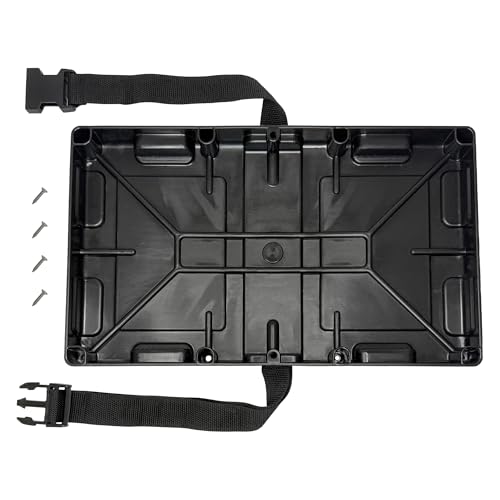
A.A Group 29/31 Battery Tray With Strap

THEPRO Battery Hold Down Tray Kit 10.6” Bolt, 13.58” Tray

Danti Universal Battery Tray Hold Down 551181

Attwood Adjustable Battery Tray 9090-5
More Details On Our Top Picks
Camco leans into the kind of build you want in an RV bay or boat compartment, where vibration is part of the job. The acid-resistant plastic tray and stainless steel hardware give it a sturdier feel than basic strap-only setups, and that matters when the battery sits through rough roads.
You also get a clear size target for group 27 batteries, so the fit is easier to judge before you start a weekend install. The trade-off is simple, it’s built for a fairly specific battery class, so smaller or oddly shaped units need a different tray.
Strong Points
- Heavy-duty plastic keeps the tray from feeling flimsy in a storage compartment.
- Stainless steel hardware is a solid match for damp marine or RV spaces.
- The group 27 fit gives you a clear sizing target before installation.
- Its hold-down design helps cut battery movement during travel.
Things To Consider
- It suits a narrower battery range than the more adjustable trays below.
- The setup is more component-based, so installation takes a little more time than a simple drop-in box.
Feature Snapshot
Who It Suits Best
RVers and boat owners who want a tougher, more traditional hold-down tray for a group 27 battery will get the most from this one.
A Better Fit Elsewhere
The Attwood Adjustable Battery Tray, 9090-5 suits you better when you need a marine-friendly tray with a height-adjustable crossbar for group 24 or 24M batteries.
Compared with Camco’s more hardware-heavy tray, this A.A option keeps the formula straightforward: polypropylene plastic, a strap, and a battery holder layout built for common travel use. That simplicity can be a plus in a garage install or a weekend boat project, because fewer pieces usually mean less second-guessing.
The real advantage is fit confidence for group 27 batteries, especially when you want to limit side-to-side movement without overcomplicating the setup. The honest trade-off is that it feels more utilitarian than premium, which is fine for plenty of people, just not for everyone chasing the most rigid metal build.
What We Like
- High-impact polypropylene keeps weight low and handling easy.
- The included strap helps keep the battery from shifting in transit.
- Four mounting points support a more settled install.
- Group 27 sizing is straightforward for common marine and RV batteries.
Softer Spots
- The plastic construction is practical, but it does not feel as rigid as steel or aluminum.
- You’ll want to check your tray space carefully, since the fit is meant for a defined battery class.
Core Details
Who Should Grab It
Travel-focused shoppers with a group 27 battery and a straightforward mounting job will likely find this a clean, sensible choice.
Another Choice May Suit
The Camco RV Large Battery Hold-Down Tray (55404) makes more sense for you when you want stainless hardware and a more reinforced feel in an RV compartment.
This one follows the same no-nonsense formula as the group 27 tray, but the group 24 size makes it a better fit for tighter compartments and smaller battery layouts. That smaller footprint matters in a boat locker or a packed utility space, where every inch counts and bulky hardware gets in the way.
You still get the strap-based hold-down approach, so the battery isn’t just sitting loose in the tray. The trade-off is obvious enough, you gain space efficiency, but you also keep the same plain-plastic feel that suits utility use more than polished builds.
Upsides
- Group 24 sizing works well for smaller automotive and marine batteries.
- The strap helps secure the battery without adding much complexity.
- High-impact polypropylene keeps the tray light and easy to handle.
- Eight mounting points give you more attachment options than the group 27 version.
Minor Gripes
- The simple plastic build is practical, but it does not bring the stiffness of a metal tray.
- You’ll want to measure carefully, because the group 24 fit is intentionally narrow.
- Strap setups tend to need occasional re-checks after rough travel.
Details At A Glance
Best Suited To
You’ll get the most value from this tray in a compact installation where a group 24 battery needs a simple, secure home.
Where A Sibling Pick Shines
The A.A Group 27 Battery Tray With Strap is the better match for you when your battery is larger and you want the same straightforward retention style.
Where the group 24 and 27 trays focus on tighter battery classes, this one steps up for larger 29 and 31 series setups. That makes it a better anchor for bigger automotive or marine batteries, especially in vehicles that need a broader base and a little more mounting support.
The added mounting points help the tray feel more planted, and that matters in a trailer, boat, or off-road setup where movement can work against a loose battery. It’s still a strap-based plastic tray, so the appeal is utility first, not luxury finishes, and that’s fine for plenty of installs.
Reasons To Buy
- Larger fit range suits 29 and 31 series batteries.
- High-impact polypropylene keeps the tray practical for marine and vehicle use.
- Ten mounting points give you more anchoring options than the smaller A.A trays.
- The included strap helps keep the battery from shifting during transport.
Points To Note
- The bigger footprint needs more installation room than the group 24 or 27 versions.
- Like the other strap trays here, it rewards a quick periodic check after rough miles.
Quick Facts
Whose Shelf It Belongs On
This tray fits you best when your battery is in the larger 29 or 31 series range and you want a straightforward, secure setup.
Look Elsewhere When
The Camco RV Large Battery Hold-Down Tray (55404) makes more sense for a group 27 battery when you want stainless hardware in a more compact package.
THEPRO takes a different route from the plastic trays above, leaning on metal construction and a coated finish for a more rigid hold-down setup. That extra structure matters in a truck, 4×4, trailer, or boat compartment where you want the battery clamped down rather than merely seated.
You also get a defined tray length and bolt length, which helps with planning around your mounting space before the hardware goes in. The honest trade-off is that metal kits usually ask for a little more attention during installation, but the payoff is a firmer, more structured feel.
Highlights
- Metal construction feels more rigid than the plastic trays in this roundup.
- The coated finish helps the parts hold up better in damp storage spaces.
- The adjustable bracket setup gives you more room to fine-tune the fit.
- Useful for vehicles and small marine installs that need a firmer clamp-down.
Areas To Watch
- Metal parts usually take a bit more time to position cleanly than simpler plastic trays.
- The tray size and bolt length are specific, so checking your mounting space first is important.
Technical Sheet
Made For
This fits you best when you want a more rigid battery clamp for a car, boat, or trailer installation.
Swap It Out When
The A.A Group 29/31 Battery Tray With Strap is the easier pick for larger batteries when you want a simpler plastic setup.
Danti is the niche choice in this group, aimed at people working with Optima-style batteries and race-oriented mounting needs. The billet aluminum look gives it a more specialized feel than the Camco or A.A trays, and that usually matters most in custom trunk or relocation installs.
Because it targets specific battery sizes, it’s less forgiving than the adjustable options, but that’s also why it can feel so purposeful. You’re trading broad compatibility for a more exact fit, which is the right trade for custom builds and serious weekend projects.
Positives
- Billet aluminum construction gives it a more specialized, rigid feel.
- It covers several Optima red, yellow, and blue top sizes.
- The included plate and hardware set support a cleaner custom install.
- Good fit for trunk relocation or race-style mounting layouts.
Small Caveats
- Compatibility is narrower than the universal trays in this list.
- Custom installs usually take more planning than a basic battery box swap.
- The specialized layout makes it less casual-friendly than the A.A strap trays.
At A Glance
Right Fit For
You’ll get the best match here for a custom trunk setup or a race-style battery mount built around Optima-sized batteries.
Reach For A Different Pick When
The Attwood Adjustable Battery Tray, 9090-5 is the better everyday choice for you if a marine battery needs a simpler adjustable crossbar.
Attwood sits neatly between the simple plastic trays and the more specialized metal kits, which makes it a smart middle path for marine battery installs. The height-adjustable crossbar is the useful part here, since it helps the tray adapt to the battery instead of forcing a shaky fit.
For a boat compartment or a utility setup, that adjustability can save you a round of trial and error. The limitation is plain enough, though, it only serves group 24 and 24M batteries, so larger battery families need one of the A.A trays or the THEPRO kit.
What We Like
- Heavy-duty plastic keeps the tray suitable for marine environments.
- The height-adjustable crossbar helps you secure the battery more cleanly.
- It fits both 24 and 24M batteries, which broadens its usefulness.
- Pre-drilled mounting support makes installation more straightforward.
Worth Noting
- The fit is limited to a specific battery family, so measure before you commit.
- Plastic construction is practical, but it won’t feel as rigid as the metal THEPRO kit.
- Marine hardware still benefits from occasional inspection in wet or salty conditions.
Feature Card
Built With In Mind
This is the right fit for you when a group 24 or 24M marine battery needs a stable, adjustable tray without extra complexity.
Where Shoppers Go Wrong
The Danti Universal Battery Tray Hold Down 551181 suits you better for an Optima battery and a custom trunk-style relocation setup.
How To Choose The Right Automotive Battery Trays
Start With Battery Size And Group Number
Battery trays live or die on fit. Group numbers such as 24, 27, and 29/31 tell you whether the battery footprint and height line up with the tray, and the tray dimensions tell you how much room the install will actually take.
That matters in a boat locker, RV compartment, or a cramped trunk because a battery that sits loosely can shift under vibration. Measure length, width, and height, then match those numbers before you worry about hardware style.
Choose Material For The Environment You Use Most
Plastic trays are light, simple, and usually easier to live with in wet spaces, especially for marine or RV use. Metal trays bring a firmer feel and often suit custom installs where rigidity matters more than easy handling.
The trade-off shows up in maintenance and fit. Plastic can be easier to clean, while coated steel or aluminum tends to feel more substantial, which helps in a truck, trailer, or performance build.
Look Closely At The Hold-Down Style
Some trays use a strap and buckle, while others rely on rods, crossbars, or clamp kits. Strap systems are straightforward and familiar, but a crossbar or metal hold-down usually gives a more planted feel once tightened.
For daily road vibration, that difference can matter more than it first appears. You want the battery to stay seated without turning the install into a maintenance chore.
Match The Tray To The Space Around It
Tray footprint, mounting points, and the shape of the surrounding compartment all affect the final result. A bigger tray may fit the battery perfectly yet still crowd a service panel or block access to cables.
That’s why a compact group 24 tray can make more sense than a larger universal kit in a tight compartment. You gain room to work, and that usually makes future checks easier too.
A Quick Reality Check Before You Order
Wrong Turns To Avoid
One common mistake is focusing only on the battery group and ignoring overall tray size. Another is picking a hold-down style that looks sturdy on paper but makes cable access awkward once installed.
It also helps to think about where the battery lives. A marine compartment and a trunk relocation box do not ask for the same finish, the same hardware, or the same amount of adjustment.
Where The Extra Money Goes
Higher-tier trays usually spend the budget on tougher materials, more refined hardware, and better fit adjustment. That can mean coated steel, billet aluminum, adjustable crossbars, or a fuller set of mounting pieces.
Those details pay off most in custom work, rough-road use, or damp environments where a more rigid hold-down feels worth it. For a simple battery swap in a clean compartment, a plain strap tray often makes more sense.
Closing Thoughts
The right tray is the one that fits your battery cleanly, matches the space you have, and holds up to the kind of movement your vehicle sees. Camco and Attwood make sense for more purpose-built installs, while the A.A trays keep things simple for common battery sizes. THEPRO and Danti step in when you want a firmer, more specialized mount. Choose the tray that matches your setup, and the rest of the install gets much easier.
