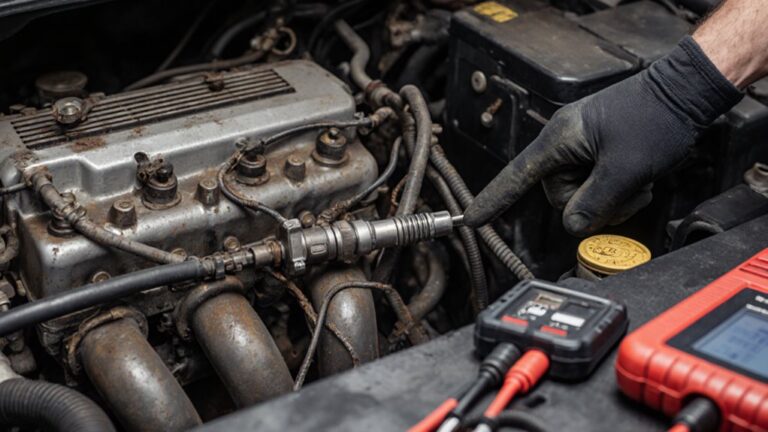
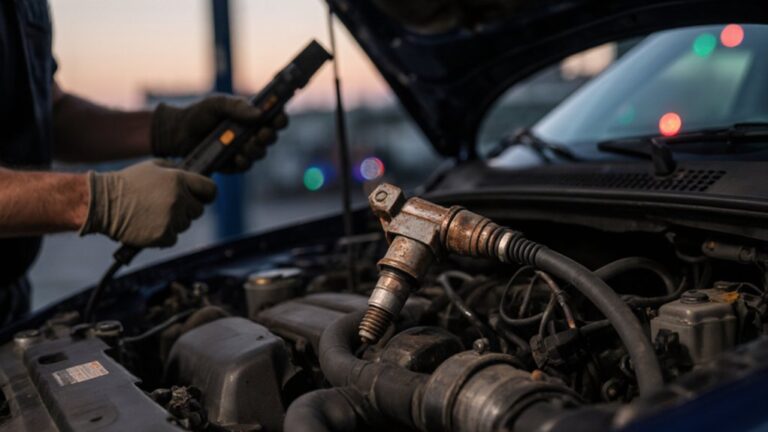
A vacuum leak in a car causes abnormal engine behavior and reduced efficiency. Common signs include a rough idle, a racing engine, a sharp hissing sound, and stalling at stoplights. Extra fuel consumption and unexpected shaking often accompany these symptoms. Small cracks or loose hoses in the intake system usually cause the leak. Spotting these signs early helps pinpoint the problem and avoid bigger engine issues.
What Is a Vacuum Leak in a Car?
What’s a vacuum leak in a car? You’ve got one whenever outside air slips through an intake breach or a cracked hose and enters the intake system without being measured.
That extra air weakens engine suction balance, so your engine runs lean, with more air than fuel. Your car’s PCM then works with bad readings from the MAF or MAP sensors, and the air-fuel mix drifts off target.
Vacuum itself is the pressure difference your engine creates, usually about 16 to 22 inches of mercury at idle. Whenever that number drops near 12, you likely have a serious leak.
Common causes include brittle hoses, bad intake gaskets, cracked manifolds, or faulty EGR, brake booster, and purge parts.
Signs Your Car Has a Vacuum Leak
Whenever a vacuum leak shows up, your car usually starts sending clear warning signs, and they can be easy to spot provided you know what to look for.
You might feel uneasy, but you’re not alone; these clues usually point straight to the problem. Watch for:
- A Check Engine Light with dashboard warning patterns that seem to appear together.
- An idle that races, hunts, or feels rough, plus intermittent misfires when you press the gas.
- A hissing sound near the intake, along with stalling or weak brake assist.
These signs often mean extra air is slipping in and upsetting the mix.
Can You Drive With a Vacuum Leak?
Yes, you can sometimes drive a car with a small vacuum leak, but it’s a bit like trying to sip soup with a cracked spoon, since the car could run, yet not very happily. On short trips, you might make it home, but rough idle, stalling, and a lean mix can show up fast.
| Condition | What you feel | What to do |
|---|---|---|
| Small leak | Uneven running | Limit driving |
| Warning light | Fault codes | Plan service |
| Brake assist loss | Firmer pedal | Use emergency precautions |
Because the leak can affect brakes and other vacuum parts, you need to stay alert. Should the engine dies in traffic or during acceleration, that can put you at risk. So, get it checked soon, and avoid extended driving whenever vacuum readings stay low or the check engine light keeps coming on.
Why Vacuum Leaks Hurt Fuel Economy and Idle
A vacuum leak can quietly drain your fuel economy because it lets extra air sneak in after the mass airflow sensor has already measured the intake flow. That unmetered air makes the PCM command too little fuel, so your engine runs lean and burns more gas to stay smooth. You might feel the difference most at idle, whenever even a small leak matters a lot.
- The idle can rise or wobble because the throttle is nearly closed.
- The ECU might add fuel with positive trims, which hides the leak but hurts mileage.
- Longer warm-up and more throttle corrections waste fuel every trip.
Good engine tuning depends on stable intake temperature and a sealed intake path, so you and your car stay in sync.
Common Causes of Vacuum Leak Symptoms
The most common vacuum leak symptoms usually start with a few worn-out parts that have simply had enough of engine heat, oil, and age. You’ll often find cracked or loose vacuum hoses initially, since rubber lines dry out, split, and pull in extra air.
Then a tired intake manifold gasket or a cracked manifold can let air slip past the throttle body and upset your idle. You might also face leaking parts like the brake booster, EGR valve, purge solenoid, or fuel-pressure regulator, which can throw off performance.
In the same way, loose intake bolts, weak throttle body seals, and damaged fittings or clamps can keep the leak coming back. If that occurs, your engine feels fussy, but you’re not alone in chasing it.
How to Listen for Vacuum Leak Sounds
Start through listening for a sharp hiss, sucking sound, or high-pitched whistle under the hood while the engine idles or revs lightly, because that noise often gives away a vacuum leak before you ever see it. You’re not alone here; many drivers miss it initially, especially during engine bay acoustics blend with road noise.
- Move your ear close, but never touch, vacuum lines, intake gaskets, and actuator links.
- Gently blip the throttle, because the leak could grow louder with RPM.
- Use a hose or mechanic’s stethoscope to narrow the sound and hear the source.
If you’ve got aftermarket soundproofing, it can hide faint leaks, so listen in a quiet spot. A tiny leak might only whisper on and off, yet that soft clue still matters.
How Mechanics Find Vacuum Leaks
Once you’ve heard that telltale hiss, mechanics usually move straight into hands-on checks to pin down the leak fast.
You can start with visual diagnostics, because cracked hoses, loose clamps, and split gaskets often show their face first. Next, a tech might watch the intake with diagnostic tools, like a handheld vacuum gauge. At a warm idle, you should see about 16 to 22 in. Hg; a steady reading under 12 usually points to a big leak.
Then the scan tool helps confirm the damage through showing odd fuel trims, MAP, or MAF codes. When needed, the mechanic probes suspect spots with a vacuum pump or safe spray, and when the idle changes, you’ve likely found the trouble.
Smoke Testing for Vacuum Leaks
To smoke check for a vacuum leak, a mechanic will connect a smoke machine to your intake or vacuum system with the engine off.
Then you watch for thin smoke trails, because they’ll show you the exact spot where air is escaping, even from tiny cracks or loose joints.
With the right setup, you can spot leaks in hoses, gaskets, valves, and manifold seams without guessing or chasing phantom problems.
Smoke Test Setup
For a clean smoke check, you want the engine off and the intake system isolated so the smoke has nowhere to hide. Start by doing a quick visual inspection, then protect sensitive parts like MAP or airflow sensors, connectors, and the turbo actuator. Next, focus on smoke placement and pressure calibration so the system stays gentle and safe.
- Connect the smoke machine to an intake opening or vacuum port.
- Set low pressure, about 1 to 5 in. H2O, so tiny leaks can show up.
- Seal the rest of the intake path so smoke only goes where you need it.
If you don’t have a machine, use a shop service or a smoke can. That way, you join the crowd that finds leaks without risking damage.
Reading Smoke Trails
Smoke trails tell you a lot, especially after you’ve set up the trial the right way and sealed the intake system. You’ll see clear visual patterns where air slips out, and the trail direction usually points right to the fault. Watch hose fittings, solenoids, gasket seams, valve covers, and tiny cracks in rubber lines. Should the smoke escapes, that spot is letting in unmetered air between the mass airflow sensor and the intake manifold, which can trigger a lean condition.
Because the smoke is dense and the pressure stays low, even hairline leaks show up fast without harming parts. You don’t have to guess or spray around and hope for the best. On newer engines with crowded vacuum and EVAP lines, this method helps you find the leak with confidence.
How a Mechanic Fixes Vacuum Leaks
A mechanic starts via confirming the leak, not guessing at it, because vacuum problems can hide behind several different symptoms at once.
Initially, you and the tech follow a tools checklist and a repair workflow: scan trouble codes, then inspect every hose, fitting, and vacuum part for cracks or loose ends.
Next, the mechanic examines the system with:
- a vacuum gauge
- a smoke machine
- a hand pump or ultrasonic detector
Should a small hose be split, you’ll likely get a fresh OEM-quality or silicone line and proper clamps.
In case the intake manifold or throttle body leaks, the mechanic removes parts and seals the gasket.
Whenever a valve or booster fails, it gets replaced so your engine can breathe right again.
How to Prevent Vacuum Leaks in the Future
You can stop many vacuum leaks before they start through checking your hoses every 6 to 12 months, or at each oil change.
In the event you spot hard, brittle, or cracked rubber, replace it right away with OEM or high-quality silicone hose, since cheaper parts often wear out fast.
Using quality parts and giving your lines a quick look and listen after engine work can save you a lot of hassle later.
Regular Hose Inspections
Every six months, or right along with your oil change, take a close look at your vacuum hoses before a tiny crack turns into a bigger headache. This simple hose maintenance keeps you ahead of leaks and helps you feel like you’ve got the car covered.
- Check for cracks, hard spots, soft spots, and oil stains.
- Follow the under-hood routing diagram, then do connector checks via gently wiggling each fitting.
- Make sure clamps and quick-connects sit fully in place.
If you spot surface damage or a hose that’s getting stiff, replace it prior to it fails. After engine work, give disturbed lines a quick visual check, especially near hot exhaust areas. Whenever you stay consistent, you protect your ride and keep small problems from sneaking up on you.
Use Quality Replacement Parts
Quality replacement parts help stop vacuum leaks from coming back after a repair, and that matters because a small savings now can turn into another rough idle later.
Whenever you choose High quality hoses made for heat, you give your engine a better chance to stay sealed.
You should also install Premium gaskets, because cheap ones can fail at the intake and let air sneak in.
Match vacuum fittings and connectors to the factory size too, so every piece fits like it should.
After the job, smoke-test or pressure-test the system and check idle vacuum.
At sea level, you want about 16 to 22 in. Hg.
That quick check helps you and your car stay in the same friendly lane, with fewer surprises and less repeat repair stress.
Frequently Asked Questions
How Can I Tell if My Car Has a Vacuum Leak?
You can tell by checking for a rough idle, hissing noises, and a check engine light. You may also notice poor fuel economy, stalling, or a hard brake pedal, and you will want to inspect hoses.