
When it comes to your vehicle’s exhaust system, understanding the core difference between up pipes and downpipes is crucial. These components play distinct roles that significantly impact performance. Up pipes connect the exhaust manifold to the turbocharger, while downpipes link the turbocharger to the rest of the exhaust system. Upgrading downpipes can enhance exhaust flow, reduce backpressure, and improve turbo response. Studies show that performance downpipes can lead to power gains of 20-30 horsepower and torque increases of 15-25%. Recognizing these differences can help you make informed decisions for your vehicle.
Key Takeaways
Up pipes connect the exhaust manifold to the turbocharger, improving turbo response and reducing lag.
Downpipes link the turbocharger to the exhaust system, minimizing backpressure and enhancing engine performance.
Upgrading both up pipes and downpipes can lead to significant power gains, improving horsepower and torque.
Regular maintenance of up pipes and downpipes is essential to prevent issues like cracks and leaks.
Consider the impact of upgrades on your vehicle’s warranty and emissions compliance before making modifications.
Up Pipe Overview

Design and Placement
An up pipe serves a vital role in turbocharged engines. It connects the exhaust manifold to the turbocharger. This connection allows exhaust gases to flow from the engine to the turbo, where they spin the turbine and create boost. The design of the up pipe significantly affects how efficiently these gases move.
Up pipes often feature smoother bends and high-flow designs. These enhancements improve gas flow, which reduces turbo lag. When you upgrade to a performance up pipe, you can expect quicker turbo spool-up. This means your engine responds faster when you press the accelerator.
Here are some materials commonly used in the construction of up pipes:
Material | Properties |
|---|---|
Stainless Steel | Resists rust and corrosion better than OEM mild steel. |
High-grade Stainless | Handles higher exhaust gas temperatures (EGTs) and boost without cracking. |
Thicker Flanges | Reduces warping under thermal load for longer gasket life. |
Direct-Fit Design | Matches OEM routing, bolt patterns, and EGR connections for easy installation. |
The transition from plain carbon and low alloy steels to stainless steel began in the mid-1990s. This shift responds to market demands for extended warranties and stricter emission standards.
The placement of up pipes also impacts exhaust gas flow efficiency. Upgraded up pipes facilitate smoother exhaust gas flow, enhancing turbo response and overall engine performance. They help lower exhaust gas temperatures, which is crucial for engine reliability, especially under high-demand conditions like towing. Aftermarket up pipes are designed with smoother bends and high-flow construction, leading to improved turbo response and increased horsepower and torque.
However, up pipes can experience failures. Common failure points include flex pipe failures, often due to the softness of materials. Exhaust systems undergo unpredictable movements, leading to fatigue and cracking. Proper management of flexibility is crucial to prevent these issues.
Downpipe Overview
Design and Placement
A downpipe plays a crucial role in turbocharged engines. It connects the turbocharger to the rest of the exhaust system. This connection allows exhaust gases to exit the turbocharger efficiently. A well-designed downpipe enhances exhaust flow, which can lead to significant increases in engine power.
When you upgrade to a performance downpipe, you can expect several benefits. Here’s how downpipes improve your vehicle’s performance:
Minimized Backpressure: The smooth design of downpipes reduces backpressure. This allows exhaust gases to flow freely, improving engine efficiency.
Enhanced Turbo Response: With less restriction, your turbocharger can spool up faster. This means quicker acceleration and improved throttle response.
Increased Power Output: Many drivers report noticeable power gains after installing a performance downpipe. You might see increases of 20-30 horsepower, depending on your vehicle and other modifications.
The placement of downpipes also impacts exhaust flow and emissions. Here are some key points to consider:
Exhaust gases exit the engine’s combustion chambers and flow into the exhaust manifold, which channels them into the downpipe.
The downpipe guides gases away from the engine with a smooth design that minimizes backpressure, enhancing engine efficiency.
Sensors within the downpipe monitor emissions and flow. This allows the ECU to adjust air-fuel ratios for optimal combustion.
Gases pass through catalytic converters to reduce pollutants before continuing downstream.
The gases exit the downpipe into the rest of the exhaust system, including mufflers and tailpipes, which further reduce noise and emissions.
Real-time data from sensors informs ongoing adjustments, enabling the ECU to modify engine parameters for performance and compliance.
However, downpipes can encounter issues over time. Common problems include broken downpipes and body mounts. Symptoms of failure may include low boost, exhaust odors in the cabin, and soot on the firewall. You might also hear noises such as ticking, indicating an exhaust leak, or squeaking at idle from flexible connections. Regular maintenance can help you avoid these issues and keep your downpipe functioning optimally.
Core Differences Between Up Pipes and Downpipes
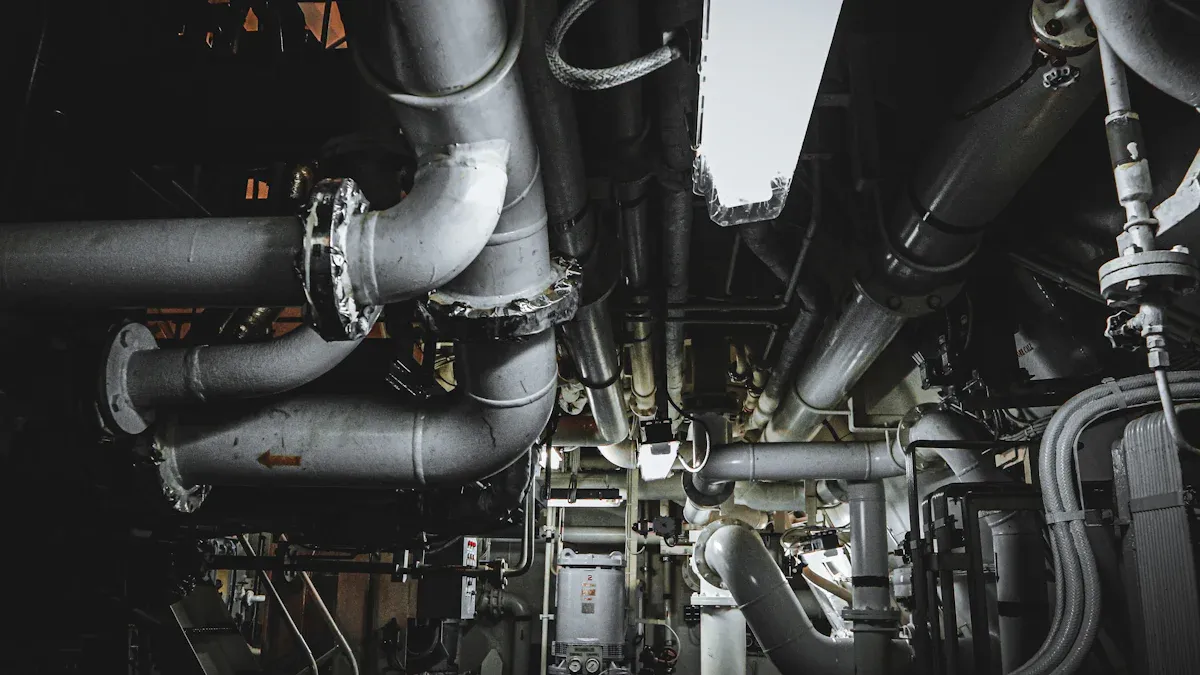
Understanding the core difference between up pipes and downpipes is essential for optimizing your vehicle’s performance. Both components play unique roles in the exhaust system, affecting turbo spool-up and horsepower.
Functional Differences
The up pipe connects the exhaust manifold to the turbocharger. It helps exhaust gases flow smoothly into the turbo, which is crucial for quick turbo spool-up. A well-designed up pipe reduces lag, allowing your turbo to respond faster when you accelerate.
On the other hand, the downpipe connects the turbocharger to the rest of the exhaust system. It minimizes backpressure and increases exhaust volume. This design allows the turbo to spool up faster due to a longer duration at a higher delta pressure, enhancing overall performance.
Here’s how each component impacts engine performance:
Up Pipe:
Boosts turbo spin
Reduces lag
Maximizes spool
Down Pipe:
Reduces backpressure for faster turbo spool
Improves exhaust scavenging effects
Lowers exhaust gas temperatures (EGTs)
Enhances boost response and throttle sensitivity
Physical Differences
The physical design of up pipes and downpipes also varies significantly. Up pipes often feature smoother bends and high-flow designs. This design helps improve gas flow efficiency. In contrast, downpipes are typically larger in diameter and designed to handle higher exhaust volumes.
Performance Metric | Impact on Engine |
|---|---|
Horsepower Gain | 20-50 hp |
Torque Gain | 30-70 lb-ft |
Benefits of Upgrading Up Pipes and Downpipes
Upgrading your up pipes and downpipes can lead to several performance benefits. Here are some key improvements you can expect:
Noticeable improvements in turbo spool time.
Increases in overall horsepower.
Enhancements in torque figures.
These upgrades can also enhance fuel efficiency. By minimizing back pressure, upgraded downpipes allow your engine to expel exhaust gases more effectively. This means you can generate more power with the same amount of fuel, especially during highway driving.
However, installation can present challenges. Here are some common issues you might face:
Difficulty in accessing bolts, which may require removing components like the trans dipstick for better access.
Problems with clamps and brackets during installation.
The order of installation can affect the time taken and ease of the process.
When considering these upgrades, be aware of their impact on your vehicle’s warranty and emissions compliance. Modifications made upstream of the catalytic converter can lead to warranty issues. However, changes made downstream are less likely to cause problems. The Magnuson-Moss Warranty Act protects you, ensuring that warranties cannot be voided automatically due to aftermarket parts unless the manufacturer proves that the part caused a failure.
It’s wise to keep your original parts for potential reversion to meet smog check requirements. Additionally, be mindful of local regulations regarding modified exhaust systems.
Understanding the differences between up pipes and downpipes is essential for optimizing your vehicle’s performance. Here are the key points to remember:
Up Pipe: Connects the turbo to the exhaust manifold. It transports exhaust gases to the turbo and is made from durable materials like cast iron or stainless steel.
Down Pipe: Connects the turbo to the rest of the exhaust system. It manages exhaust gases after they exit the turbo, focusing on reducing back pressure and improving engine performance.
By upgrading these components, you can enhance your vehicle’s power and efficiency. This knowledge empowers you to make informed decisions for better automotive performance and maintenance. 🚗💨
FAQ
What is the main purpose of an up pipe?
An up pipe connects the exhaust manifold to the turbocharger. It helps exhaust gases flow smoothly into the turbo, reducing lag and improving turbo response.
How does a downpipe affect engine performance?
A downpipe connects the turbocharger to the exhaust system. It minimizes backpressure, allowing exhaust gases to exit more efficiently, which can increase horsepower and torque.
Can I install up pipes and downpipes myself?
Yes, you can install these components yourself if you have basic mechanical skills. However, ensure you have the right tools and follow installation guides carefully.
Will upgrading my exhaust system void my warranty?
Upgrading components upstream of the catalytic converter may void your warranty. However, changes downstream are less likely to cause issues. Always check with your dealer.
How often should I check my up pipes and downpipes?
Regular inspections are recommended, especially if you notice performance issues. Check for cracks, leaks, or rust at least once a year or during routine maintenance.